Siciliano Giulia, Costa Giulia, Suárez-Cortés Pablo, Valleriani Angelo, Alano Pietro, Levashina Elena A
Dipartimento di Malattie Infettive, Istituto Superiore di Sanità, Rome, Italy.
Vector Biology, Max Planck Institute for Infection Biology, Berlin, Germany.
Front Microbiol. 2020 Mar 17;11:269. doi: 10.3389/fmicb.2020.00269. eCollection 2020.
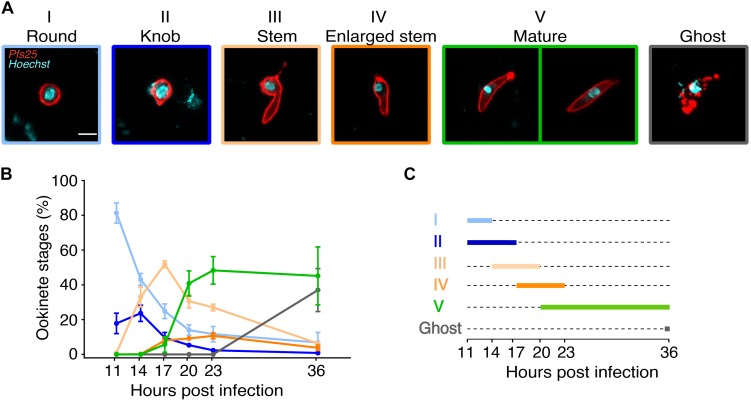
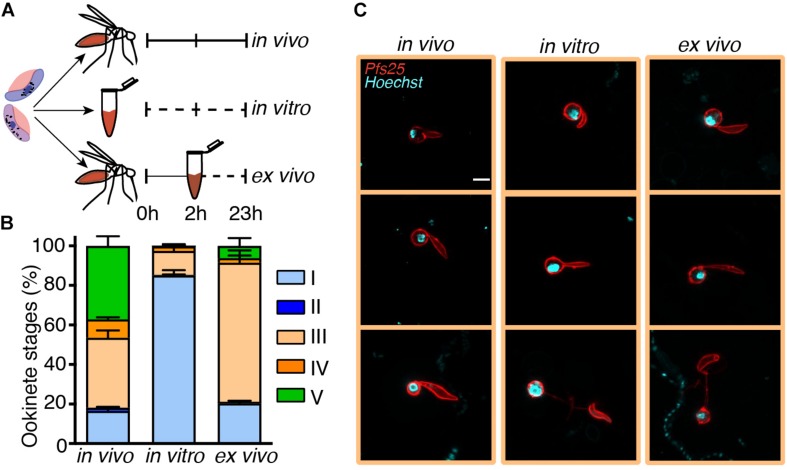
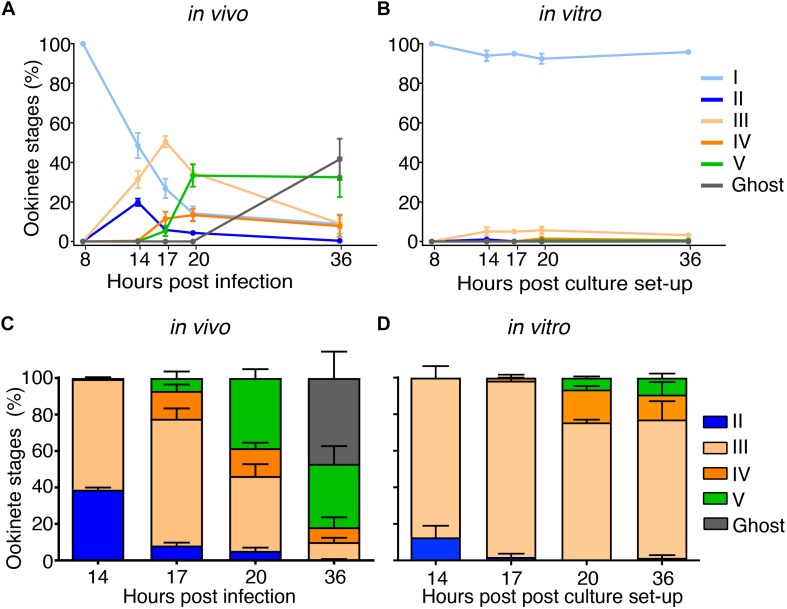
The egress and fertilization of gametes and development of a motile ookinete are the first crucial steps that mediate the successful transmission of the malaria parasites from humans to the vector. However, limited information exists about the cell biology and regulation of this process. Technical impediments in the establishment of conditions for ookinete maturation in and other human malaria parasites further constrain a detailed characterization of ookinete maturation. Here, using fluorescence microscopy and immunolabeling, we compared ookinete maturation in mosquitoes and in cell culture . Our results identified two critical steps in ookinete maturation that are regulated by distinct mosquito factors, thereby highlighting the role of the mosquito environment in the transmission efficiency of malaria parasites.
配子的排出、受精以及活动动合子的发育是介导疟原虫从人类成功传播到媒介的首要关键步骤。然而,关于这一过程的细胞生物学和调控的信息有限。在恶性疟原虫和其他人类疟原虫中建立动合子成熟条件的技术障碍进一步限制了对动合子成熟的详细表征。在这里,我们使用荧光显微镜和免疫标记技术,比较了冈比亚按蚊和细胞培养中动合子的成熟情况。我们的结果确定了动合子成熟过程中的两个关键步骤,它们受不同的蚊虫因子调控,从而突出了蚊虫环境在疟原虫传播效率中的作用。