Rang Jie, He Haocheng, Yuan Shuangqin, Tang Jianli, Liu Zhudong, Xia Ziyuan, Khan Tahir Ali, Hu Shengbiao, Yu Ziquan, Hu Yibo, Sun Yunjun, Huang Weitao, Ding Xuezhi, Xia Liqiu
Hunan Provincial Key Laboratory for Microbial Molecular Biology, State Key Laboratory of Development Biology of Freshwater Fish, College of Life Science, Hunan Normal University, Changsha, China.
Front Microbiol. 2020 Mar 18;11:396. doi: 10.3389/fmicb.2020.00396. eCollection 2020.
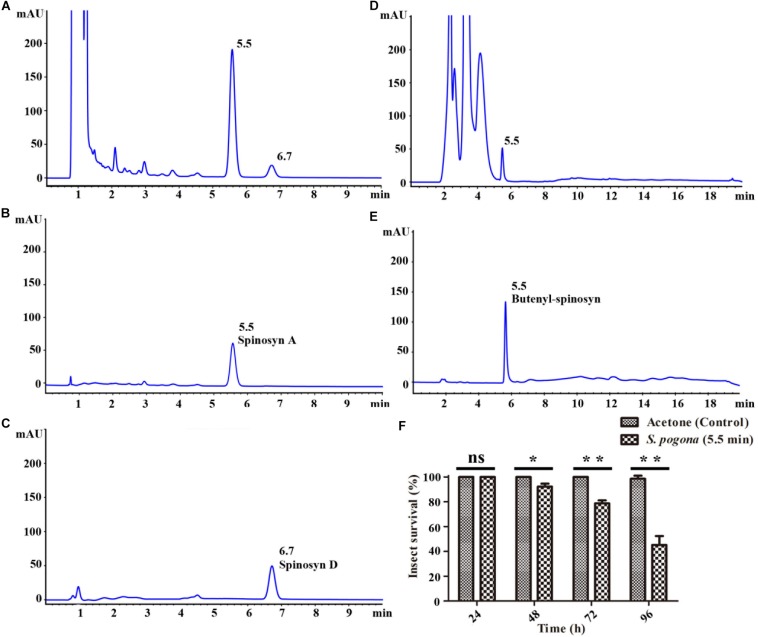
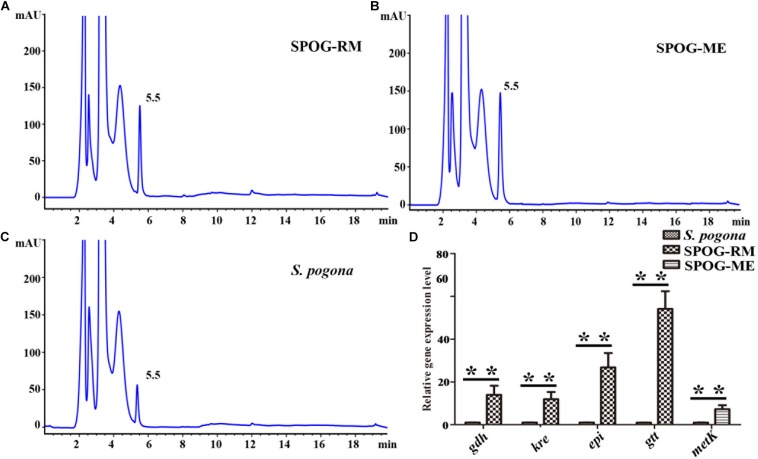
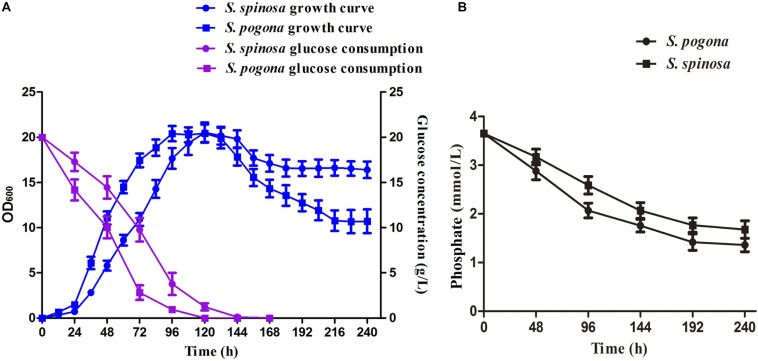
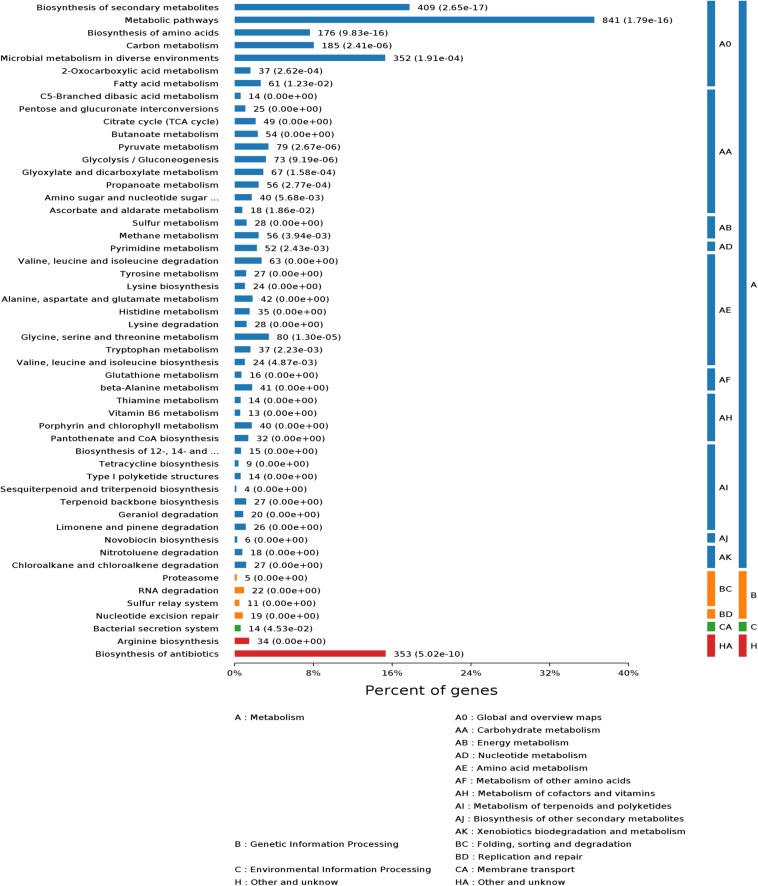
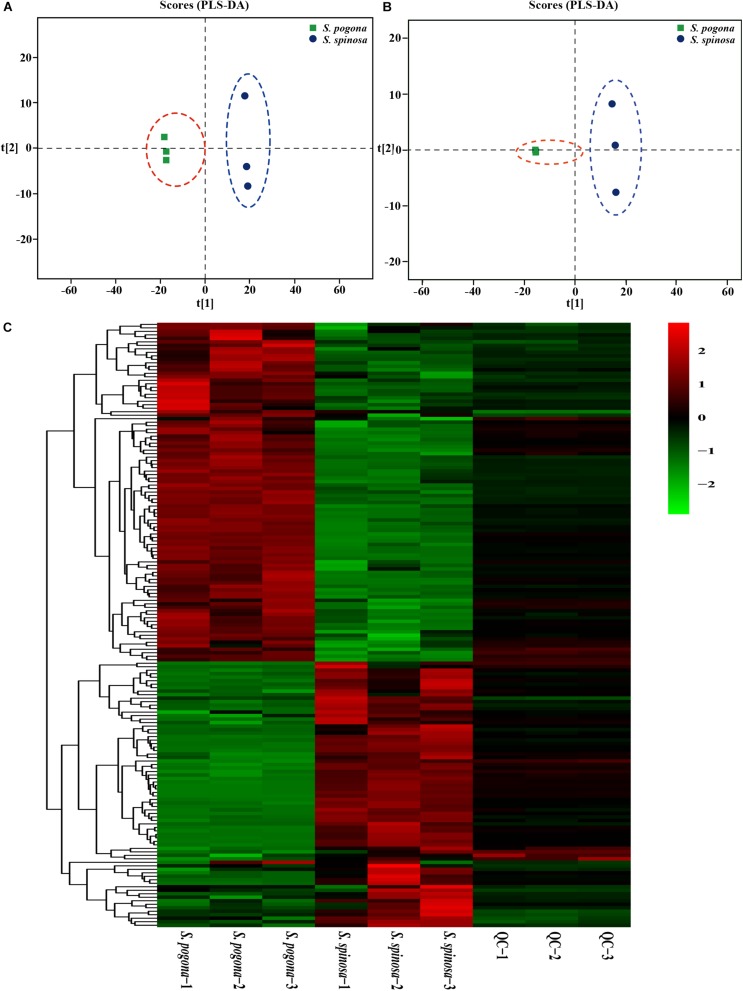
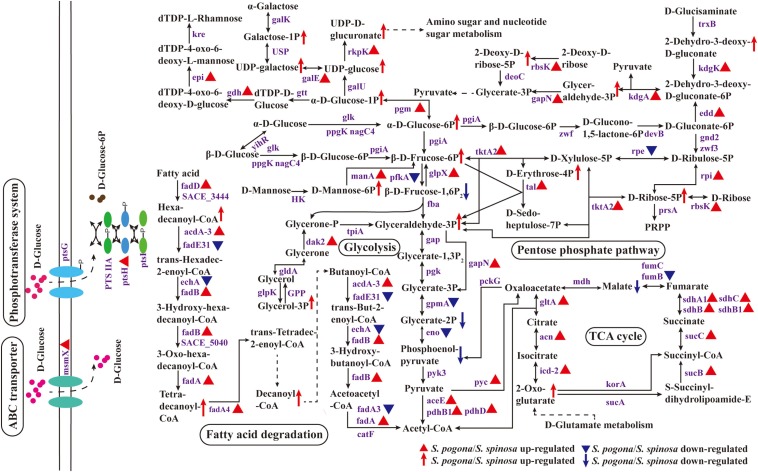
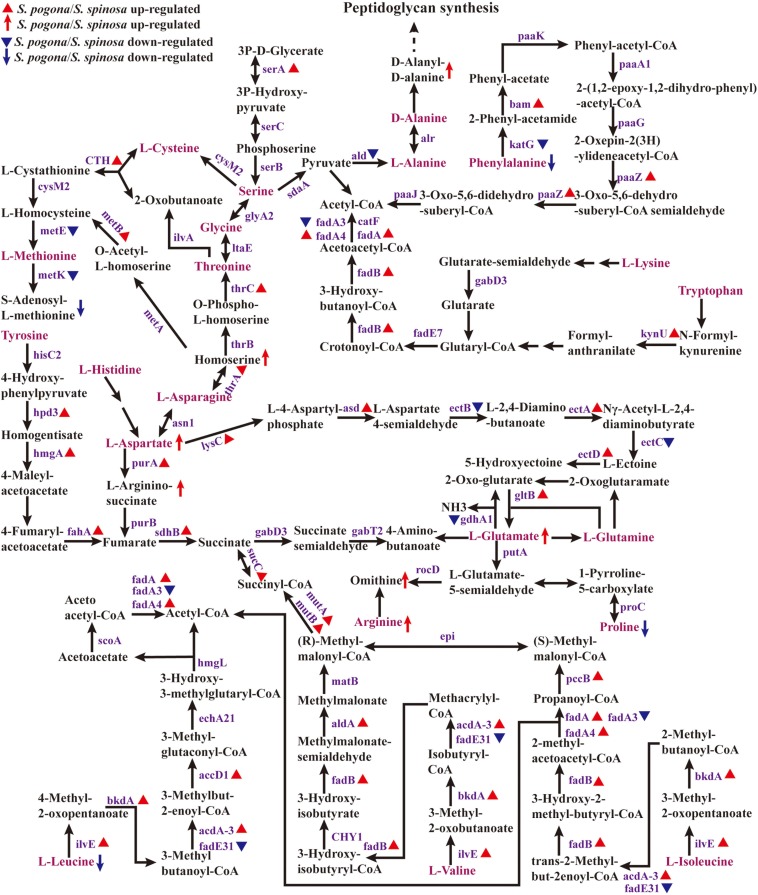
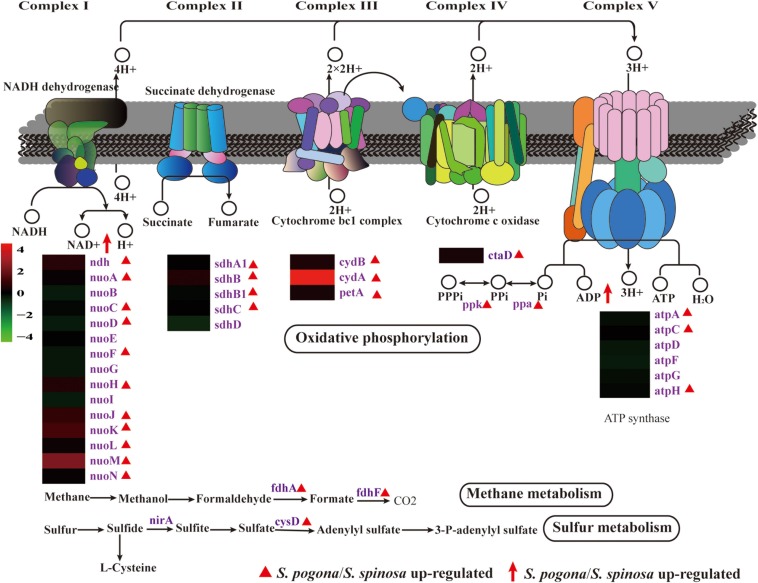
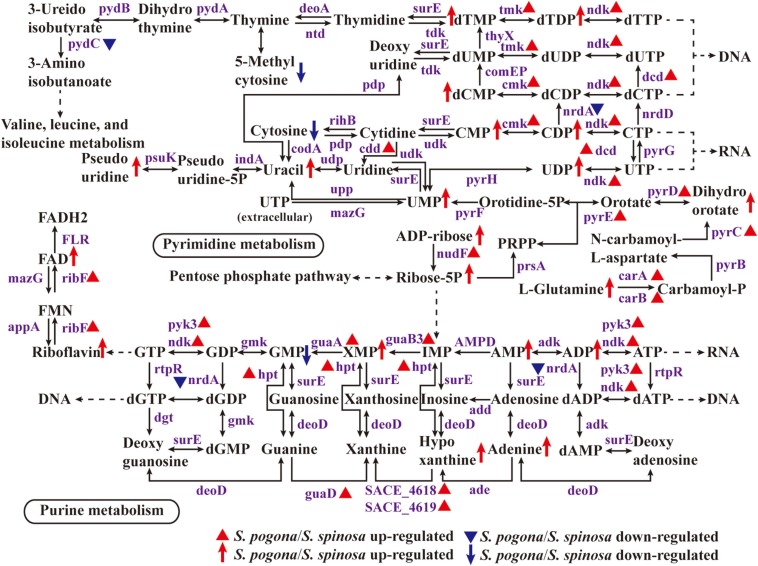
Butenyl-spinosyn, a secondary metabolite produced by , exhibits strong insecticidal activity than spinosyn. However, the low synthesis capacity and unknown metabolic characteristics of butenyl-spinosyn in wild-type limit its broad application and metabolic engineering. Here, we showed that exhibited increased glucose consumption ability and growth rate compared with , but the production of butenyl-spinosyn was much lower than that of spinosyn. To further elucidate the metabolic mechanism of these different phenotypes, we performed a comparative proteomic and metabolomic study on and to identify the change in the abundance levels of proteins and metabolites. We found that the abundance of most proteins and metabolites associated with glucose transport, fatty acid metabolism, tricarboxylic acid cycle, amino acid metabolism, energy metabolism, purine and pyrimidine metabolism, and target product biosynthesis in was higher than that in . However, the overall abundance of proteins involved in butenyl-spinosyn biosynthesis was much lower than that of the high-abundance protein chaperonin GroEL, such as the enzymes related to rhamnose synthesis. We speculated that these protein and metabolite abundance changes may be directly responsible for the above phenotypic changes in and , especially affecting butenyl-spinosyn biosynthesis. Further studies revealed that the over-expression of the rhamnose synthetic genes and methionine adenosyltransferase gene could effectively improve the production of butenyl-spinosyn by 2.69- and 3.03-fold, respectively, confirming the reliability of this conjecture. This work presents the first comparative proteomics and metabolomics study of and , providing new insights into the novel links of phenotypic change and metabolic difference between two strains. The result will be valuable in designing strategies to promote the biosynthesis of butenyl-spinosyn by metabolic engineering.
丁烯基多杀菌素是由[具体产生菌]产生的一种次生代谢产物,其杀虫活性比多杀菌素强。然而,野生型[菌株名称]中丁烯基多杀菌素的合成能力低且代谢特性未知,限制了其广泛应用和代谢工程研究。在此,我们表明[菌株名称]与[对比菌株名称]相比,具有更高的葡萄糖消耗能力和生长速率,但丁烯基多杀菌素的产量远低于多杀菌素。为了进一步阐明这些不同表型的代谢机制,我们对[菌株名称]和[对比菌株名称]进行了比较蛋白质组学和代谢组学研究,以确定蛋白质和代谢物丰度水平的变化。我们发现,[菌株名称]中与葡萄糖转运、脂肪酸代谢、三羧酸循环、氨基酸代谢、能量代谢、嘌呤和嘧啶代谢以及目标产物生物合成相关的大多数蛋白质和代谢物的丰度高于[对比菌株名称]。然而,参与丁烯基多杀菌素生物合成的蛋白质的总体丰度远低于高丰度蛋白质伴侣蛋白GroEL,例如与鼠李糖合成相关的酶。我们推测这些蛋白质和代谢物丰度变化可能直接导致了[菌株名称]和[对比菌株名称]的上述表型变化,特别是影响了丁烯基多杀菌素的生物合成。进一步研究表明,鼠李糖合成基因和甲硫氨酸腺苷转移酶基因的过表达可分别有效提高丁烯基多杀菌素产量2.69倍和3.03倍,证实了这一推测的可靠性。这项工作首次对[菌株名称]和[对比菌株名称]进行了比较蛋白质组学和代谢组学研究,为两菌株间表型变化和代谢差异的新联系提供了新见解。该结果对于通过代谢工程设计促进丁烯基多杀菌素生物合成的策略具有重要价值。