Ortiz-Otero Nerymar, Clinch Andrea B, Hope Jacob, Wang Wenjun, Reinhart-King Cynthia A, King Michael R
Meinig School of Biomedical Engineering, Cornell University, Ithaca, NY 14850, USA.
Department of Biomedical Engineering, Vanderbilt University, Nashville, TN 37202, USA.
Oncotarget. 2020 Mar 24;11(12):1037-1050. doi: 10.18632/oncotarget.27510.
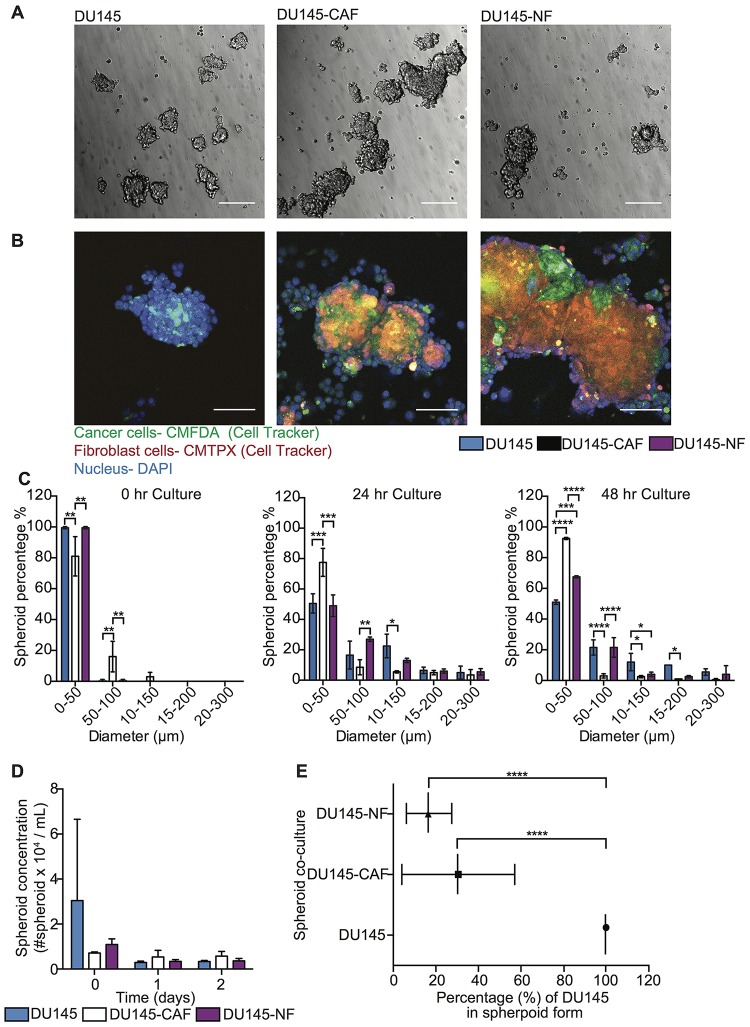
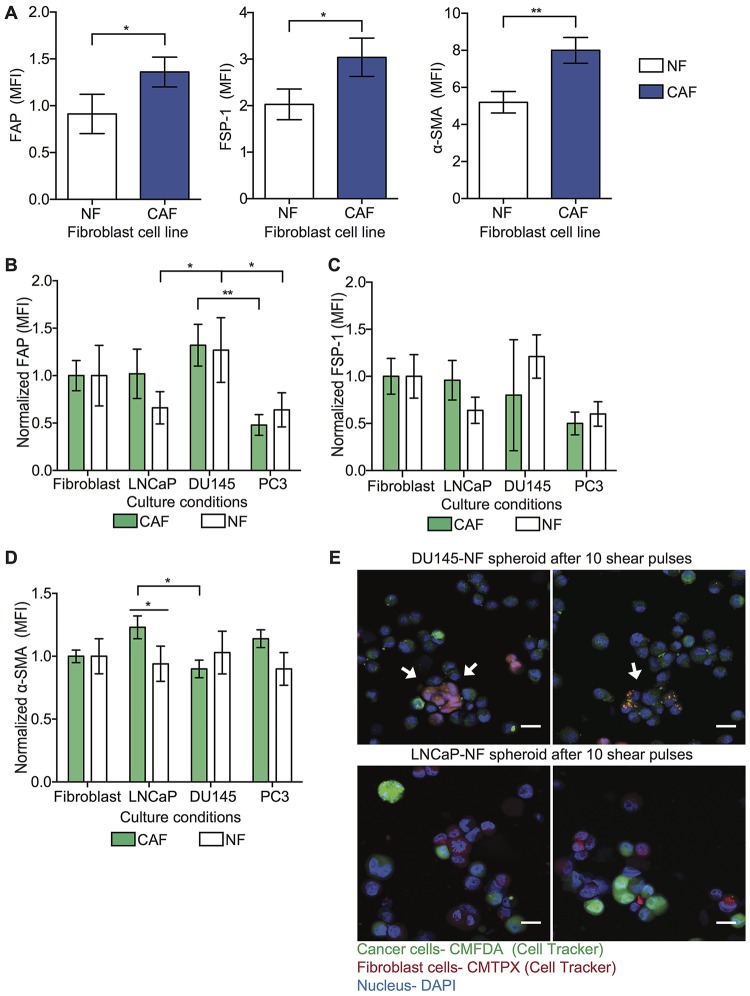
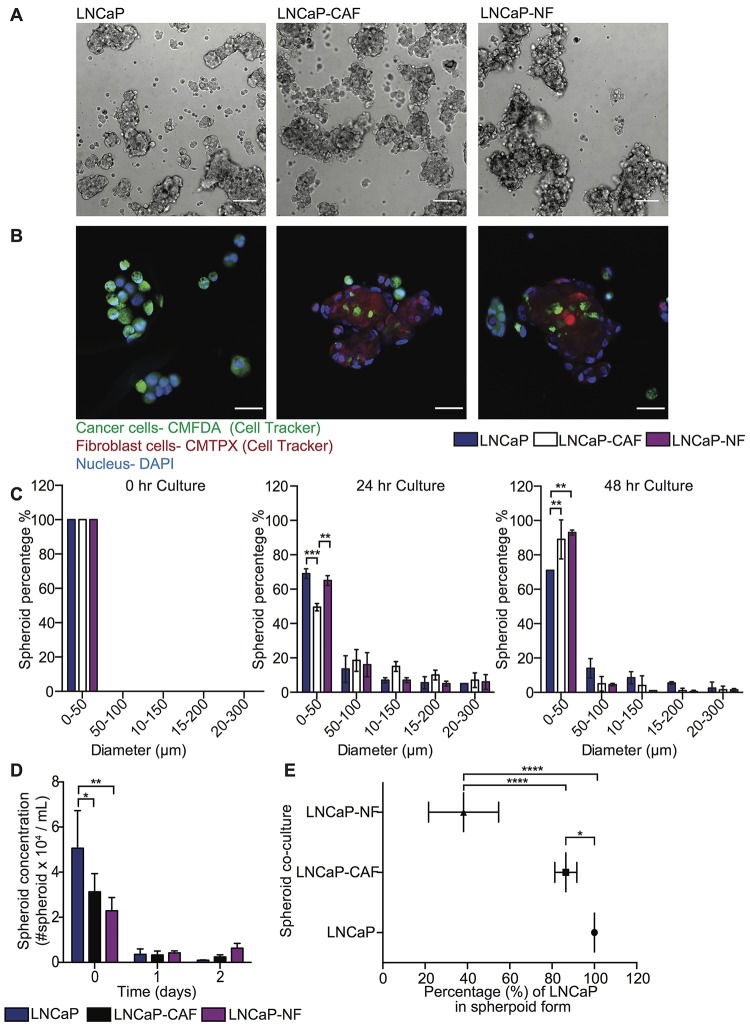
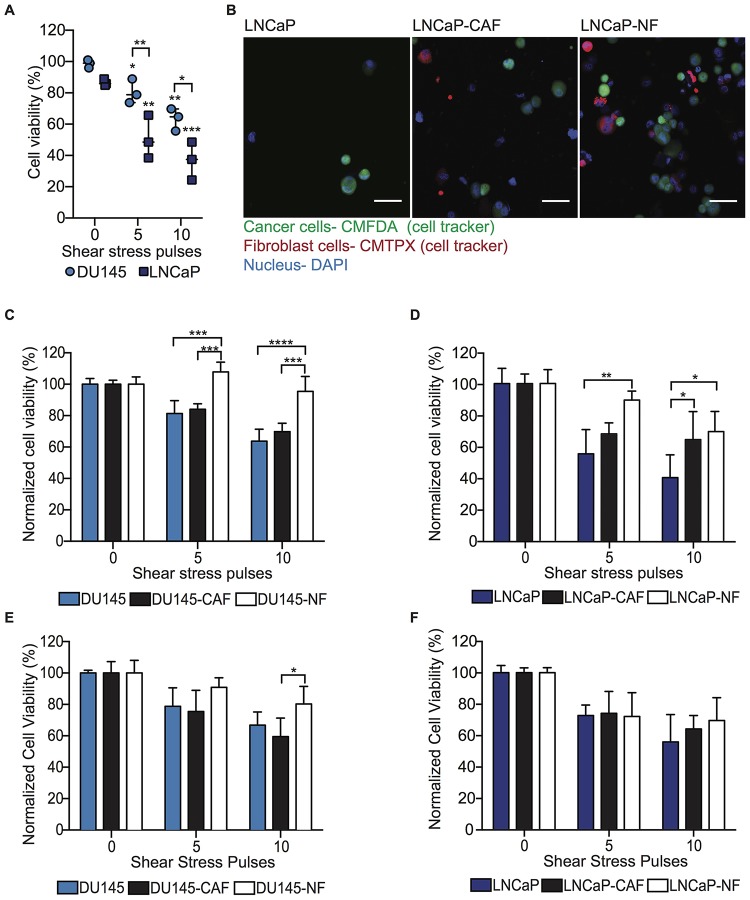
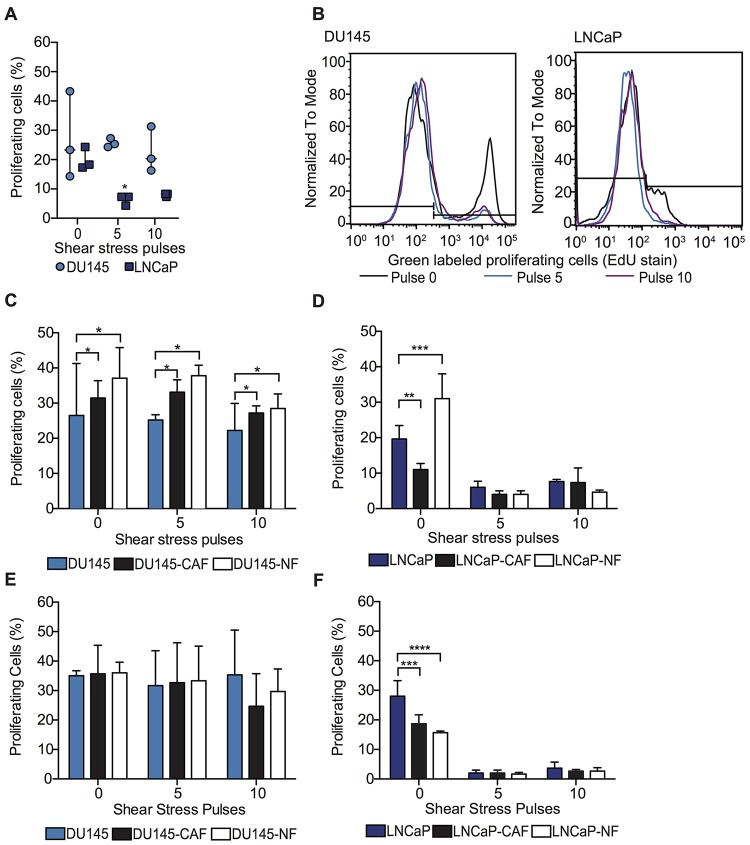
Previous studies have demonstrated that CTCs do not travel in the bloodstream alone, but rather are accompanied by clusters of stromal cells such as cancer associated fibroblasts (CAFs). Our laboratory has confirmed the presence of CAFs in the peripheral blood of prostate cancer (PC) patients. The observation that CAFs disseminate with CTCs prompts the examination of the role of CAFs in CTC survival under physiological shear stress during the dissemination process using a clinically relevant, three-dimensional (3D) co-culture model. In this study, we found that "reactive CAFs" induce shear resistance to prostate tumor cells via intercellular contact and soluble derived factors. In addition, these reactive CAFs conserve the proliferative capability of tumor cells in the presence of high magnitude fluid shear stress (FSS). This reactive CAF phenotype emerges from normal fibroblasts (NF), which take on the CAF phenotype when co-cultured with tumor cells. The reactive CAFs showed higher expression of α-smooth muscle actin (α-SMA) and fibroblast activation protein (FAP) compared to differentiated CAFs, when co-cultured with PC cells at the same experimental conditions. Together, we found that the activation mechanism of NF to CAF comprises different stages that progress from a reactive to quiescent cellular state in which these two states are differentiated by the fluctuation of intensity in CAF markers. Here we determined that a reactive state of CAFs proved to be important for supporting tumor cell survival and proliferation. These findings suggest the use of CAFs as a marker for cancer progression and a potential target for novel cancer therapeutics to treat metastatic disease.
先前的研究表明,循环肿瘤细胞(CTCs)并非单独在血液中流动,而是伴随着基质细胞簇,如癌症相关成纤维细胞(CAFs)。我们实验室已证实前列腺癌(PC)患者外周血中存在CAFs。CAFs与CTCs一起扩散这一观察结果促使我们使用临床相关的三维(3D)共培养模型,研究CAFs在扩散过程中生理剪切应力下对CTCs存活的作用。在本研究中,我们发现“反应性CAFs”通过细胞间接触和可溶性衍生因子诱导前列腺肿瘤细胞产生抗剪切力。此外,这些反应性CAFs在高流体剪切应力(FSS)存在的情况下保留肿瘤细胞的增殖能力。这种反应性CAF表型源自正常成纤维细胞(NF),当与肿瘤细胞共培养时,NF会呈现CAF表型。在相同实验条件下与PC细胞共培养时,与分化的CAFs相比,反应性CAFs显示出更高的α平滑肌肌动蛋白(α-SMA)和成纤维细胞活化蛋白(FAP)表达。我们共同发现,NF向CAF的激活机制包括不同阶段,从反应性细胞状态发展到静止细胞状态,这两种状态通过CAF标志物强度的波动来区分。在这里,我们确定CAFs的反应性状态被证明对支持肿瘤细胞存活和增殖很重要。这些发现表明,可将CAFs用作癌症进展的标志物以及治疗转移性疾病的新型癌症治疗的潜在靶点。