King Liam, Christie David, Arora Devinder, Anoopkumar-Dukie Shailendra
School of Pharmacy and Pharmacology, Griffith University, Queensland, Australia.
Genesis Cancer Care, Gold Coast, Queensland, Australia.
Prostate Int. 2020 Mar;8(1):34-40. doi: 10.1016/j.prnil.2019.10.004. Epub 2019 Nov 30.
A common treatment for localized prostate cancer (PCa) is radiotherapy; however, effectiveness is hampered because of toxicities and tumor resistance. Cyclooxygenase-2 (COX-2) inhibitors have been identified as potential agents that could improve treatment outcomes and have demonstrated ability to increase the radiosensitivity of many human carcinomas. This retrospective human study aims to investigate the ability of COX-2 inhibitors, celecoxib, and meloxicam, to improve treatment outcomes after radiotherapy.
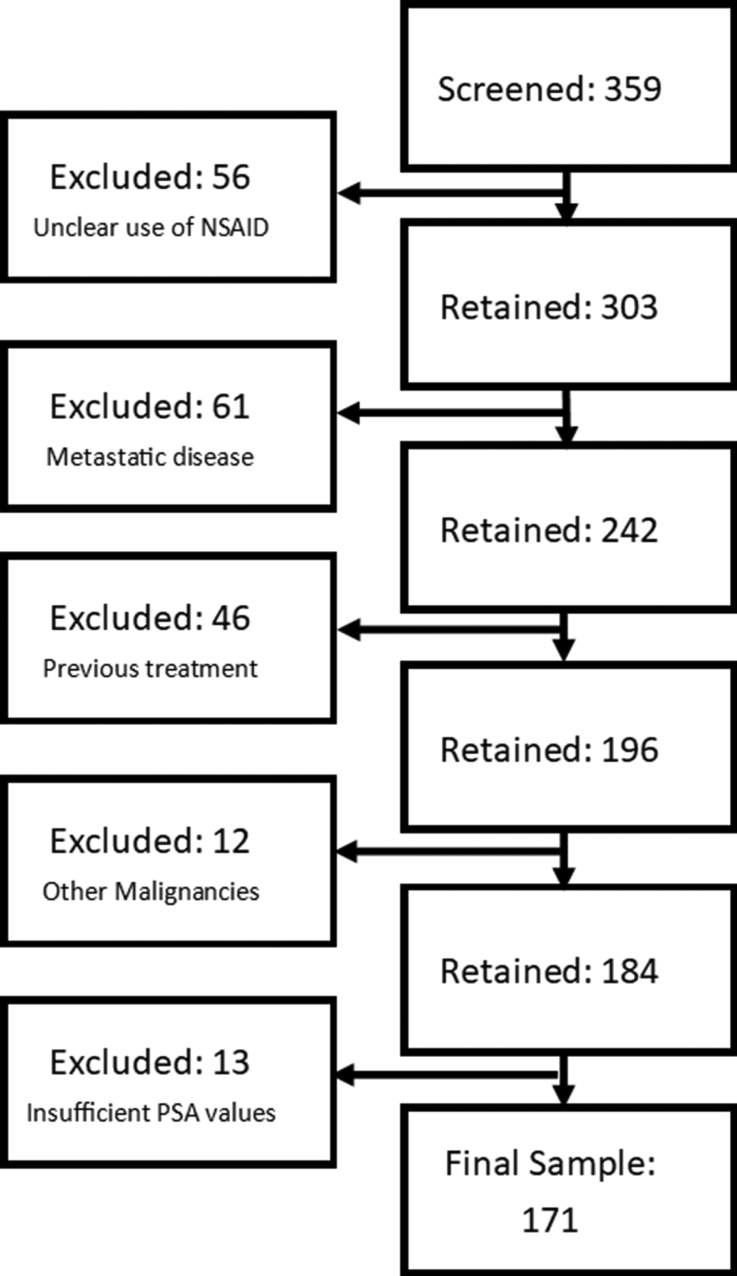
Prostate Specific Antigen (PSA) data of eligible patients were obtained from Genesis Cancer Care, Southport, Australia. The primary outcome was the percentage of patients in each group that had reached biochemical relapse at two and five years after treatment. Secondary outcomes included time to biochemical relapse and PSA velocity.
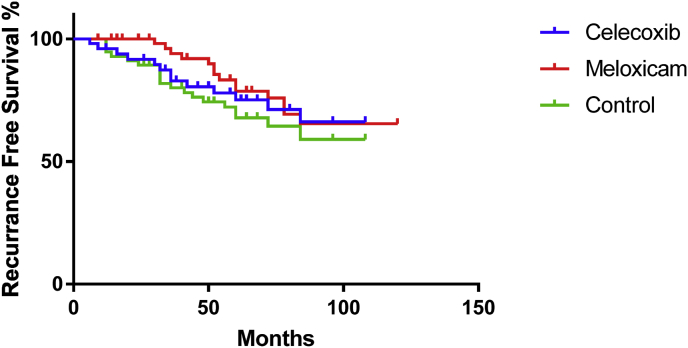
At two and five years after treatment, both the celecoxib (6.7%, 18.3%) and meloxicam (0.0%, 18.9%) showed lower relapse rates than the control (8.6%, 31.0%). Although not statistically significant, these results are clinically significant. In addition, the two treatment groups were found to increase the time to relapse, 46.20 months for celecoxib and 54.15 months for meloxicam, compared with the control group, 35.53 months. A similar trend was shown for PSA velocity with both treatment groups demonstrating lower PSA velocities compared with control.
This study provides further evidence to the potential for COX-2 inhibitors to address gaps in localizedz PCa treatment by demonstrating high clinical significance for the use of celecoxib and meloxicam. Further research should be conducted including larger retrospective studies and prospective studies to fully evaluate the benefits of COX-2 inhibitors in combination with radiotherapy for PCa.
局部前列腺癌(PCa)的一种常见治疗方法是放射治疗;然而,由于毒性和肿瘤耐药性,其疗效受到阻碍。环氧合酶-2(COX-2)抑制剂已被确定为可能改善治疗结果的药物,并已证明有能力提高许多人类癌症的放射敏感性。这项回顾性人体研究旨在调查COX-2抑制剂塞来昔布和美洛昔康在放射治疗后改善治疗结果的能力。
符合条件的患者的前列腺特异性抗原(PSA)数据来自澳大利亚南港的创世纪癌症护理中心。主要结果是每组患者在治疗后两年和五年达到生化复发的百分比。次要结果包括生化复发时间和PSA速度。
在治疗后两年和五年时,塞来昔布组(6.7%,18.3%)和美洛昔康组(0.0%,18.9%)的复发率均低于对照组(8.6%,31.0%)。尽管无统计学意义,但这些结果具有临床意义。此外,发现两个治疗组均延长了复发时间,塞来昔布组为46.20个月,美洛昔康组为54.15个月,而对照组为35.53个月。PSA速度也呈现类似趋势,两个治疗组的PSA速度均低于对照组。
本研究通过证明塞来昔布和美洛昔康使用的高度临床意义,为COX-2抑制剂填补局部PCa治疗空白的潜力提供了进一步证据。应开展进一步研究,包括更大规模的回顾性研究和前瞻性研究,以全面评估COX-2抑制剂联合放疗治疗PCa的益处。