Puzhko Svetlana, Schuster Tibor, Barnett Tracie A, Renoux Christel, Rosenberg Ellen, Barber David, Bartlett Gillian
Department of Family Medicine, Faculty of Medicine, McGill University, Montréal, QC, Canada.
Department of Epidemiology and Biostatistics, INRS-Institut Armand-Frappier, Université du Québec à Montreal (UQAM), Laval, QC, Canada.
Front Nutr. 2020 Mar 17;7:24. doi: 10.3389/fnut.2020.00024. eCollection 2020.
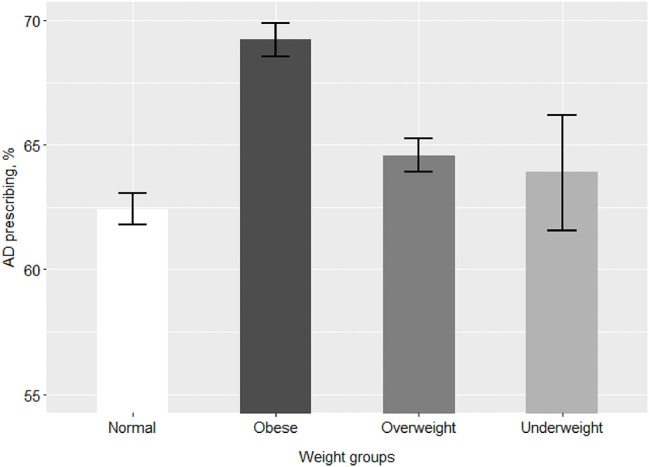
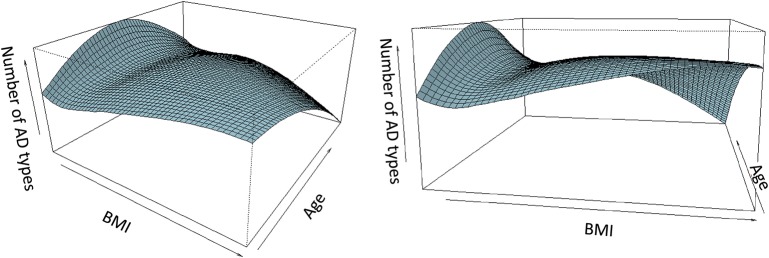
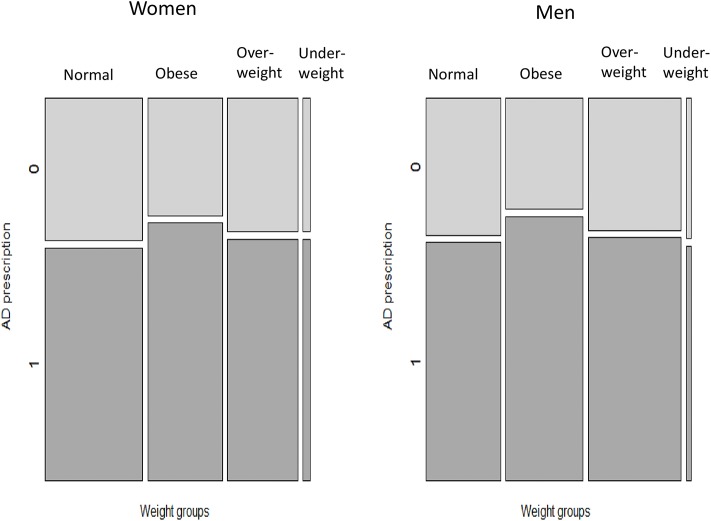
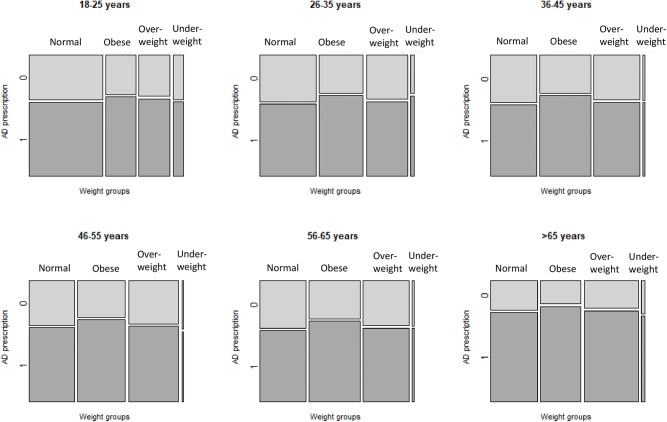
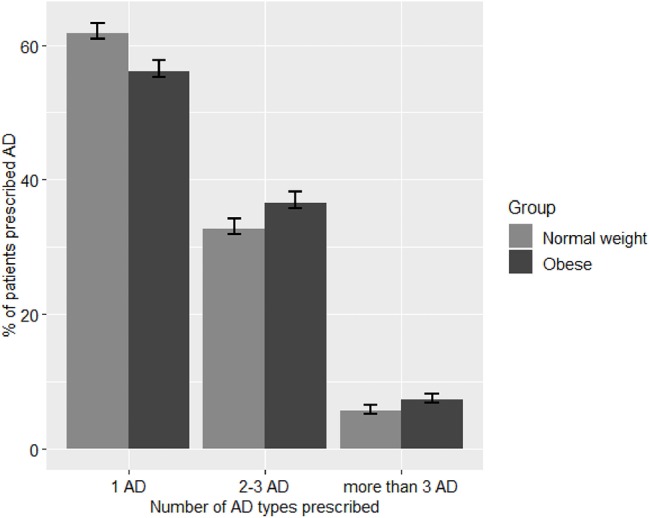
Depression is a serious disorder that brings a tremendous health and economic burden. Many antidepressants (AD) have obesogenic effects, increasing the population of obese patients at increased risk for a more severe disease course and poor treatment response. In addition, obese patients with depression may not be receiving the recommended standard of care due to "obesity bias." It is important to evaluate prescribing pharmacological treatment of depression in patients with obesity. To describe the prevalence and patterns of AD prescribing for patients with depression and comorbid obesity compared with normal weight patients, and to examine the association of prescribing prevalence with obesity class. Study sample of adult patients (>18 years old) with depression was extracted from the national Canadian Primary Care Sentinel Surveillance Network (CPCSSN) Electronic Medical Records database for 2011-2016. Measures were prescribing of at least one AD (outcome) and body mass index (BMI) to categorize patients into weight categories (exposure). Data were analyzed cross-sectionally using descriptive statistics and mixed effects logistic regression model with clustering on CPCSSN networks and adjusting for age, sex, and the comorbidities. Of 120,381 patients with depression, 63,830 patients had complete data on studied variables (complete cases analysis). Compared with normal weight patients, obese patients were more likely to receive an AD prescription (adjusted Odds Ratio [aOR] = 1.17; 95% Confidence Interval [CI]: 1.12-1.22). Patients with obesity classes II and III were 8% (95% CI: 1.00, 1.16) and 6% (95% CI: 0.98, 1.16) more likely, respectively, to receive AD. After imputing missing data using Multiple Imputations by Chained Equations, the results remained unchanged. The prevalence of prescribing >3 AD types was higher in obese category (7.27%, [95% CI: 6.84, 7.73]) than in normal weight category (5.6%; [95% CI: 5.24, 5.99]). The association between obesity and high prevalence of AD prescribing and prescribing high number of different AD to obese patients, consistent across geographical regions, raises a public health concern. Study results warrant qualitative studies to explore reasons behind the difference in prescribing, and quantitative longitudinal studies evaluating the association of AD prescribing patterns for obese patients with health outcomes.
抑郁症是一种严重的疾病,会带来巨大的健康和经济负担。许多抗抑郁药具有致肥胖作用,导致肥胖患者数量增加,而这些患者患更严重病程疾病和治疗反应不佳的风险也更高。此外,患有抑郁症的肥胖患者可能因“肥胖偏见”而未得到推荐的标准治疗。评估肥胖患者抑郁症的药物治疗处方情况很重要。描述与正常体重患者相比,患有抑郁症和合并肥胖症患者的抗抑郁药处方流行情况和模式,并研究处方流行率与肥胖等级的关联。从加拿大国家初级保健哨兵监测网络(CPCSSN)2011 - 2016年电子病历数据库中提取成年(>18岁)抑郁症患者的研究样本。测量指标为开具至少一种抗抑郁药(结果)和体重指数(BMI),以将患者分类为不同体重类别(暴露因素)。使用描述性统计和混合效应逻辑回归模型对数据进行横断面分析,该模型在CPCSSN网络上进行聚类,并对年龄、性别和合并症进行调整。在120,381名抑郁症患者中,63,830名患者有关于研究变量的完整数据(完整病例分析)。与正常体重患者相比,肥胖患者更有可能接受抗抑郁药处方(调整后的优势比[aOR]=1.17;95%置信区间[CI]:1.12 - 1.22)。II级和III级肥胖患者接受抗抑郁药处方的可能性分别高出8%(95%CI:1.00,1.16)和6%(95%CI:0.98,1.16)。使用链式方程多重填补法填补缺失数据后,结果保持不变。肥胖类别中开具>3种抗抑郁药类型的流行率(7.27%,[95%CI:6.84,7.73])高于正常体重类别(5.6%;[95%CI:5.24,5.99])。肥胖与抗抑郁药高处方流行率以及向肥胖患者开具大量不同抗抑郁药之间的关联在不同地理区域一致,这引发了公共卫生关注。研究结果需要进行定性研究以探索处方差异背后的原因,以及进行定量纵向研究以评估肥胖患者抗抑郁药处方模式与健康结果之间的关联。