Kokudo Norihiro, Takemura Nobuyuki, Ito Kyoji, Mihara Fuminori
Department of Surgery National Center for Global Health and Medicine Tokyo Japan.
Ann Gastroenterol Surg. 2020 Feb 26;4(2):109-117. doi: 10.1002/ags3.12322. eCollection 2020 Mar.
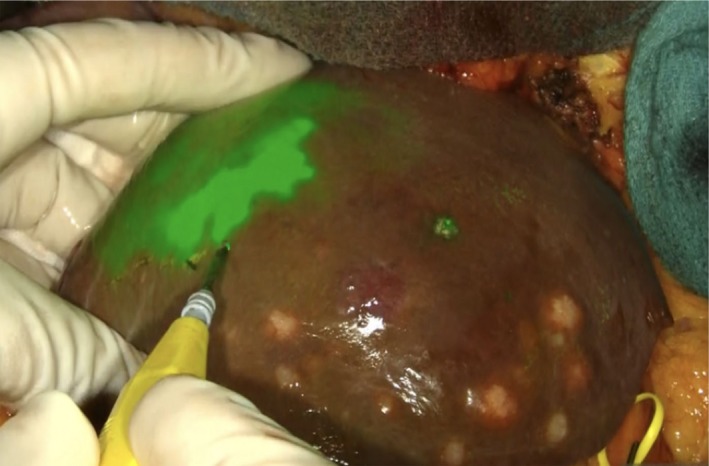
We reviewed the progress made in the field of liver surgery over the past 50 years. The widespread use and improved outcomes of the hepatectomy were, primarily, due to pioneer surgeons who were responsible for technological advances and rapid improvements in the safety of the procedure in the last century. These advances included the hepatic functional evaluation used to determine the safety limit of liver resections, the introduction of intraoperative ultrasonography, and the development of innovative techniques such as portal vein embolization to increase the remnant liver volume. Cadaveric liver transplantation has been attempted since 1963. However, the clinical outcomes only began improving and becoming acceptable in the 1970s-1980s due to refinements in technology and the development of new immunosuppressants. Partial liver transplantation from living donors, which was first attempted in 1988, required further technological innovation and sophisticated perioperative management plans. Moreover, these developments allowed for further overall improvements to take place in the field of liver surgery. Since the turn of the century, advances in computation and imaging technology have made it possible for safer and more elaborate surgeries to be performed. In Japan, preoperative 3-dimensional simulation technology has been covered by health insurance since 2012 and is now widely used. An urgent need for real-time navigation tools will develop in the future. Indocyanine green (ICG) fluorescence imaging was first used in 2007 and has led to the creation of a new surgical concept known as fluorescence navigation surgery. Laparoscopic surgery and robotic surgery have solved the issue of large incisions, which used to be a major drawback of open liver surgery; however, further improvements are required in order to achieve the level of safety and accuracy observed during open liver resection when performing all minimally invasive procedures. In the near future, liver surgery will become more precise and less invasive due to substantial progress including the development of navigation surgery, cancer imaging, and minimally invasive surgery. This overview of the history of liver surgery over the past 50 years may provide useful insights for further innovation in the next 50 years.
我们回顾了过去50年肝脏外科领域取得的进展。肝切除术的广泛应用及疗效改善,主要归功于上世纪的先驱外科医生,他们推动了技术进步,并迅速提高了该手术的安全性。这些进展包括用于确定肝切除安全限度的肝功能评估、术中超声检查的引入,以及诸如门静脉栓塞等创新技术的发展,以增加残余肝体积。自1963年起就有人尝试尸体肝移植。然而,由于技术的改进和新型免疫抑制剂的研发,直到20世纪70年代至80年代临床疗效才开始改善并变得可以接受。1988年首次尝试的活体供体部分肝移植,需要进一步的技术创新和完善的围手术期管理计划。此外,这些进展使得肝脏外科领域能够进一步全面发展。自世纪之交以来,计算和成像技术的进步使更安全、更精细的手术得以开展。在日本,术前三维模拟技术自2012年起已纳入医保,目前已广泛应用。未来对实时导航工具的需求将十分迫切。吲哚菁绿(ICG)荧光成像于2007年首次应用,催生了一种名为荧光导航手术的新手术概念。腹腔镜手术和机器人手术解决了大切口问题,而大切口曾是开放肝手术的主要缺点;然而,在进行所有微创手术时,要达到开放肝切除时所观察到的安全和精确水平,仍需进一步改进。在不久的将来,由于导航手术、癌症成像和微创手术等方面的重大进展,肝脏手术将变得更加精确、创伤更小。对过去50年肝脏外科历史的这一概述,可能为未来50年的进一步创新提供有益的见解。