Departments of Biological Sciences and Health Sciences, DePaul University, Chicago, IL 60614, United States of America.
Division of Pharmacology and Toxicology in the College of Pharmacy and Department of Psychology, University of Texas at Austin, Austin, TX 78712, United States of America.
Neurotoxicol Teratol. 2020 May-Jun;79:106880. doi: 10.1016/j.ntt.2020.106880. Epub 2020 Apr 4.
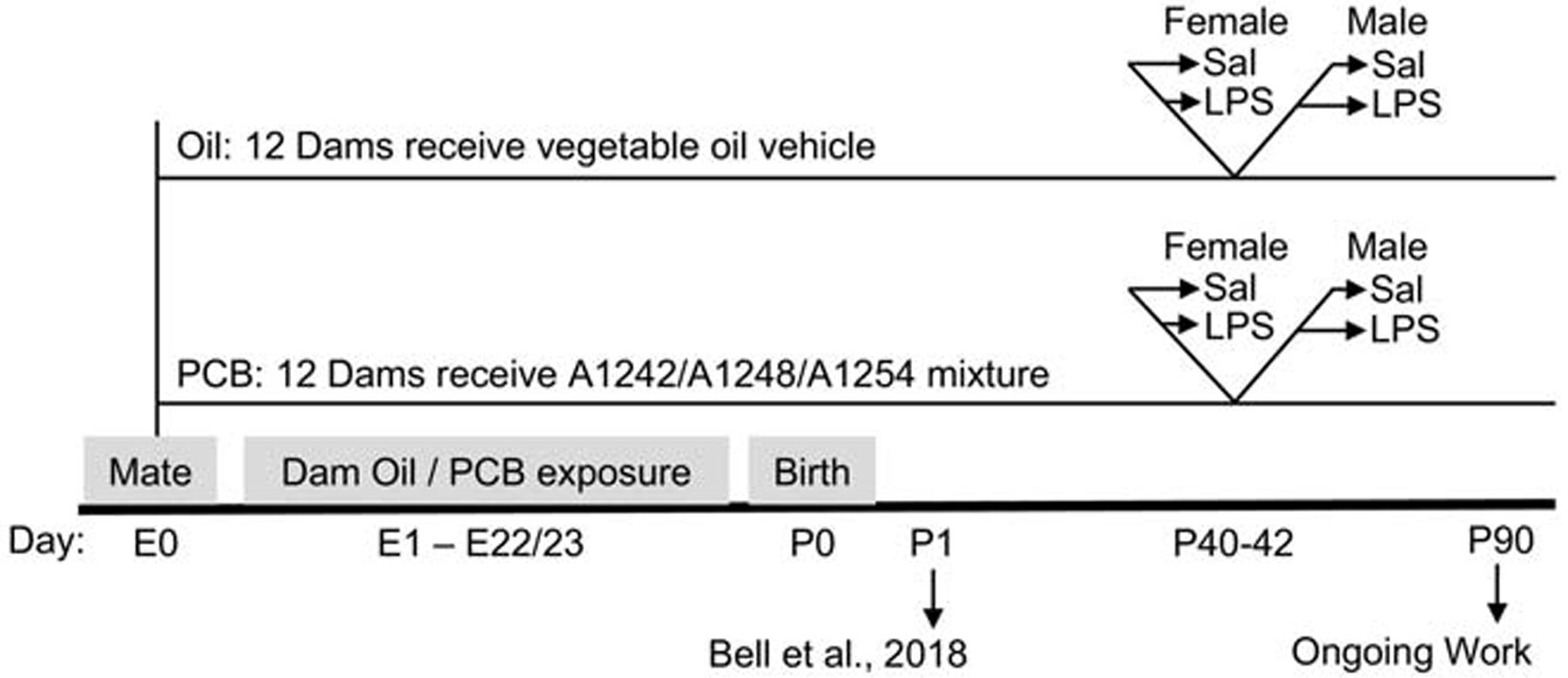
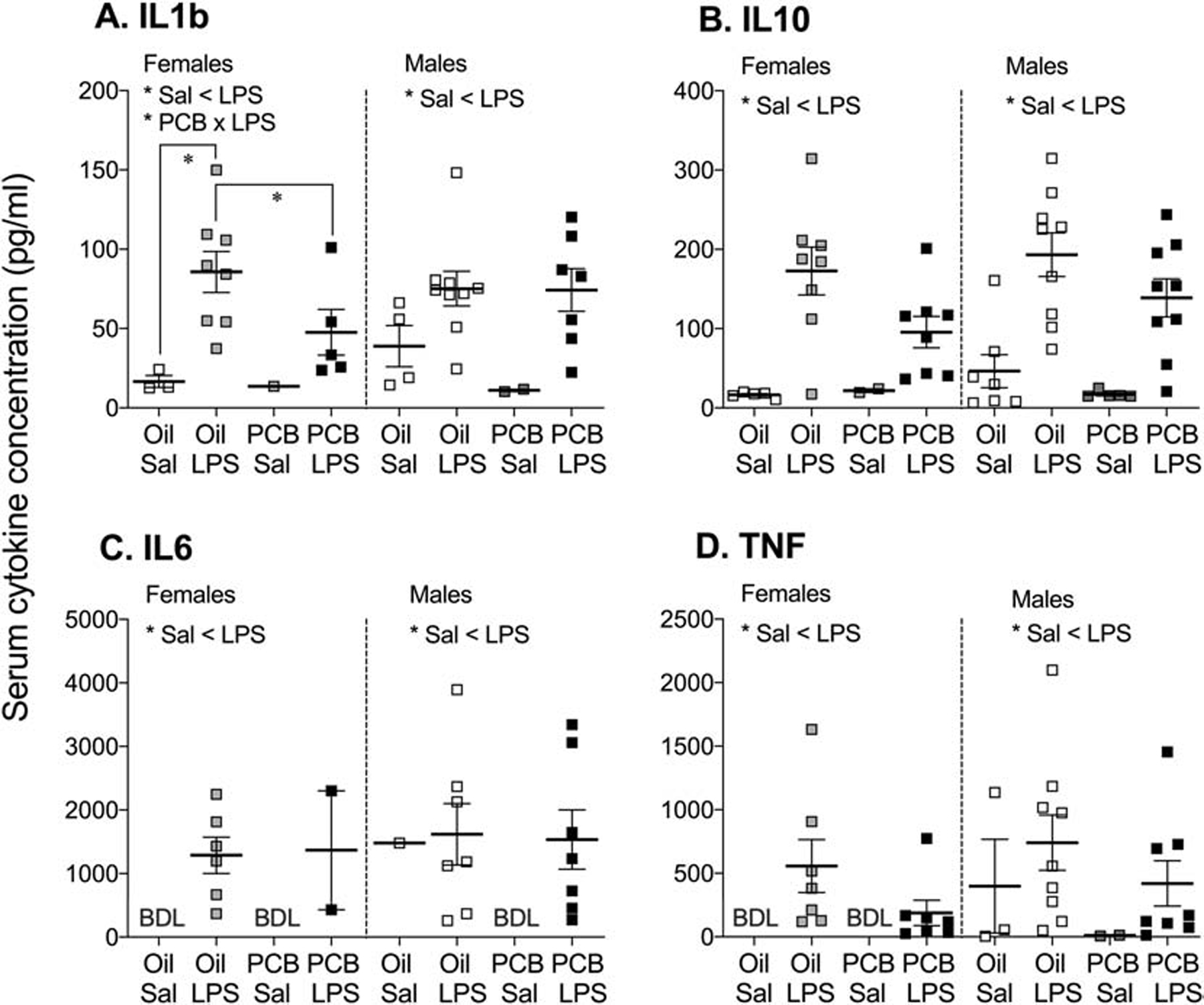
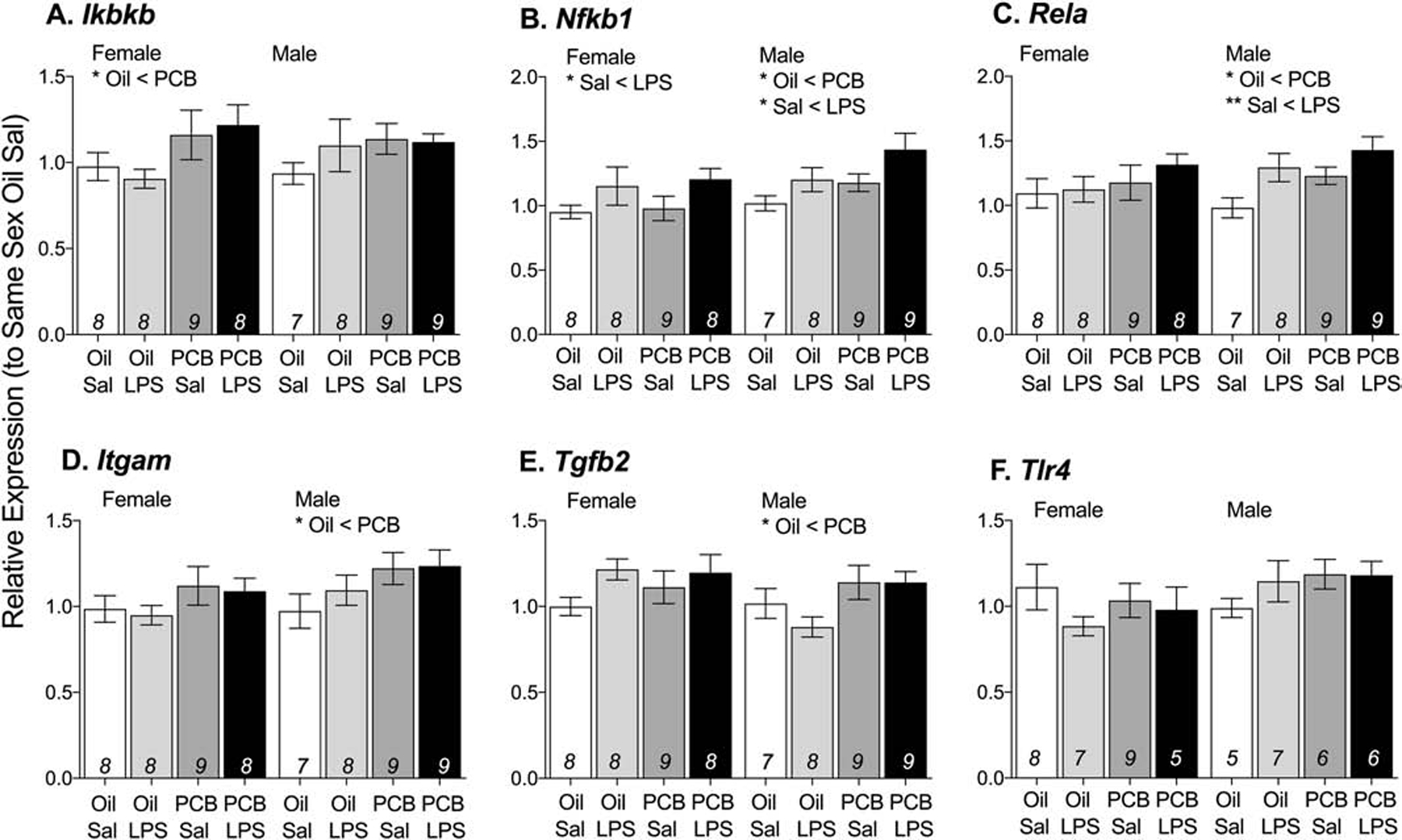
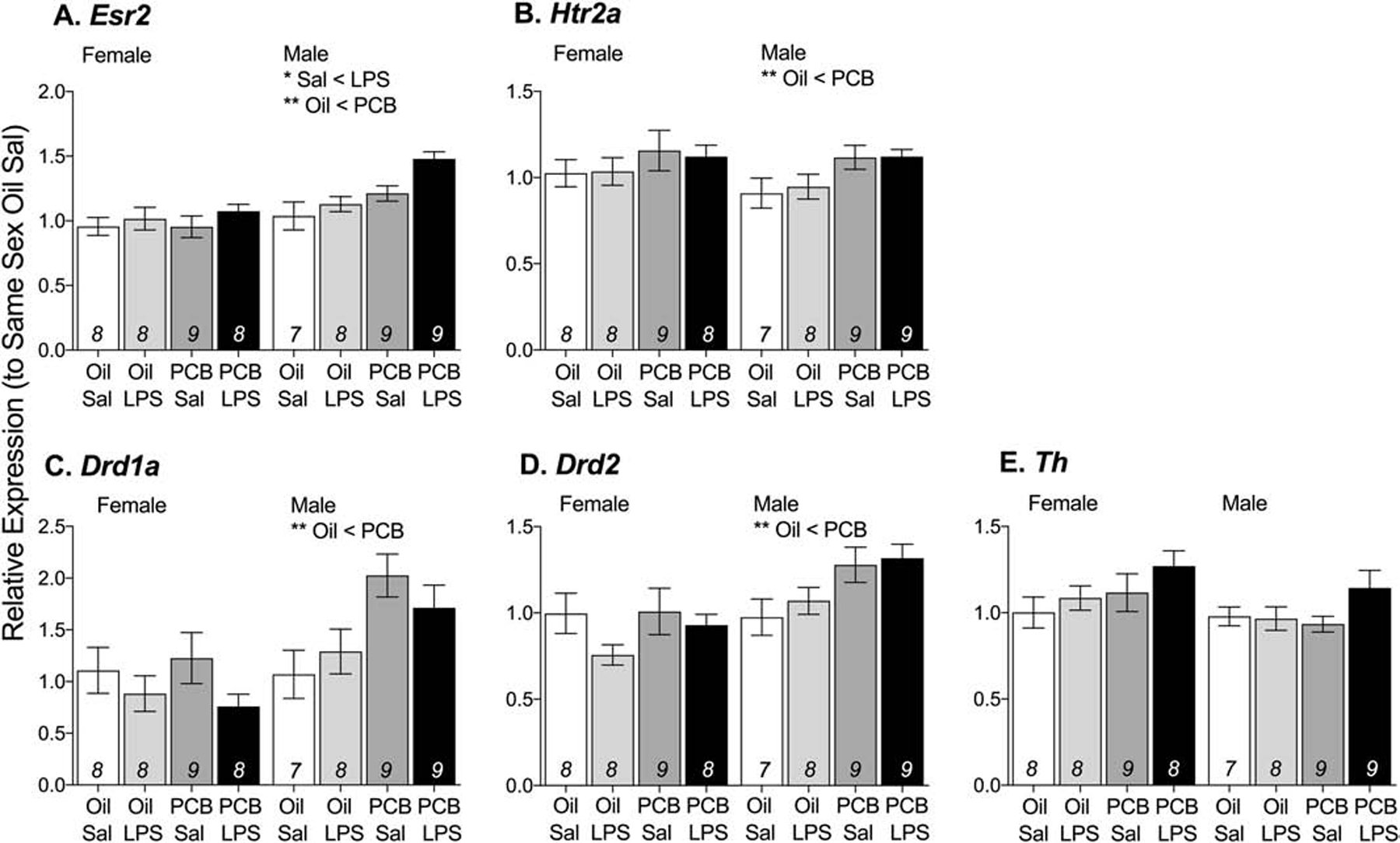
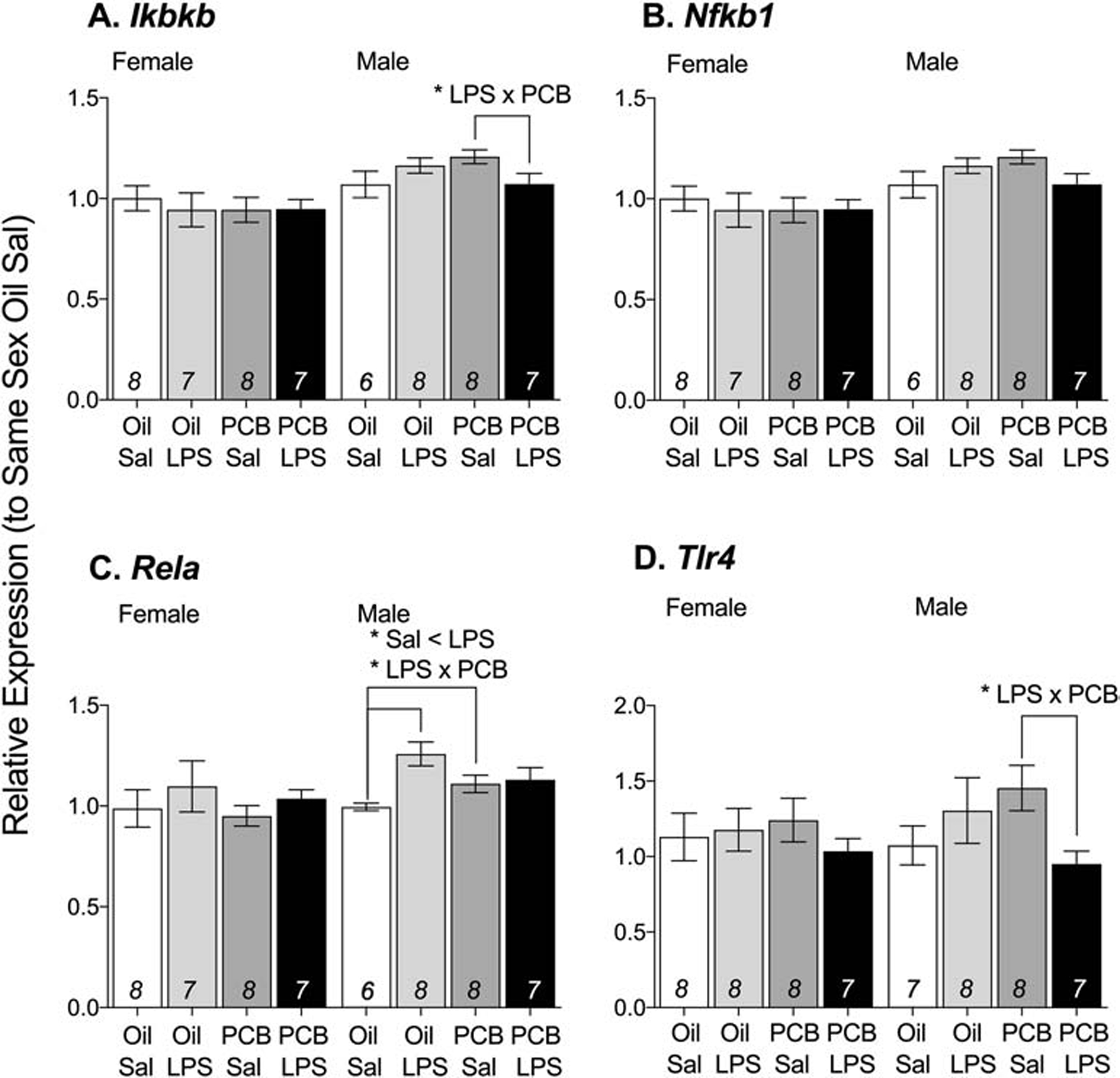
Exposure to environmental contaminants early in life can have long lasting consequences for physiological function. Polychlorinated biphenyls (PCBs) are a group of ubiquitous contaminants that perturb endocrine signaling and have been associated with altered immune function in children. In this study, we examined the effects of developmental exposure to PCBs on neuroimmune responses to an inflammatory challenge during adolescence. Sprague Dawley rat dams were exposed to a PCB mixture (Aroclor 1242, 1248, 1254, 1:1:1, 20 μg/kg/day) or oil control throughout pregnancy, and adolescent male and female offspring were injected with lipopolysaccharide (LPS, 50 μg/kg, ip) or saline control prior to euthanasia. Gene expression profiling was conducted in the hypothalamus, prefrontal cortex, striatum, and midbrain. In the hypothalamus, PCBs increased expression of genes involved in neuroimmune function, including those within the nuclear factor kappa b (NF-κB) complex, independent of LPS challenge. PCB exposure also increased expression of receptors for dopamine, serotonin, and estrogen in this region. In contrast, in the prefrontal cortex, PCB exposure blunted or induced irregular neuroimmune gene expression responses to LPS challenge. Moreover, neither PCB nor LPS exposure altered expression of neurotransmitter receptors throughout the mesocorticolimbic circuit. Almost all effects were present in males but not females, in agreement with the idea that male neuroimmune cells are more sensitive to perturbation and emphasizing the importance of studying both male and female subjects. Given that altered neuroimmune signaling has been implicated in mental health and substance abuse disorders that often begin during adolescence, these results highlight neuroimmune processes as another mechanism by which early life PCBs can alter brain function later in life.
生命早期暴露于环境污染物会对生理功能产生持久的影响。多氯联苯 (PCBs) 是一组普遍存在的污染物,它们会干扰内分泌信号,并与儿童免疫功能改变有关。在这项研究中,我们研究了发育过程中接触 PCB 对青春期炎症挑战时神经免疫反应的影响。妊娠期间,Sprague Dawley 大鼠母鼠接受 PCB 混合物(Aroclor 1242、1248、1254、1:1:1、20μg/kg/天)或油对照处理,然后在安乐死前对雄性和雌性未成年后代进行脂多糖(LPS,50μg/kg,ip)或生理盐水对照注射。在下丘脑、前额叶皮层、纹状体和中脑进行基因表达谱分析。在下丘脑中,PCBs 增加了神经免疫功能相关基因的表达,包括核因子 kappa B(NF-κB)复合物中的基因,而与 LPS 挑战无关。PCB 暴露还增加了该区域中多巴胺、血清素和雌激素受体的表达。相比之下,在前额叶皮层中,PCB 暴露减弱或诱导了对 LPS 挑战的不规则神经免疫基因表达反应。此外,无论是 PCB 还是 LPS 暴露都没有改变中脑边缘皮质回路中神经递质受体的表达。这些影响几乎都存在于雄性中,但不存在于雌性中,这与雄性神经免疫细胞对干扰更敏感的观点一致,并强调了研究雄性和雌性对象的重要性。鉴于改变的神经免疫信号与精神健康和物质滥用障碍有关,这些障碍通常在青春期开始,这些结果突出了神经免疫过程是早期生命 PCB 可以改变以后生命大脑功能的另一种机制。