Lim Joe, Suh Youjun, Li Xueshu, Wilson Rebecca, Lehmler Hans-Joachim, Lein Pamela, Cui Julia Yue
Department of Environmental and Occupational Health Sciences, University of Washington, Seattle, WA 98105.
Environmental Health and Microbiome Research Center (EHMBRACE), University of Washington, Seattle, WA 98105.
bioRxiv. 2025 Jun 8:2025.06.04.657944. doi: 10.1101/2025.06.04.657944.
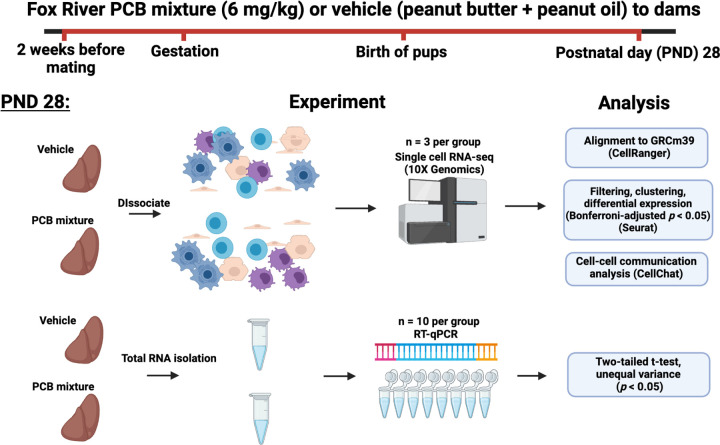
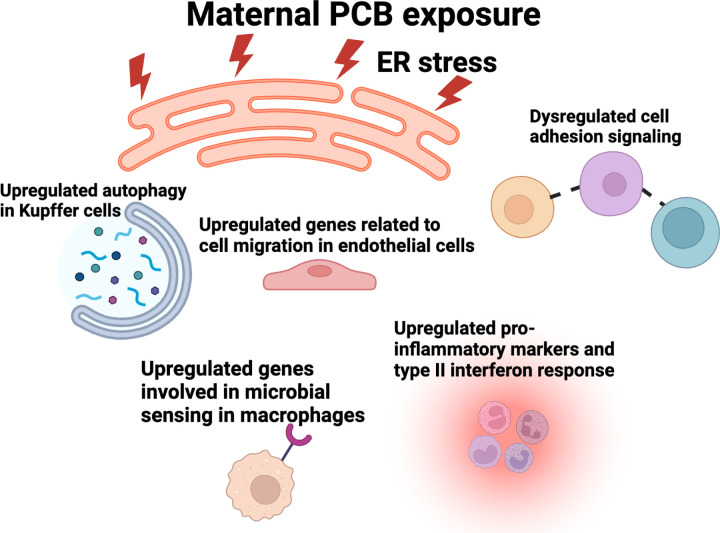
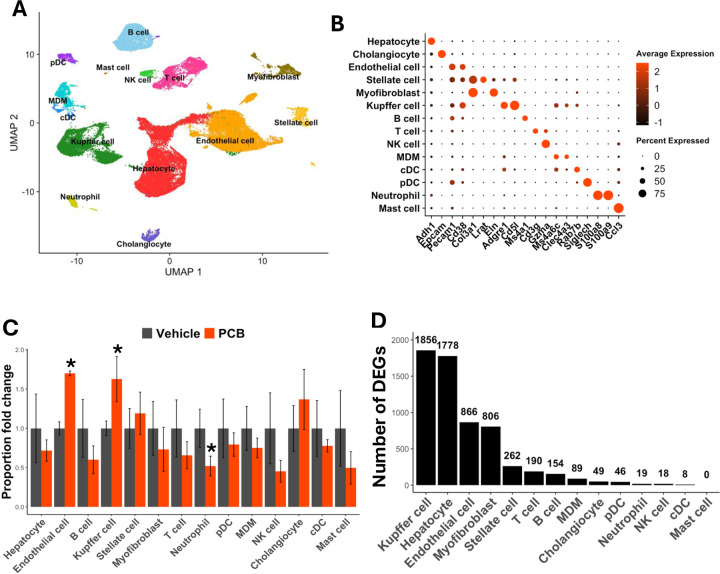
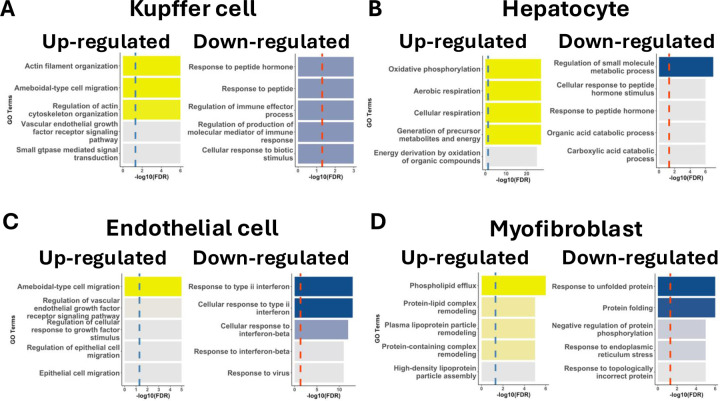
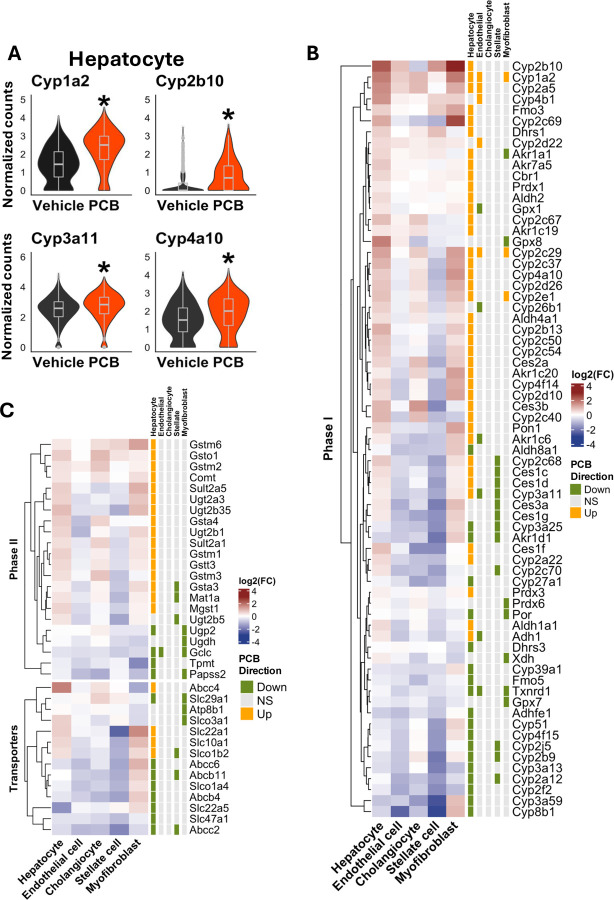
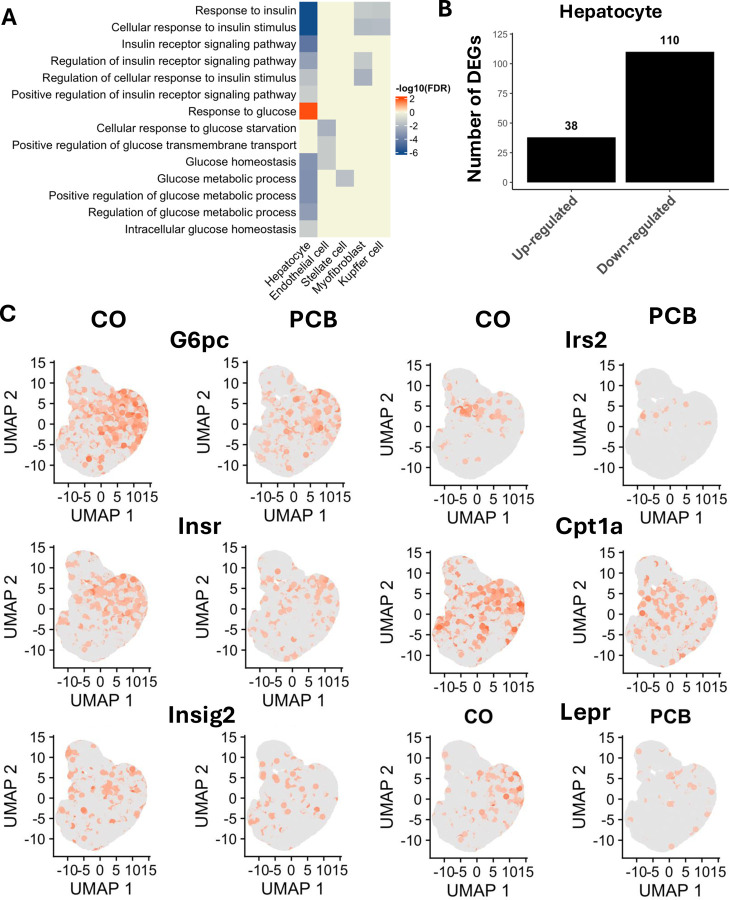
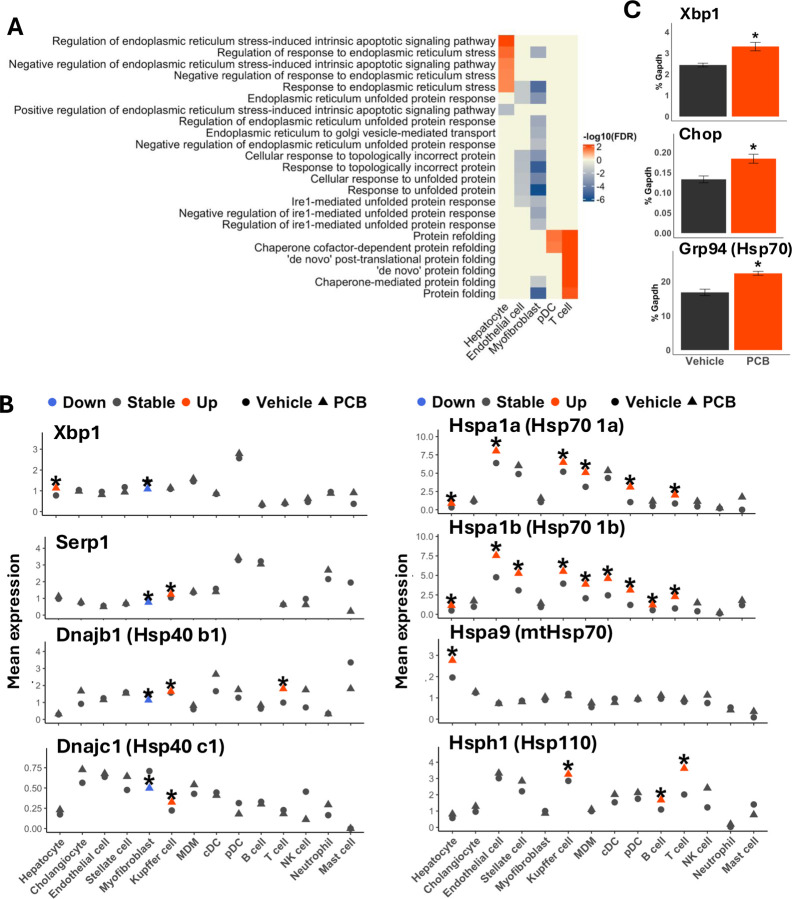
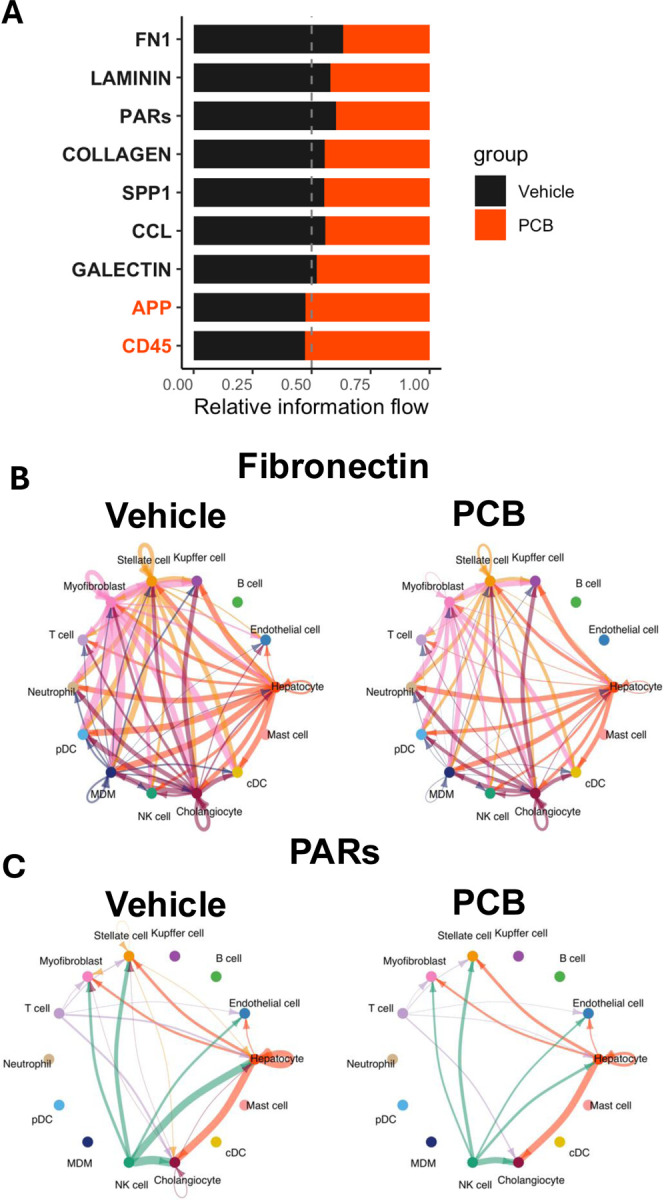
Polychlorinated biphenyls (PCBs) are persistent environmental toxicants that bioaccumulate in the food chain and readily cross the placenta, raising concerns for developmental toxicity. While PCB exposure has been associated with metabolic and neurodevelopmental disorders, its cell type-specific effects on liver development remain poorly understood. This study aimed to investigate how maternal exposure to an environmentally relevant Fox River PCB mixture affects liver development in female offspring at single-cell resolution. We hypothesized that early-life PCB exposure disrupts hepatic metabolic and immune function in a cell type-specific manner. Using single-cell RNA sequencing (scRNA-seq) on liver tissue from postnatal day 28 female mice perinatally exposed to PCBs, we identified major hepatic and immune cell populations and assessed cell-specific transcriptional responses. PCB exposure significantly altered the proportions of endothelial cells and Kupffer cells and reduced neutrophil abundance. Transcriptomic analysis revealed that PCBs dysregulated key pathways in hepatocytes and non-parenchymal cells, including ER stress responses, drug metabolism, and glucose/insulin signaling. Notably, hepatocytes exhibited upregulation of phase-I drug-metabolizing enzymes and uptake transporters, but downregulation of phase-II enzymes and efflux transporters. Kupffer cells and endothelial cells had altered immune and metabolic gene expression, and intercellular communication analysis predicted disrupted fibronectin, collagen, and chemokine signaling due to PCB exposure. RT-qPCR validation confirmed increased hepatic ER stress marker expression. Together these findings demonstrate that perinatal PCB exposure induces persistent, cell type-specific transcriptomic reprogramming in the liver, impairing metabolic and immune functions. This study highlights the utility of single-cell transcriptomics for revealing toxicant effects with cellular precision during critical windows of development.
多氯联苯(PCBs)是持久性环境毒物,可在食物链中生物累积并易于穿过胎盘,引发对发育毒性的担忧。虽然多氯联苯暴露与代谢和神经发育障碍有关,但其对肝脏发育的细胞类型特异性影响仍知之甚少。本研究旨在以单细胞分辨率研究母体暴露于环境相关的福克斯河多氯联苯混合物如何影响雌性后代的肝脏发育。我们假设生命早期多氯联苯暴露以细胞类型特异性方式破坏肝脏代谢和免疫功能。通过对出生后第28天围产期暴露于多氯联苯的雌性小鼠肝脏组织进行单细胞RNA测序(scRNA-seq),我们确定了主要的肝脏和免疫细胞群体,并评估了细胞特异性转录反应。多氯联苯暴露显著改变了内皮细胞和库普弗细胞的比例,并降低了中性粒细胞丰度。转录组分析表明,多氯联苯使肝细胞和非实质细胞中的关键途径失调,包括内质网应激反应、药物代谢和葡萄糖/胰岛素信号传导。值得注意的是,肝细胞中I相药物代谢酶和摄取转运蛋白上调,但II相酶和外排转运蛋白下调。库普弗细胞和内皮细胞的免疫和代谢基因表达发生改变,细胞间通讯分析预测多氯联苯暴露会破坏纤连蛋白、胶原蛋白和趋化因子信号传导。RT-qPCR验证证实肝脏内质网应激标志物表达增加。这些发现共同表明,围产期多氯联苯暴露会在肝脏中诱导持续的、细胞类型特异性的转录组重编程,损害代谢和免疫功能。本研究强调了单细胞转录组学在揭示发育关键窗口期毒物对细胞的精确影响方面的作用。