Department of Hematology and Rheumatology, Kindai University Faculty of Medicine, Osaka-sayama, Osaka 589-8511, Japan.
Int J Mol Sci. 2020 Apr 5;21(7):2519. doi: 10.3390/ijms21072519.
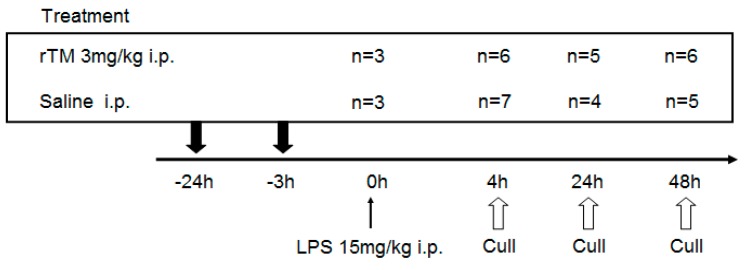
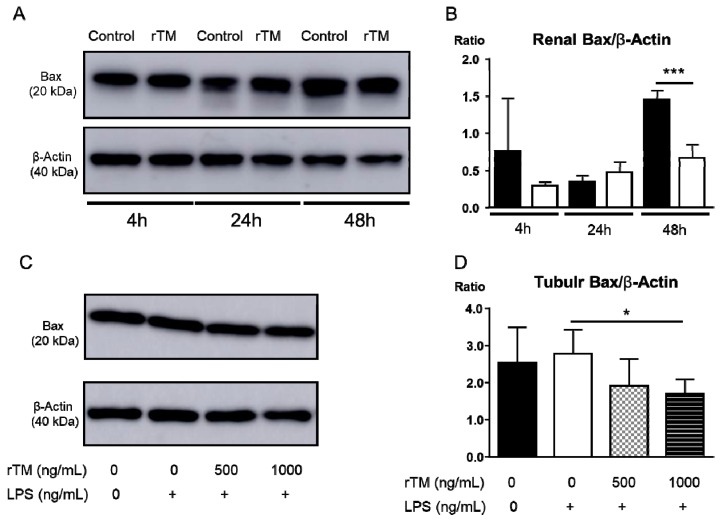
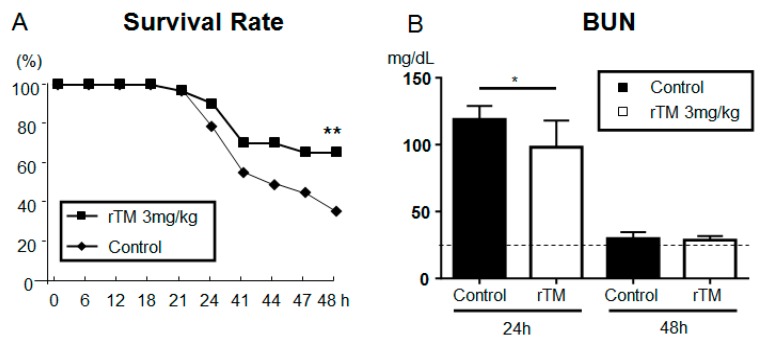
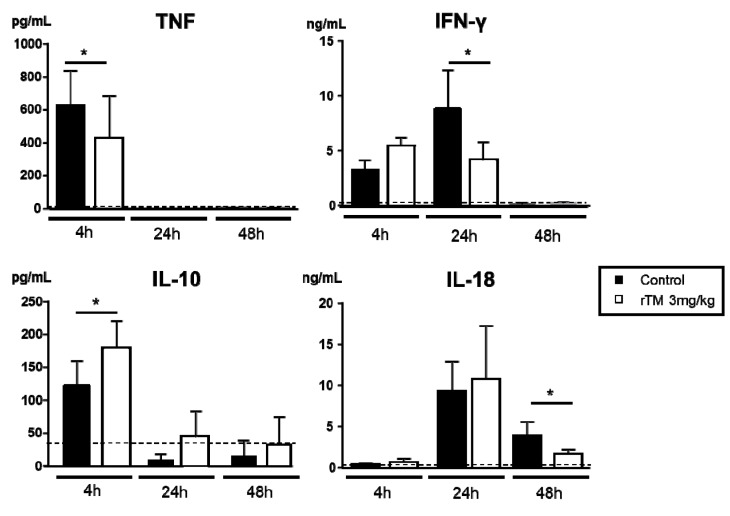
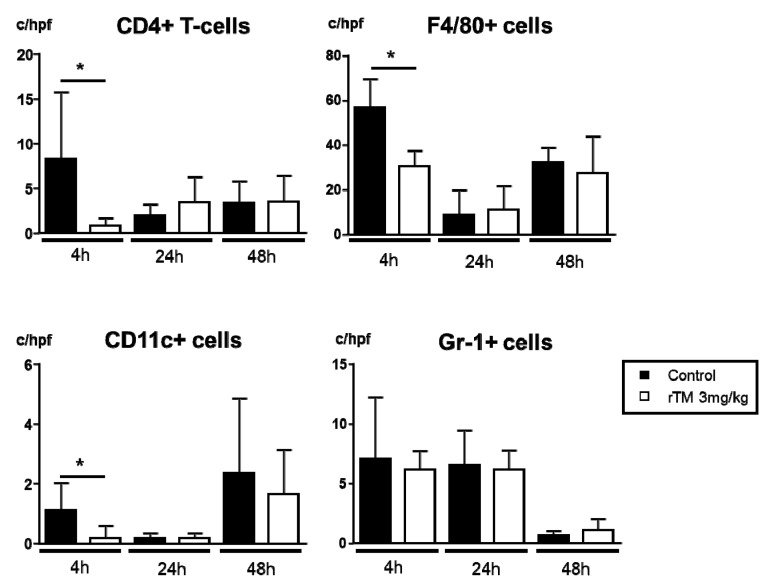
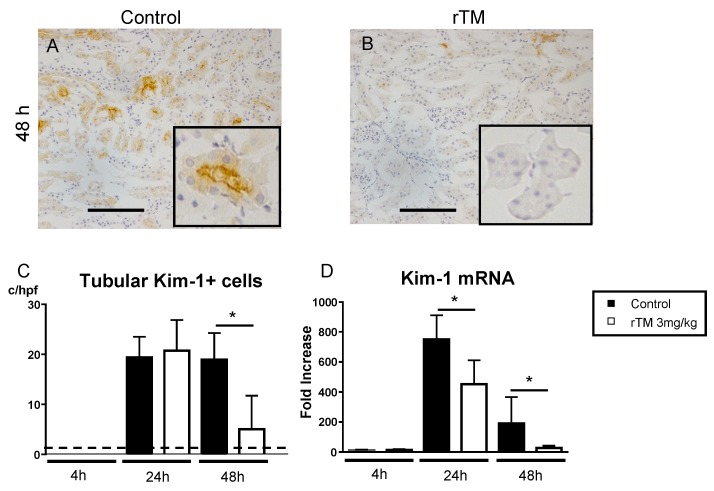
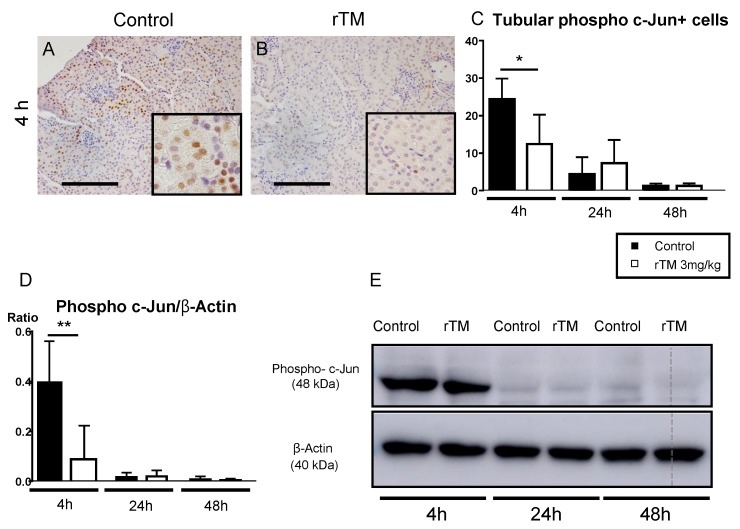
Thrombomodulin (TM) is a single transmembrane, multidomain glycoprotein receptor for thrombin, and is best known for its role as a cofactor in a clinically important natural anticoagulant pathway. In addition to its anticoagulant function, TM has well-defined anti-inflammatory properties. Soluble TM levels increase significantly in the plasma of septic patients; however, the possible involvement of recombinant human soluble TM (rTM) transduction in the pathogenesis of lipopolysaccharide (LPS)-induced nephrotoxicity, including acute kidney injury (AKI), has remained unclear. Mice were injected intraperitoneally with 15 mg/kg LPS. rTM (3 mg/kg) or saline was administered to the animals before the 3 and 24 h LPS-injection. At 24 and 48 h, blood urea nitrogen, the inflammatory cytokines in sera and kidney, and histological findings were assessed. Cell activation and apoptosis signal was assessed by Western blot analysis. In this study using a mouse model of LPS-induced AKI, we found that rTM attenuated renal damage by reducing both cytokine and cell activation and apoptosis signals with the accumulation of CD4+ T-cells, CD11c+ cells, and F4/80+ cells via phospho c-Jun activations and Bax expression. These findings suggest that the mechanism underlying these effects of TM may be mediated by a reduction in inflammatory cytokine production in response to LPS. These molecules might thereby provide a new therapeutic strategy in the context of AKI with sepsis.
血栓调节蛋白(TM)是一种单跨膜、多功能糖蛋白受体,可与凝血酶结合,其作为一种临床重要的天然抗凝途径的辅助因子而广为人知。除了抗凝功能外,TM 还具有明确的抗炎特性。脓毒症患者血浆中可溶性 TM 水平显著升高;然而,重组人可溶性 TM(rTM)转导是否参与脂多糖(LPS)诱导的肾毒性发病机制,包括急性肾损伤(AKI),仍不清楚。将 LPS 以 15mg/kg 剂量经腹腔注射入小鼠体内。在 LPS 注射前 3 小时和 24 小时,rTM(3mg/kg)或生理盐水被注射到动物体内。在 24 小时和 48 小时时,评估血尿素氮、血清和肾脏中的炎症细胞因子,以及组织学发现。通过 Western blot 分析评估细胞激活和凋亡信号。在这项使用 LPS 诱导 AKI 的小鼠模型的研究中,我们发现 rTM 通过减少磷酸化 c-Jun 激活和 Bax 表达,减少细胞因子和细胞激活及凋亡信号,从而减轻肾脏损伤,CD4+T 细胞、CD11c+细胞和 F4/80+细胞的积累。这些发现表明,TM 的这些作用的机制可能是通过减少对 LPS 的炎症细胞因子产生来介导的。这些分子可能为脓毒症相关 AKI 提供新的治疗策略。