Kanno Tatsuo, Venhuizen Peter, Wu Ming-Tsung, Chiou Phebe, Chang Chia-Liang, Kalyna Maria, Matzke Antonius J M, Matzke Marjori
Institute of Plant and Microbial Biology, Academia Sinica, 128, Sec. 2, Academia Rd., Nangang District, Taipei, 11529 Taiwan.
Department of Applied Genetics and Cell Biology, University of Natural Resources and Life Sciences - BOKU, Muthgasse 18, 1190 Vienna, Austria.
G3 (Bethesda). 2020 Jun 1;10(6):1983-1996. doi: 10.1534/g3.119.400998.
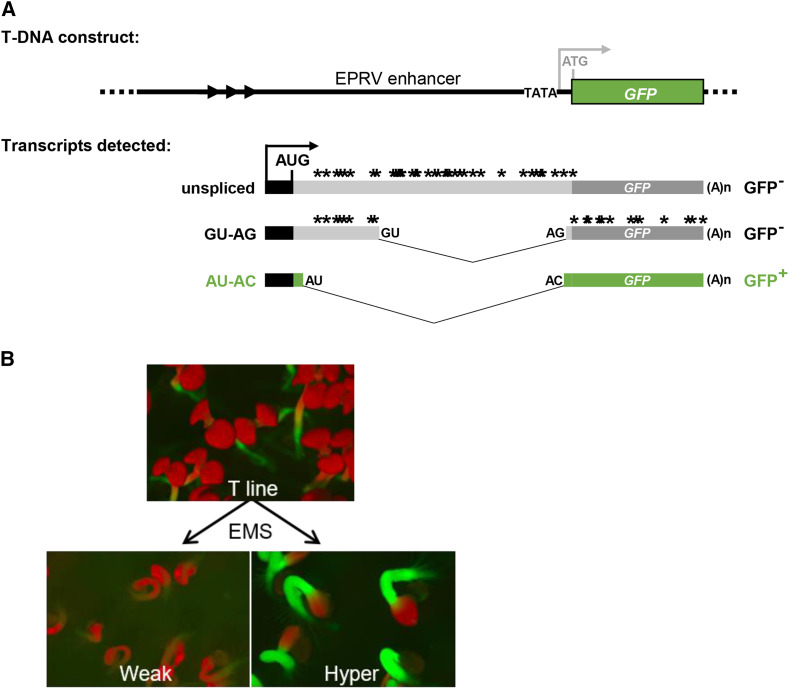
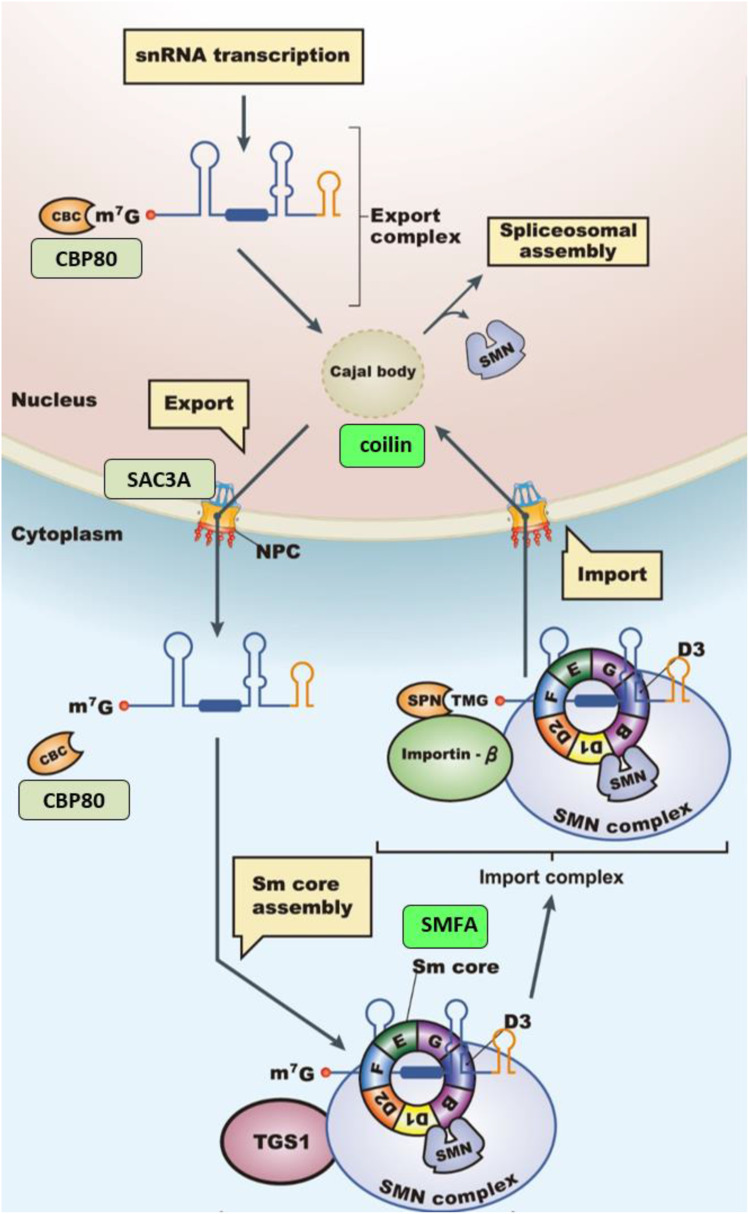
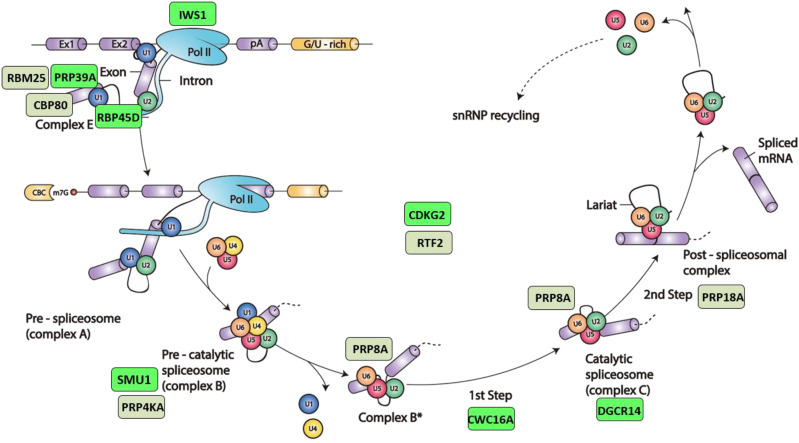
To investigate factors influencing pre-mRNA splicing in plants, we conducted a forward genetic screen using an alternatively-spliced reporter gene in This effort generated a collection of sixteen mutants impaired in various splicing-related proteins, many of which had not been recovered in any prior genetic screen or implicated in splicing in plants. The factors are predicted to act at different steps of the spliceosomal cycle, snRNP biogenesis pathway, transcription, and mRNA transport. We have described eleven of the mutants in recent publications. Here we present the final five mutants, which are defective, respectively, in RNA-BINDING PROTEIN 45D (), DIGEORGE SYNDROME CRITICAL REGION 14 (), CYCLIN-DEPENDENT KINASE G2 (), INTERACTS WITH SPT6 () and CAP BINDING PROTEIN 80 (). We provide RNA-sequencing data and analyses of differential gene expression and alternative splicing patterns for the mutant and for several previously published mutants, including and new alleles of , for which such information was not yet available. Sequencing of small RNAs from the mutant highlighted the necessity of wild-type CBP80 for processing of microRNA (miRNA) precursors into mature miRNAs. Redundancy tests of paralogs encoding several of the splicing factors revealed their functional non-equivalence in the reporter gene system. We discuss the cumulative findings and their implications for the regulation of pre-mRNA splicing efficiency and alternative splicing in plants. The mutant collection provides a unique resource for further studies on a coherent set of splicing factors and their roles in gene expression, alternative splicing and plant development.
为了研究影响植物前体mRNA剪接的因素,我们利用一个可变剪接的报告基因进行了正向遗传学筛选。这项工作产生了一组16个在各种剪接相关蛋白中受损的突变体,其中许多在之前的任何遗传筛选中都未被发现,也未涉及植物剪接。这些因素预计在剪接体循环、snRNP生物合成途径、转录和mRNA运输的不同步骤中发挥作用。我们在最近的出版物中描述了其中11个突变体。在这里,我们介绍最后5个突变体,它们分别在RNA结合蛋白45D()、迪格奥尔格综合征关键区域14()、细胞周期蛋白依赖性激酶G2()、与SPT6相互作用()和帽结合蛋白80()中存在缺陷。我们提供了突变体以及几个先前发表的突变体(包括和的新等位基因,此前尚无此类信息)的RNA测序数据以及差异基因表达和可变剪接模式分析。对突变体小RNA的测序突出了野生型CBP80将微小RNA(miRNA)前体加工成成熟miRNA的必要性。对编码几种剪接因子的旁系同源物的冗余性测试揭示了它们在报告基因系统中的功能不等效性。我们讨论了累积的研究结果及其对植物前体mRNA剪接效率和可变剪接调控的影响。该突变体集合为进一步研究一组连贯的剪接因子及其在基因表达、可变剪接和植物发育中的作用提供了独特资源。