López-Dávila Alfredo Jesus, Chalovich Joseph M, Zittrich Stefan, Piep Birgit, Matinmehr Faramarz, Málnási-Csizmadia Andras, Rauscher Anna Á, Kraft Theresia, Brenner Bernhard, Stehle Robert
Institute of Molecular and Cell Physiology, Hannover Medical School, Hanover, Germany.
Department of Biochemistry and Molecular Biology, Brody School of Medicine, East Carolina University, Greenville, NC, United States.
Front Physiol. 2020 Mar 24;11:144. doi: 10.3389/fphys.2020.00144. eCollection 2020.
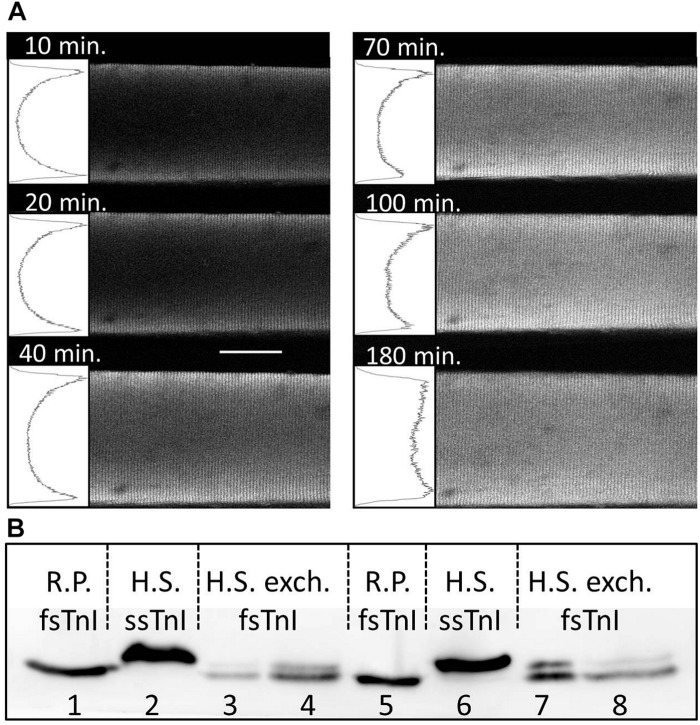
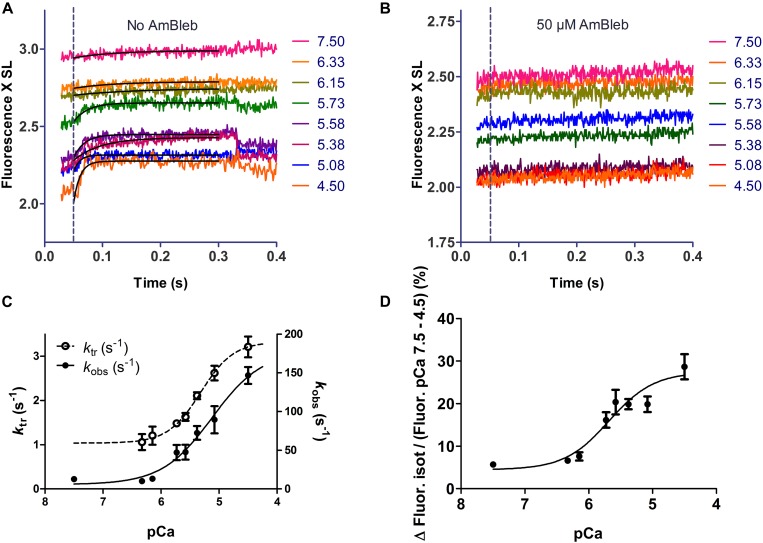
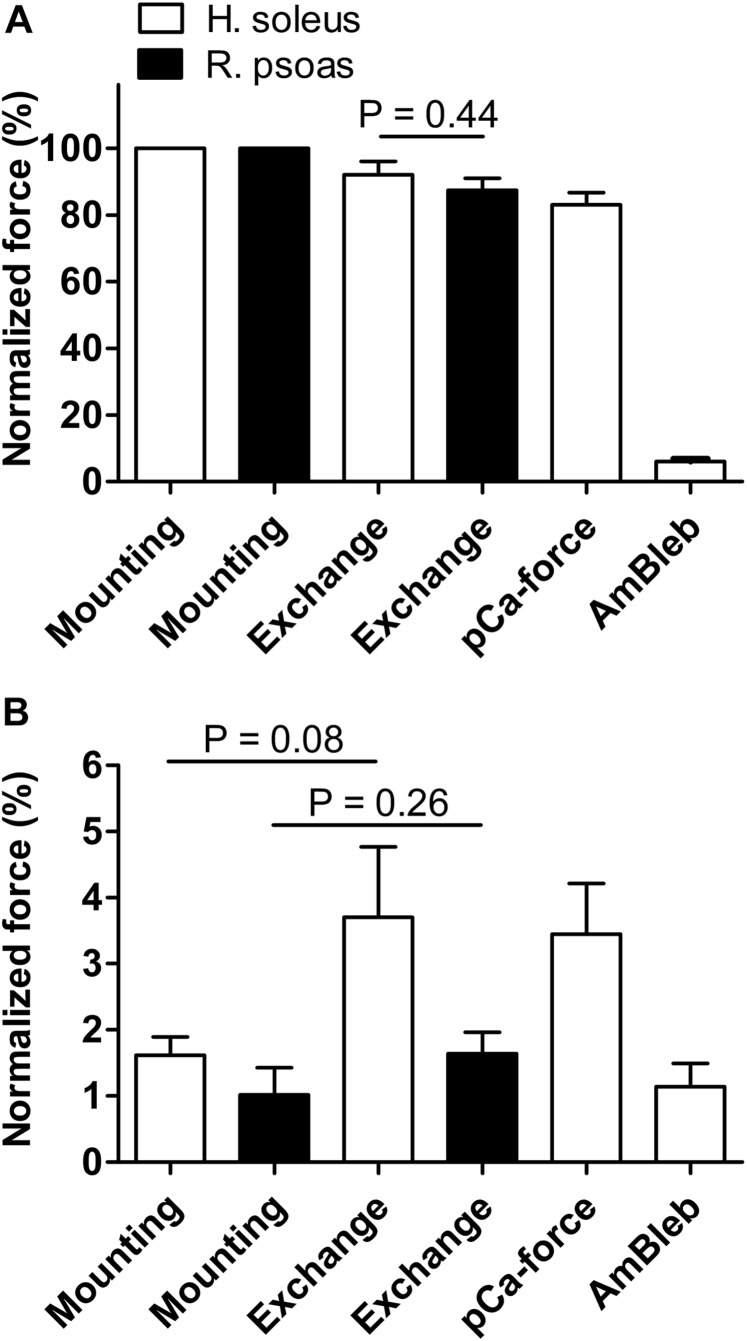
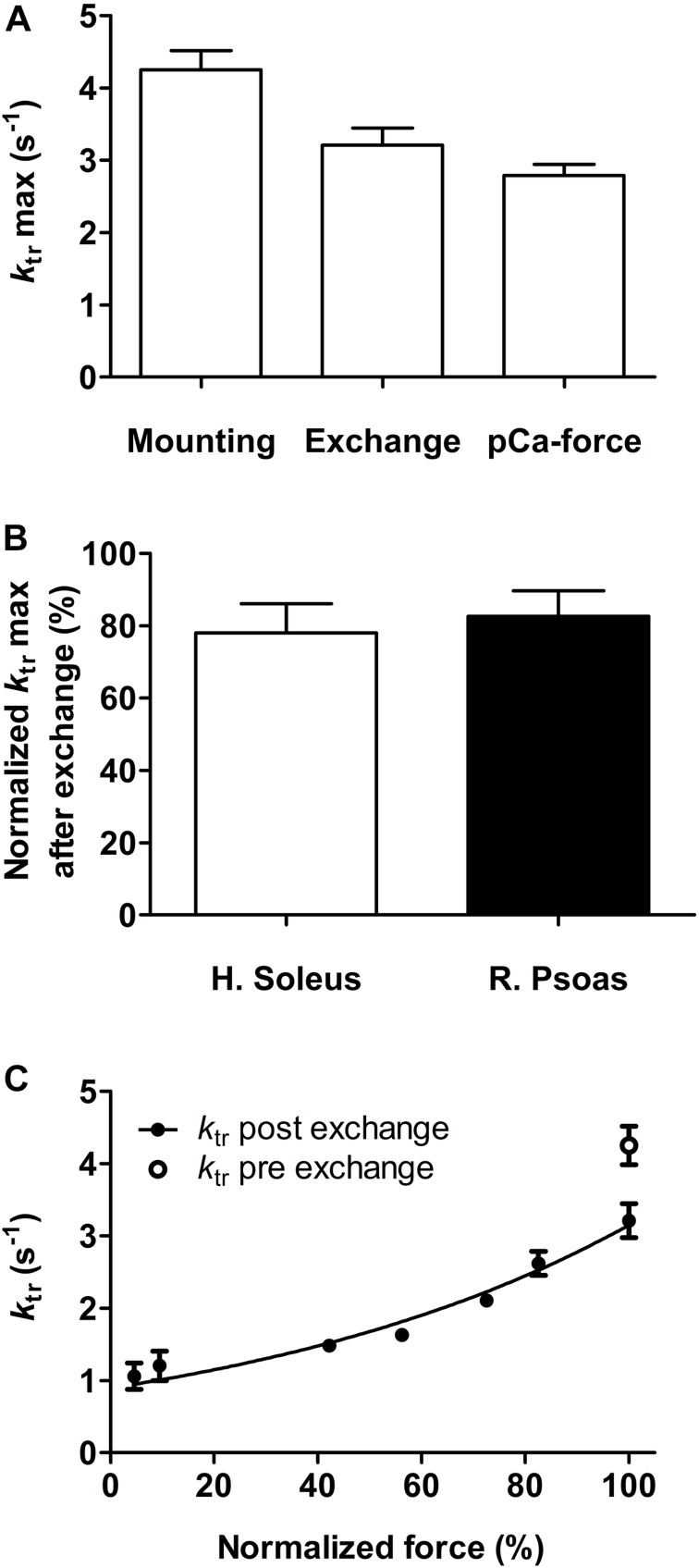
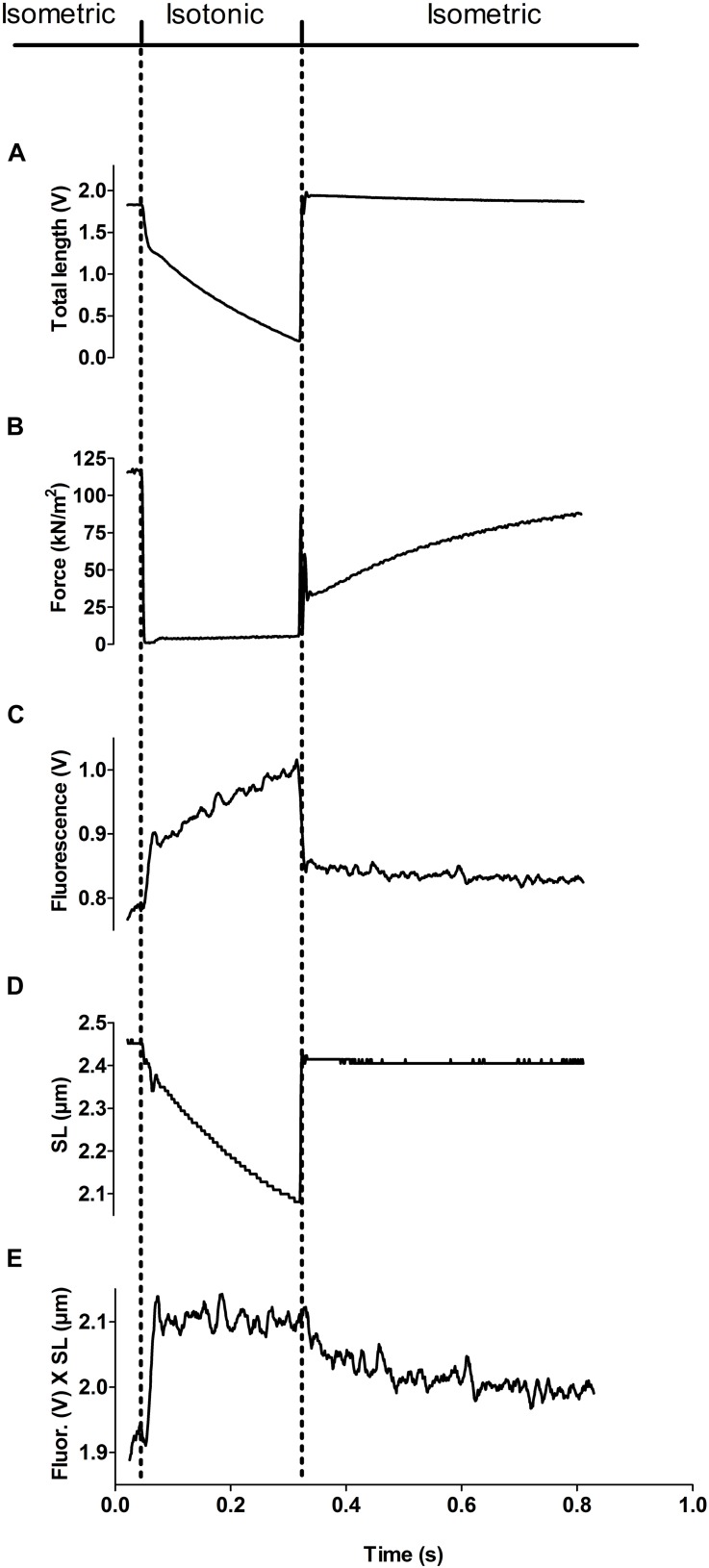
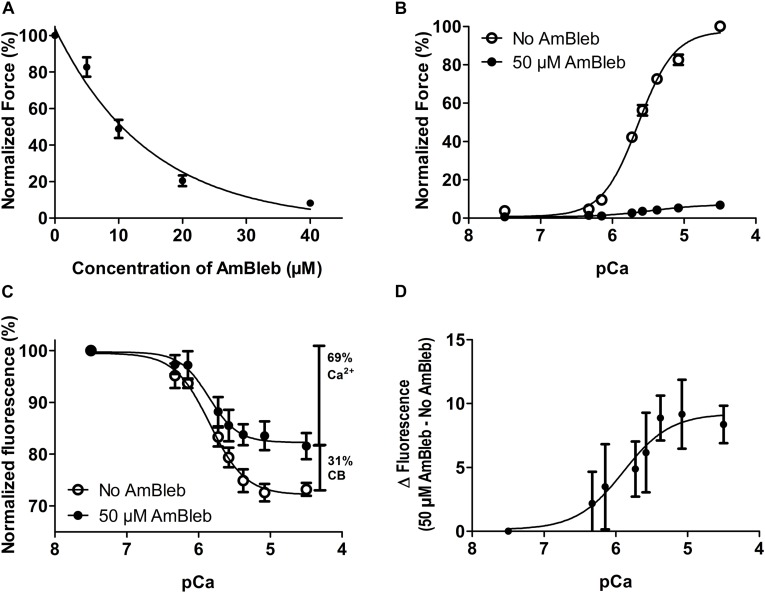
It has been shown that not only calcium but also strong binding myosin heads contribute to thin filament activation in isometrically contracting animal fast-twitch and cardiac muscle preparations. This behavior has not been studied in human muscle fibers or animal slow-twitch fibers. Human slow-twitch fibers are interesting since they contain the same myosin heavy chain isoform as the human heart. To explore myosin-induced activation of the thin filament in isometrically contracting human slow-twitch fibers, the endogenous troponin complex was exchanged for a well-characterized fast-twitch skeletal troponin complex labeled with the fluorescent dye N-((2-(Iodoacetoxy)ethyl)-N-methyl)amino-7-nitrobenz-2-oxa-1,3-diazole (fsTn-IANBD). The exchange was ≈70% complete ( = 8). The relative contributions of calcium and strong binding cross-bridges to thin filament activation were dissected by increasing the concentration of calcium from relaxing (pCa 7.5) to saturating levels (pCa 4.5) before and after incubating the exchanged fibers in the myosin inhibitor para-aminoblebbistatin (AmBleb). At pCa 4.5, the relative contributions of calcium and strong binding cross-bridges to thin filament activation were ≈69 and ≈31%, respectively. Additionally, switching from isometric to isotonic contraction at pCa 4.5 revealed that strong binding cross-bridges contributed ≈29% to thin filament activation (i.e., virtually the same magnitude obtained with AmBleb). Thus, we showed through two different approaches that lowering the number of strong binding cross-bridges, at saturating calcium, significantly reduced the activation of the thin filament in human slow-twitch fibers. The contribution of myosin to activation resembled that which was previously reported in rat cardiac and rabbit fast-twitch muscle preparations. This method could be applied to slow-twitch human fibers obtained from the soleus muscle of cardiomyopathy patients. Such studies could lead to a better understanding of the effect of point mutations of the cardiac myosin head on the regulation of muscle contraction and could lead to better management by pharmacological approaches.
研究表明,在等长收缩的动物快肌和心肌标本中,不仅钙离子,而且强结合肌球蛋白头部也有助于细肌丝激活。这种行为尚未在人类肌肉纤维或动物慢肌纤维中进行研究。人类慢肌纤维很有趣,因为它们含有与人类心脏相同的肌球蛋白重链同工型。为了探究等长收缩的人类慢肌纤维中肌球蛋白诱导的细肌丝激活,将内源性肌钙蛋白复合物替换为用荧光染料N-((2-(碘乙酰氧基)乙基)-N-甲基)氨基-7-硝基苯并-2-恶唑-1,3-二唑(fsTn-IANBD)标记的特征明确的快肌骨骼肌肌钙蛋白复合物。交换完成了约70%(n = 8)。在将交换后的纤维在肌球蛋白抑制剂对氨基blebbistatin(AmBleb)中孵育之前和之后,通过将钙离子浓度从舒张状态(pCa 7.5)增加到饱和水平(pCa 4.5),剖析了钙离子和强结合横桥对细肌丝激活的相对贡献。在pCa 4.5时,钙离子和强结合横桥对细肌丝激活的相对贡献分别约为69%和约31%。此外,在pCa 4.5时从等长收缩切换到等张收缩表明,强结合横桥对细肌丝激活的贡献约为29%(即与AmBleb获得的幅度几乎相同)。因此,我们通过两种不同的方法表明,在钙离子饱和时减少强结合横桥的数量,会显著降低人类慢肌纤维中细肌丝的激活。肌球蛋白对激活的贡献类似于先前在大鼠心脏和兔快肌标本中报道的情况。这种方法可应用于从心肌病患者比目鱼肌获得的慢肌人类纤维。此类研究可能会更好地理解心肌肌球蛋白头部点突变对肌肉收缩调节的影响,并可能通过药理学方法实现更好的治疗管理。