Diallo Idrissa, Benmoussa Abderrahim, Laugier Jonathan, Osman Abdimajid, Hitzler Walter E, Provost Patrick
Research Center of the CHU de Québec, Quebec, QC, Canada.
Department of Microbiology-Infectious Disease and Immunity, Faculty of Medicine, Université Laval, Quebec, QC, Canada.
Front Cardiovasc Med. 2020 Mar 19;7:31. doi: 10.3389/fcvm.2020.00031. eCollection 2020.
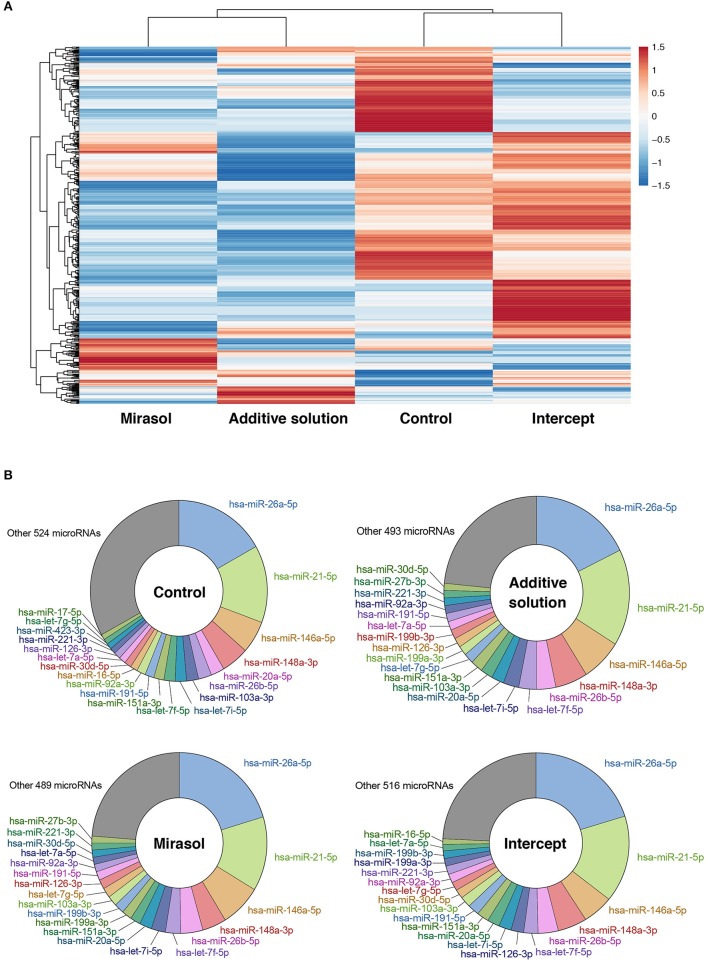
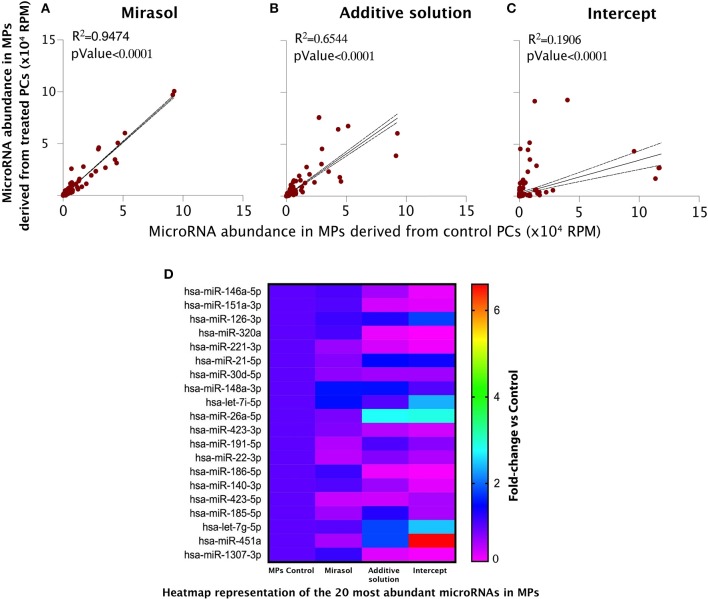
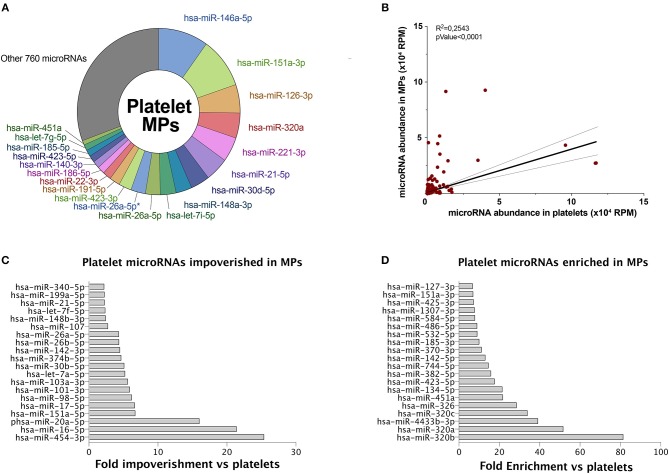
Despite improvements in donor screening and increasing efforts to avoid contamination and the spread of pathogens in clinical platelet concentrates (PCs), the risks of transfusion-transmitted infections remain important. Relying on an ultraviolet photo activation system, pathogen reduction technologies (PRTs), such as Intercept and Mirasol, utilize amotosalen, and riboflavin (vitamin B2), respectively, to mediate inactivation of pathogen nucleic acids. Although they are expected to increase the safety and prolong the shelf life of clinical PCs, these PRTs might affect the quality and function of platelets, as recently reported. Upon activation, platelets release microparticles (MPs), which are involved in intercellular communications and regulation of gene expression, thereby mediating critical cellular functions. Here, we have used small RNA sequencing (RNA-Seq) to document the effect of PRT treatment on the microRNA profiles of platelets and derived MPs. PRT treatment did not affect the microRNA profile of platelets. However, we observed a specific loading of certain microRNAs into platelet MPs, which was impaired by treatment with Intercept or its Additive solution (SSP+). Whereas, Intercept had an impact on the microRNA profile of platelet-derived MPs, Mirasol did not impact the microRNA profile of platelets and derived MPs, compared to non-treated control. Considering that platelet MPs are able to transfer their microRNA content to recipient cells, and that this content may exert biological activities, those findings suggest that PRT treatment of clinical PCs may modify the bioactivity of the platelets and MPs to be transfused and argue for further investigations into PRT-induced changes in clinical PC content and function.
尽管在献血者筛查方面有所改进,并且为避免临床血小板浓缩物(PCs)中病原体的污染和传播付出了更多努力,但输血传播感染的风险仍然很大。病原体灭活技术(PRTs),如Intercept和Mirasol,依靠紫外线光激活系统,分别利用氨甲蝶呤和核黄素(维生素B2)来介导病原体核酸的灭活。尽管预计它们会提高临床PCs的安全性并延长其保质期,但最近的报道表明,这些PRTs可能会影响血小板的质量和功能。激活后,血小板会释放微粒(MPs),这些微粒参与细胞间通讯和基因表达调控,从而介导关键的细胞功能。在这里,我们使用小RNA测序(RNA-Seq)来记录PRT处理对血小板和衍生MPs的微小RNA谱的影响。PRT处理不影响血小板的微小RNA谱。然而,我们观察到某些微小RNA特异性加载到血小板MPs中,而Intercept或其添加剂溶液(SSP+)处理会损害这种加载。与未处理的对照相比,虽然Intercept对血小板衍生MPs的微小RNA谱有影响,但Mirasol对血小板和衍生MPs的微小RNA谱没有影响。考虑到血小板MPs能够将其微小RNA含量转移到受体细胞中,并且这种含量可能发挥生物学活性,这些发现表明临床PCs的PRT处理可能会改变待输血血小板和MPs的生物活性,并主张进一步研究PRT引起的临床PCs含量和功能变化。