School of Biological and Chemical Sciences, Queen Mary University of London, London E1 4NS, UK.
Department of Zoology, University of Cambridge, Cambridge CB2 3EJ, United Kingdom.
Mol Biol Cell. 2020 Jun 1;31(12):1246-1258. doi: 10.1091/mbc.E19-08-0440. Epub 2020 Apr 8.
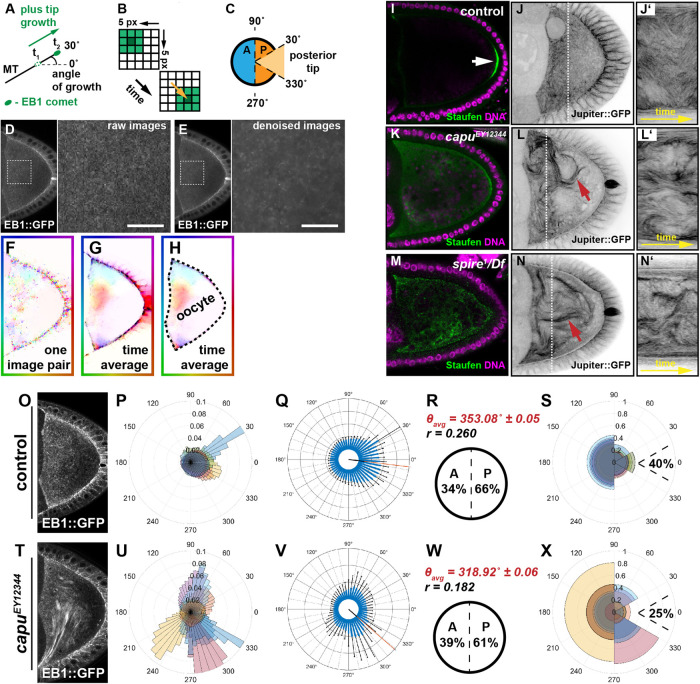
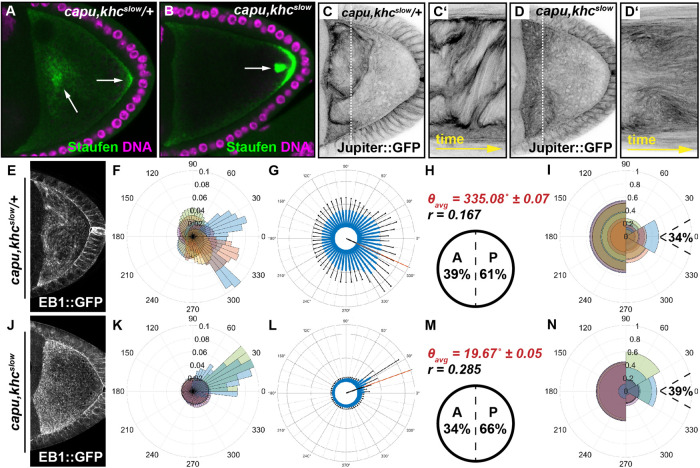
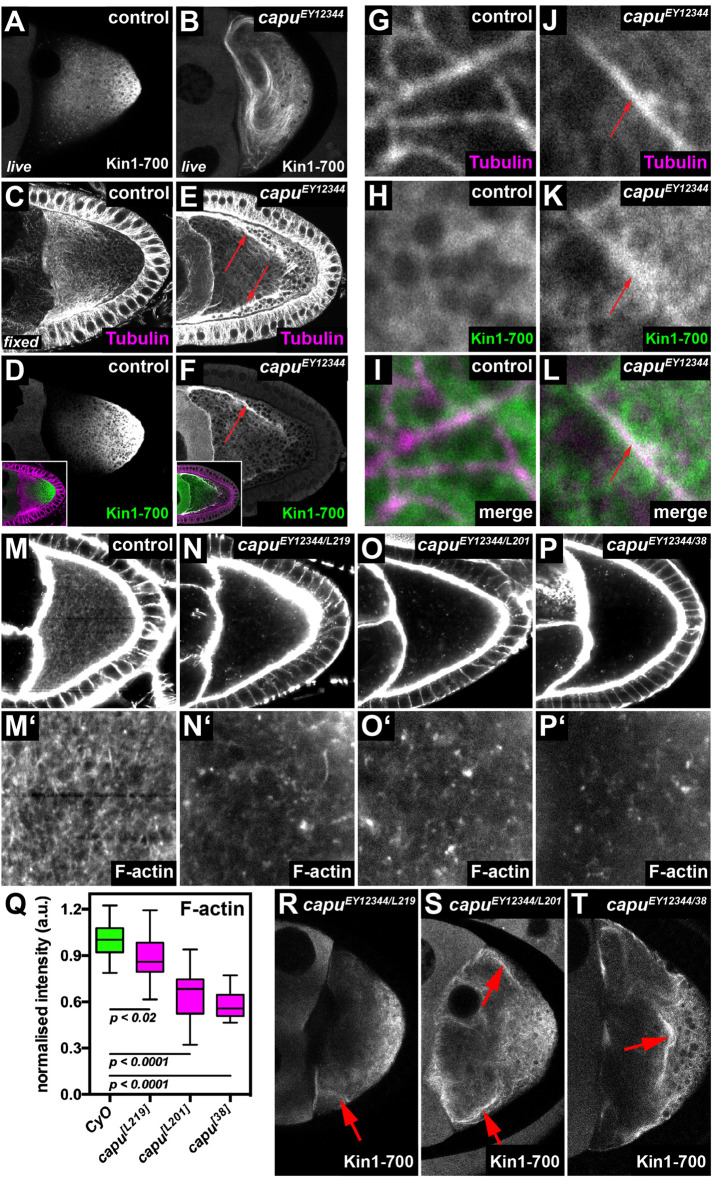
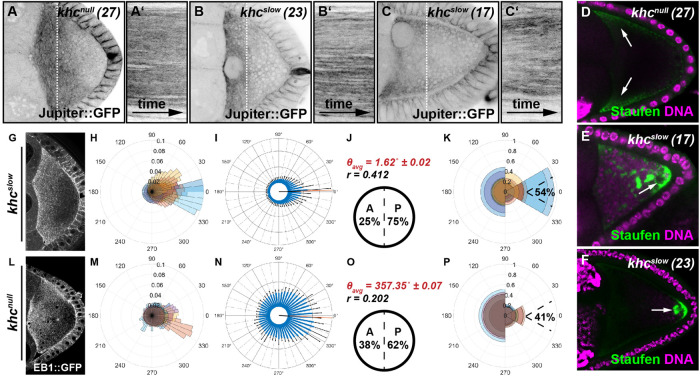
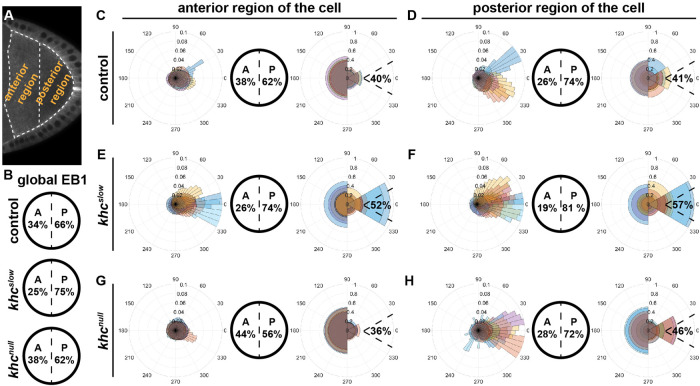
The orientation of microtubule (MT) networks is exploited by motors to deliver cargoes to specific intracellular destinations and is thus essential for cell polarity and function. Reconstituted in vitro systems have largely contributed to understanding the molecular framework regulating the behavior of MT filaments. In cells, however, MTs are exposed to various biomechanical forces that might impact on their orientation, but little is known about it. Oocytes, which display forceful cytoplasmic streaming, are excellent model systems to study the impact of motion forces on cytoskeletons in vivo. Here we implement variational optical flow analysis as a new approach to analyze the polarity of MTs in the oocyte, a cell that displays distinct Kinesin-dependent streaming. After validating the method as robust for describing MT orientation from confocal movies, we find that increasing the speed of flows results in aberrant plus end growth direction. Furthermore, we find that in oocytes where Kinesin is unable to induce cytoplasmic streaming, the growth direction of MT plus ends is also altered. These findings lead us to propose that cytoplasmic streaming - and thus motion by advection - contributes to the correct orientation of MTs in vivo. Finally, we propose a possible mechanism for a specialized cytoplasmic actin network (the actin mesh) to act as a regulator of flow speeds to counteract the recruitment of Kinesin to MTs.
微管(MT)网络的取向被马达利用来将货物运送到特定的细胞内目的地,因此对于细胞极性和功能至关重要。在体外重建的系统在很大程度上有助于理解调节 MT 纤维行为的分子框架。然而,在细胞中,MT 暴露于各种生物力学力下,这些力可能会影响它们的取向,但对此知之甚少。卵母细胞具有强大的细胞质流动,是研究运动力对细胞骨架体内影响的优秀模型系统。在这里,我们实施了变分光流分析作为一种新方法来分析卵母细胞中 MT 的极性,卵母细胞显示出明显的依赖于驱动蛋白的流动。在验证了该方法在从共聚焦电影中描述 MT 取向方面的稳健性之后,我们发现增加流动速度会导致异常的正极生长方向。此外,我们发现,在无法诱导细胞质流动的卵母细胞中,MT 正极的生长方向也发生了改变。这些发现使我们提出细胞质流动 - 以及因此通过平流产生的运动 - 有助于 MT 在体内的正确取向。最后,我们提出了一种特殊的细胞质肌动蛋白网络(肌动蛋白网格)作为调节流动速度的机制,以抵消 Kinesin 向 MT 的募集。