From the Departments of Neurology (L.E.L., B.A.L., C.P., D.D., B.H., V.P.K., G.P., K.R., D.A.H., D.P.); Immunobiology (L.E.L., B.A.L., B.H., K.R., D.A.H.); and Pathology (A.H.), Yale School of Medicine, New Haven, CT.
Neurol Neuroimmunol Neuroinflamm. 2020 Apr 8;7(3). doi: 10.1212/NXI.0000000000000712. Print 2020 May 4.
To identify coinhibitory immune pathways important in the brain, we hypothesized that comparison of T cells in lesions from patients with MS with tumor-infiltrating T cells (TILs) from patients with glioblastoma multiforme may reveal novel targets for immunotherapy.
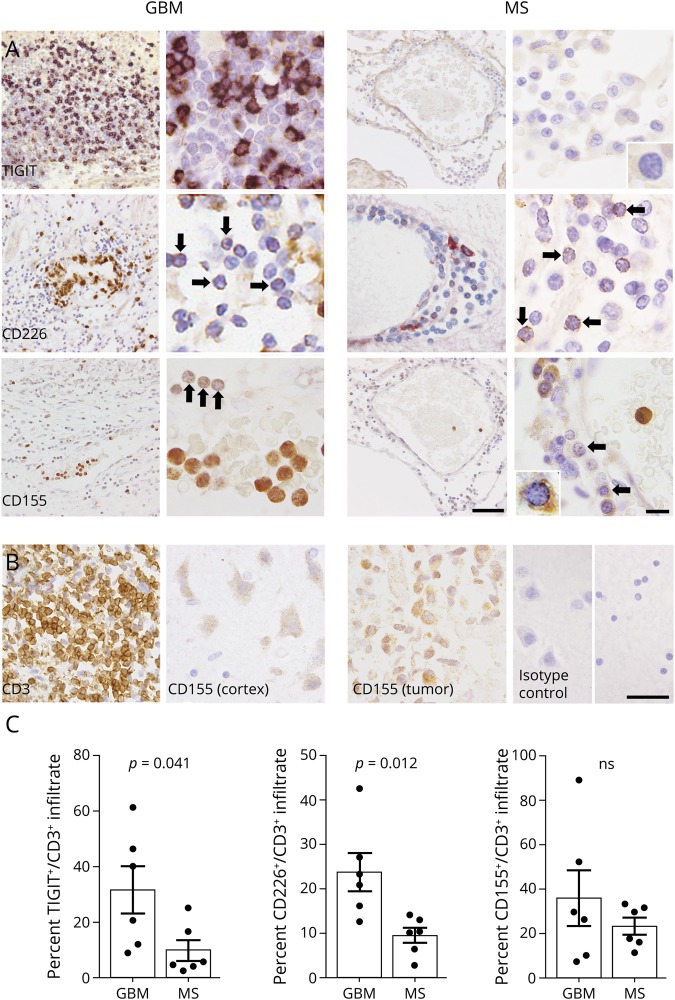
We collected fresh surgical resections and matched blood from patients with glioblastoma, blood and unmatched postmortem CNS tissue from patients with MS, and blood from healthy donors. The expression of TIGIT, CD226, and their shared ligand CD155 as well as PD-1 and PDL1 was assessed by both immunohistochemistry and flow cytometry.
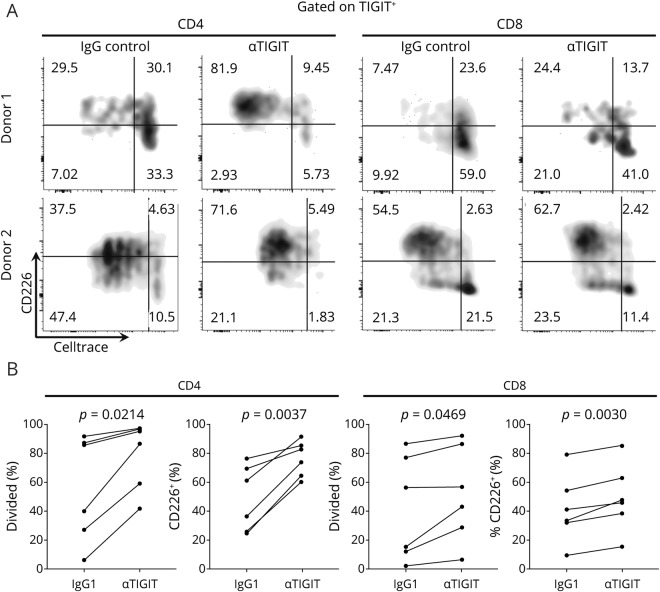
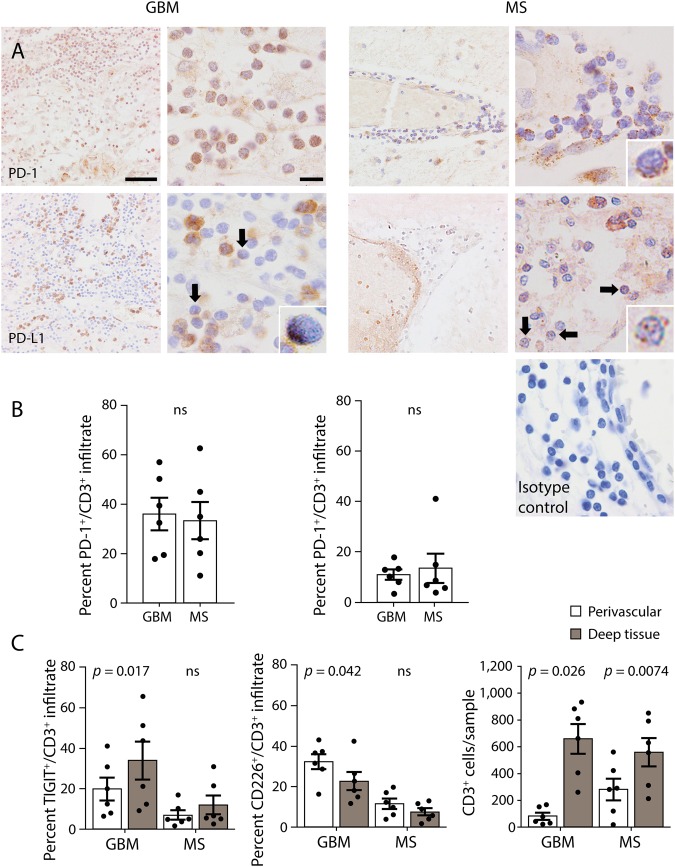
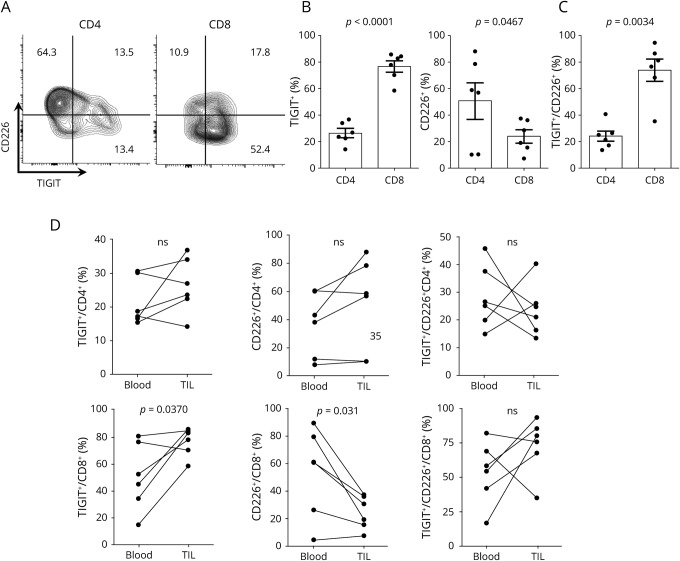
We found that TIGIT was highly expressed on glioblastoma-infiltrating T cells, but was near-absent from MS lesions. Conversely, lymphocytic expression of PD-1/PD-L1 was comparable between the 2 diseases. Moreover, TIGIT was significantly upregulated in circulating lymphocytes of patients with glioblastoma compared with healthy controls, suggesting recirculation of TILs. Expression of CD226 was also increased in glioblastoma, but this costimulatory receptor was expressed alongside TIGIT in the majority of tumor-infiltrating T cells, suggesting functional counteraction.
The opposite patterns of TIGIT expression in the CNS between MS and glioblastoma reflects the divergent features of the immune response in these 2 CNS diseases. These data raise the possibility that anti-TIGIT therapy may be beneficial for patients with glioblastoma.
为了确定大脑中重要的共抑制免疫途径,我们假设比较多发性硬化症患者病灶中的 T 细胞与多形性胶质母细胞瘤患者肿瘤浸润 T 细胞(TIL),可能会发现新的免疫治疗靶点。
我们收集了来自胶质母细胞瘤患者的新鲜手术切除物和匹配的血液、来自多发性硬化症患者的未经匹配的死后中枢神经系统组织和血液以及健康供体的血液。通过免疫组织化学和流式细胞术评估了 TIGIT、CD226 及其共同配体 CD155 以及 PD-1 和 PDL1 的表达。
我们发现 TIGIT 在胶质母细胞瘤浸润的 T 细胞中高度表达,但在多发性硬化症病变中几乎不存在。相反,两种疾病的淋巴细胞 PD-1/PD-L1 表达相当。此外,与健康对照组相比,胶质母细胞瘤患者的循环淋巴细胞中 TIGIT 显著上调,提示 TIL 的再循环。CD226 的表达也在胶质母细胞瘤中增加,但这种共刺激受体在大多数肿瘤浸润 T 细胞中与 TIGIT 一起表达,表明存在功能拮抗。
多发性硬化症和胶质母细胞瘤中枢神经系统中 TIGIT 表达的相反模式反映了这两种中枢神经系统疾病中免疫反应的不同特征。这些数据提示抗 TIGIT 治疗可能对胶质母细胞瘤患者有益。