Hybridoma Laboratory, National Institute of Immunology, New Delhi, India.
Front Immunol. 2020 Mar 25;11:514. doi: 10.3389/fimmu.2020.00514. eCollection 2020.
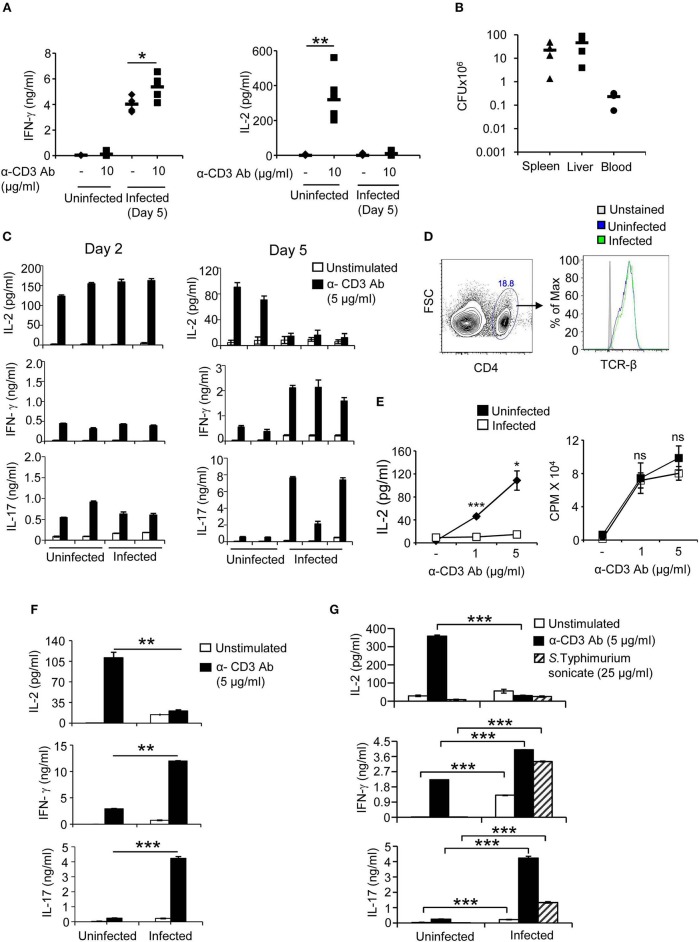
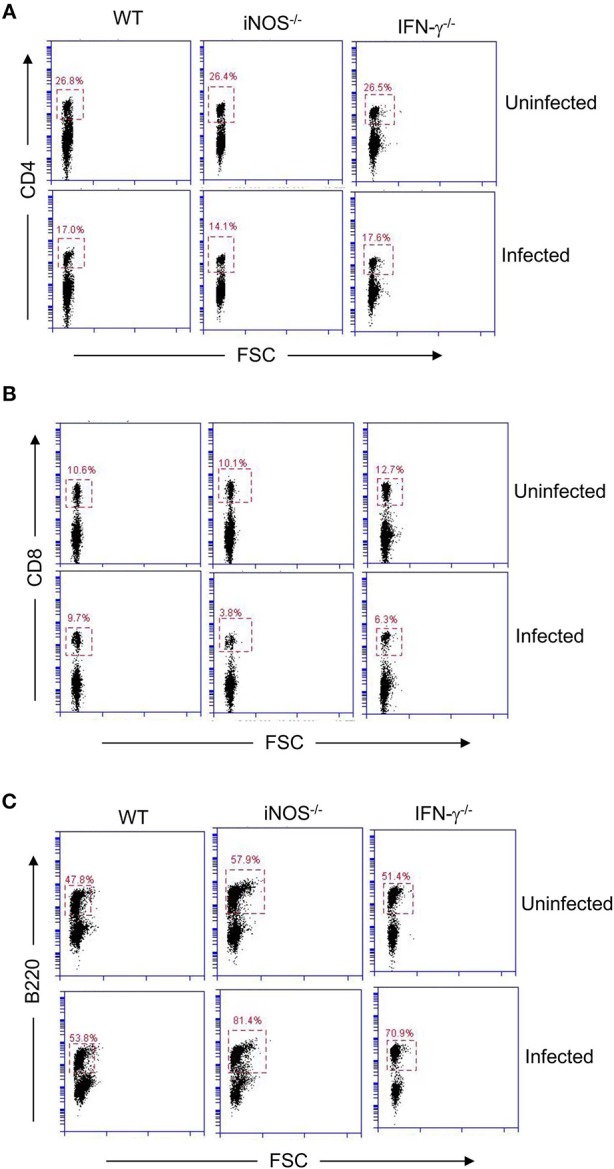
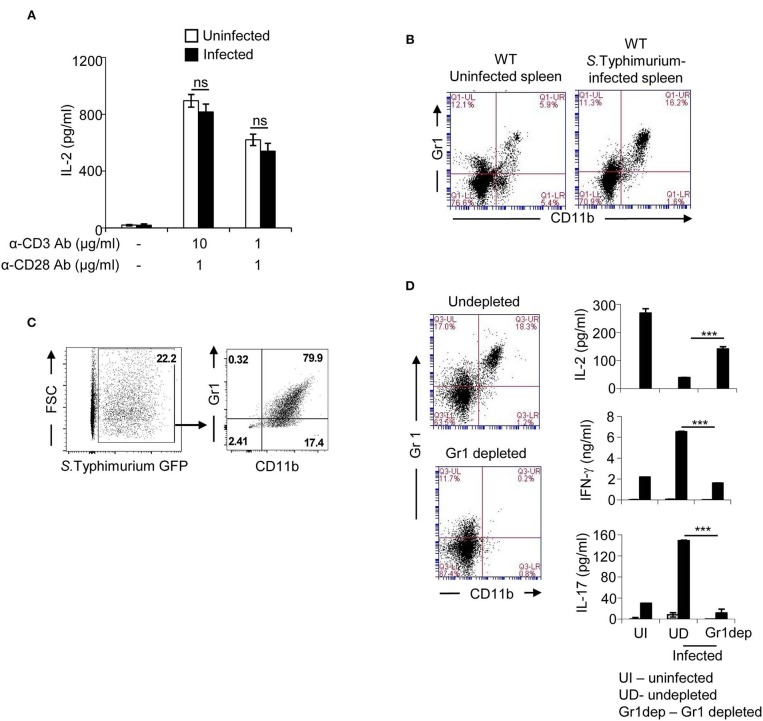
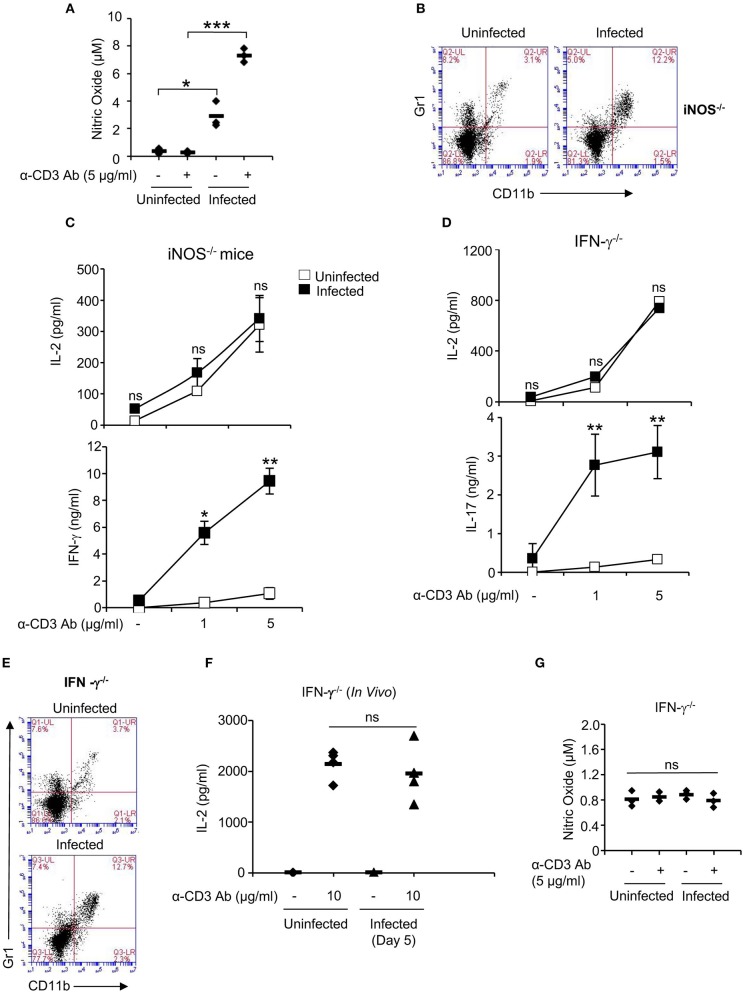
Pathogenic serovars are a major cause of enteric illness in humans and animals, and produce clinical manifestations ranging from localized gastroenteritis to systemic disease. T cells are a critical component of immunity against this intracellular pathogen. The mechanisms by which modulates T-cell-mediated immune responses in order to establish systemic infection are not completely understood. We show that infection of mice with serovar Typhimurium (. Typhimurium) suppresses IL-2 and increases IFN-γ and IL-17 production from T cells activated or through the T cell receptor. Infection with . Typhimurium brings about recruitment of CD11bGr1 suppressor cells to the spleen. depletion of these cells restores the ability of activated T cells to produce IL-2 and brings secretion of IFN-γ and IL-17 from these cells back to basal levels. The reduction in IL-2 secretion is not seen in IFN-γ and iNOS mice infected with . Our findings demonstrate that sustained innate activated IFN-γ production during progression of infection with reduces IL-2-secreting capability of T cells through an iNOS-mediated signaling pathway that can adversely affect long term immunity against this pathogen.
病原血清型是人类和动物肠道疾病的主要原因,可引起从局部胃肠炎到全身性疾病等不同临床症状。T 细胞是针对这种细胞内病原体的免疫的关键组成部分。尚不完全清楚 如何调节 T 细胞介导的免疫应答,从而建立全身性感染。我们发现,感染鼠伤寒沙门氏菌血清型 Typhimurium(. Typhimurium)可抑制 IL-2 的产生,并增加通过 T 细胞受体激活的 T 细胞产生 IFN-γ和 IL-17 的能力。. Typhimurium 感染可导致 CD11bGr1 抑制性细胞募集到脾脏。耗尽这些细胞可恢复激活的 T 细胞产生 IL-2 的能力,并使这些细胞分泌 IFN-γ和 IL-17 恢复到基础水平。在感染. Typhimurium 的 IFN-γ 和 iNOS 小鼠中未观察到 IL-2 分泌减少。我们的研究结果表明,在感染过程中持续存在固有激活的 IFN-γ产生可通过 iNOS 介导的信号通路降低 T 细胞产生 IL-2 的能力,从而对针对这种病原体的长期免疫产生不利影响。