• 文献检索
  • 文档翻译
  • 深度研究
  • 学术资讯
  • Suppr Zotero 插件Zotero 插件
  • 邀请有礼
  • 套餐&价格
  • 历史记录
应用&插件
Suppr Zotero 插件Zotero 插件浏览器插件Mac 客户端Windows 客户端微信小程序
定价
高级版会员购买积分包购买API积分包
服务
文献检索文档翻译深度研究API 文档MCP 服务
关于我们
关于 Suppr公司介绍联系我们用户协议隐私条款
关注我们

Suppr 超能文献

核心技术专利:CN118964589B侵权必究
粤ICP备2023148730 号-1Suppr @ 2026

文献检索

告别复杂PubMed语法,用中文像聊天一样搜索,搜遍4000万医学文献。AI智能推荐,让科研检索更轻松。

立即免费搜索

文件翻译

保留排版,准确专业,支持PDF/Word/PPT等文件格式,支持 12+语言互译。

免费翻译文档

深度研究

AI帮你快速写综述,25分钟生成高质量综述,智能提取关键信息,辅助科研写作。

立即免费体验

与爱管闲事的邻居一起成长:学习时间和词汇知识对儿童书面文字学习的影响

Growing up with interfering neighbours: the influence of time of learning and vocabulary knowledge on written word learning in children.

作者信息

Walker S, Gaskell M G, Knowland V C P, Fletcher F E, Cairney S A, Henderson L M

机构信息

Department of Psychology, University of York, York YO10 5DD, UK.

出版信息

R Soc Open Sci. 2020 Mar 25;7(3):191597. doi: 10.1098/rsos.191597. eCollection 2020 Mar.

DOI:10.1098/rsos.191597
PMID:32269794
原文链接:https://pmc.ncbi.nlm.nih.gov/articles/PMC7137956/
Abstract

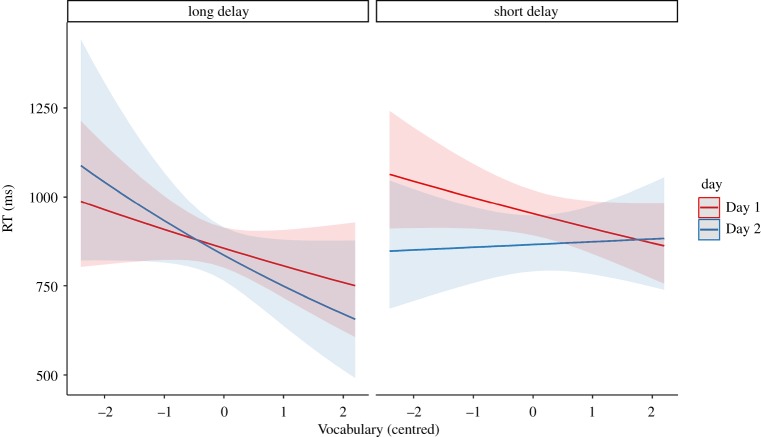
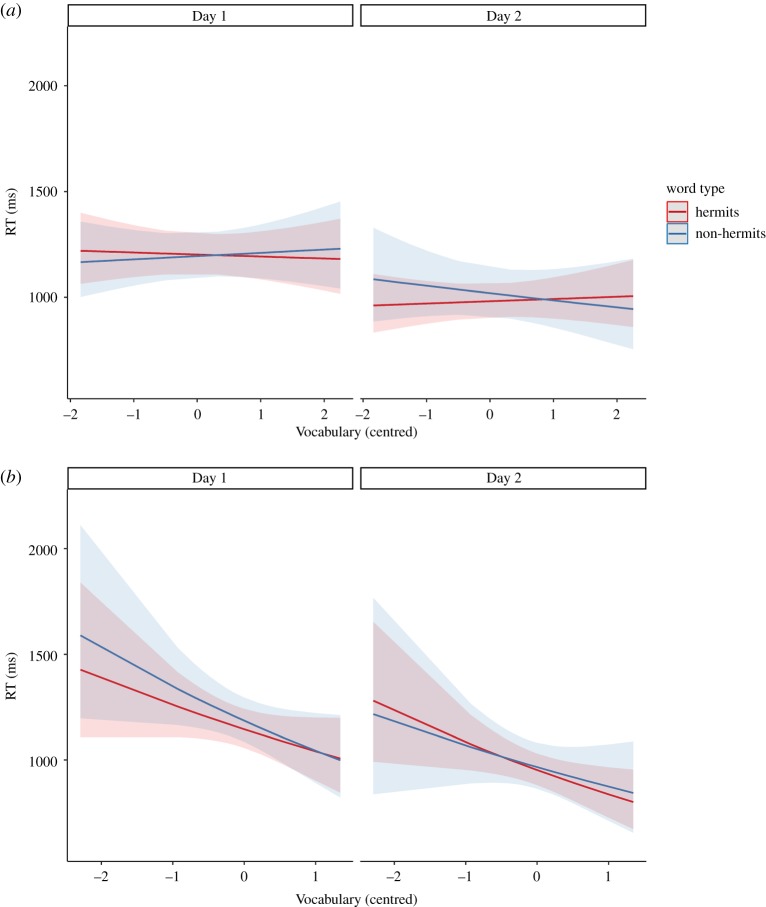
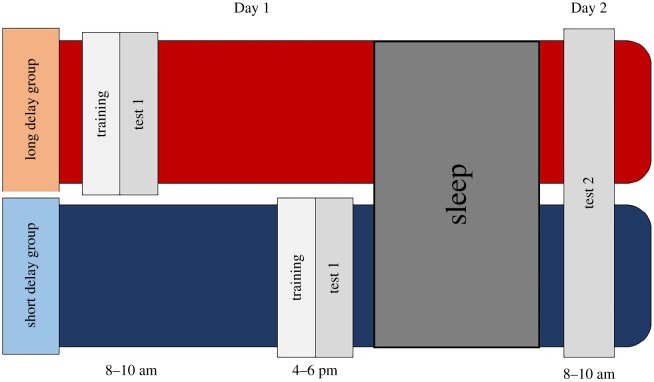
Evidence suggests that new vocabulary undergoes a period of strengthening and integration offline, particularly during sleep. Practical questions remain, however, including whether learning closer to bedtime can optimize consolidation, and whether such an effect varies with vocabulary ability. To examine this, children aged 8-12-years-old ( 59) were trained on written novel forms (e.g. BANARA) in either the morning (long delay) or the evening (short delay). Immediately after training and the next day, lexical competition (a marker of integration) was assessed via speeded semantic decisions to neighbouring existing words (e.g. BANANA); explicit memory was measured via recognition and recall tasks. There were no main effects indicating performance changes across sleep for any task, counter to studies of spoken word learning. However, a significant interaction was found, such that children with poorer vocabulary showed stronger lexical competition on the day after learning if there was a short delay between learning and sleep. Furthermore, while poorer vocabulary was associated with slower novel word recognition speed before and after sleep for the long delay group, this association was only present sleep for the short delay group. Thus, weak vocabulary knowledge compromises novel word acquisition, and when there is a longer period of post-learning wake, this disadvantage remains after a consolidation opportunity. However, when sleep occurs soon after learning, consolidation processes can compensate for weaker encoding and permit lexical integration. These data provide preliminary suggestion that children with poorer vocabulary may benefit from learning new words closer to bedtime.

摘要

有证据表明,新词汇会在离线状态下经历一段强化和整合期,尤其是在睡眠期间。然而,实际问题依然存在,包括临近就寝时间学习是否能优化巩固过程,以及这种效果是否会因词汇能力的不同而有所变化。为了对此进行研究,对59名8至12岁的儿童进行了书面新形式(如BANARA)的训练,训练时间分为上午(长延迟)或晚上(短延迟)。在训练后立即以及第二天,通过对相邻现有单词(如BANANA)进行快速语义判断来评估词汇竞争(整合的一个标志);通过识别和回忆任务来测量显性记忆。与口语学习的研究相反,没有主要效应表明任何任务在睡眠期间的表现有变化。然而,发现了一个显著的交互作用,即词汇量较差的儿童在学习与睡眠之间延迟较短的情况下,学习后第二天的词汇竞争更强。此外,虽然词汇量较差与长延迟组睡眠前后新单词识别速度较慢有关,但这种关联仅在短延迟组的睡眠期间存在。因此,薄弱的词汇知识会影响新单词的习得,并且当学习后有较长的清醒期时,在有巩固机会后这种劣势仍然存在。然而,当学习后很快入睡时,巩固过程可以弥补较弱的编码并允许词汇整合。这些数据提供了初步的建议,即词汇量较差的儿童可能会从临近就寝时间学习新单词中受益。
https://cdn.ncbi.nlm.nih.gov/pmc/blobs/feb8/7137956/cdc5eea76b1f/rsos191597-g3.jpg
https://cdn.ncbi.nlm.nih.gov/pmc/blobs/feb8/7137956/87d688385fcd/rsos191597-g1.jpg
https://cdn.ncbi.nlm.nih.gov/pmc/blobs/feb8/7137956/5f0f09e6de0d/rsos191597-g2.jpg
https://cdn.ncbi.nlm.nih.gov/pmc/blobs/feb8/7137956/cdc5eea76b1f/rsos191597-g3.jpg
https://cdn.ncbi.nlm.nih.gov/pmc/blobs/feb8/7137956/87d688385fcd/rsos191597-g1.jpg
https://cdn.ncbi.nlm.nih.gov/pmc/blobs/feb8/7137956/5f0f09e6de0d/rsos191597-g2.jpg
https://cdn.ncbi.nlm.nih.gov/pmc/blobs/feb8/7137956/cdc5eea76b1f/rsos191597-g3.jpg

相似文献

1
Growing up with interfering neighbours: the influence of time of learning and vocabulary knowledge on written word learning in children.与爱管闲事的邻居一起成长:学习时间和词汇知识对儿童书面文字学习的影响
R Soc Open Sci. 2020 Mar 25;7(3):191597. doi: 10.1098/rsos.191597. eCollection 2020 Mar.
2
Learning to live with interfering neighbours: the influence of time of learning and level of encoding on word learning.学会与爱干扰的邻居共处:学习时间和编码水平对单词学习的影响。
R Soc Open Sci. 2019 Apr 10;6(4):181842. doi: 10.1098/rsos.181842. eCollection 2019 Apr.
3
Sleep-dependent consolidation in children with comprehension and vocabulary weaknesses: it'll be alright on the night?儿童在理解和词汇方面的薄弱环节在睡眠中得以巩固:那晚将安然无恙?
J Child Psychol Psychiatry. 2020 Oct;61(10):1104-1115. doi: 10.1111/jcpp.13253. Epub 2020 May 5.
4
Learning new vocabulary during childhood: effects of semantic training on lexical consolidation and integration.儿童时期学习新词汇:语义训练对词汇巩固和整合的影响。
J Exp Child Psychol. 2013 Nov;116(3):572-92. doi: 10.1016/j.jecp.2013.07.004. Epub 2013 Aug 24.
5
Do naps benefit novel word learning? Developmental differences and white matter correlates.小睡对新单词学习有益吗?发育差异及与白质的关联。
Cortex. 2023 Jan;158:37-60. doi: 10.1016/j.cortex.2022.09.016. Epub 2022 Nov 6.
6
When the daffodat flew to the intergalactic zoo: off-line consolidation is critical for word learning from stories.当水仙花飞向星际动物园时:离线巩固对于从故事中学习单词至关重要。 (你提供的原文中“daffodat”可能有误,正确的可能是“daffodil”即“水仙花” )
Dev Psychol. 2015 Mar;51(3):406-17. doi: 10.1037/a0038786. Epub 2015 Feb 2.
7
Offline consolidation supersedes prior knowledge benefits in children's (but not adults') word learning.离线巩固优于儿童(而非成人)词汇学习中的先前知识收益。
Dev Sci. 2019 May;22(3):e12776. doi: 10.1111/desc.12776. Epub 2019 Jan 2.
8
Timing storytime to maximize children's ability to retain new vocabulary.把握故事时间,最大限度提高儿童的词汇记忆能力。
J Exp Child Psychol. 2021 Oct;210:105207. doi: 10.1016/j.jecp.2021.105207. Epub 2021 Jun 20.
9
Eye-tracking the time-course of novel word learning and lexical competition in adults and children.通过眼动追踪研究成人和儿童学习新单词的时间进程及词汇竞争情况。
Brain Lang. 2017 Apr;167:13-27. doi: 10.1016/j.bandl.2016.07.010. Epub 2016 Aug 22.
10
Neural representations for newly learned words are modulated by overnight consolidation, reading skill, and age.新学单词的神经表征受夜间巩固、阅读技能和年龄的调节。
Neuropsychologia. 2018 Mar;111:133-144. doi: 10.1016/j.neuropsychologia.2018.01.011. Epub 2018 Jan 31.

引用本文的文献

1
Lexical integration of novel words learned through natural reading.通过自然阅读学习的新单词的词汇整合。
Psychon Bull Rev. 2025 Jun;32(3):1367-1380. doi: 10.3758/s13423-024-02626-w. Epub 2024 Dec 23.
2
Reliability of the serial reaction time task: If at first you don't succeed, try, try, try again.序列反应时任务的可靠性:如果一开始你没有成功,那就再试一次,再试一次,再试一次。
Q J Exp Psychol (Hove). 2024 Nov;77(11):2256-2282. doi: 10.1177/17470218241232347. Epub 2024 Mar 7.
3
Is that a pibu or a pibo? Children with reading and language deficits show difficulties in learning and overnight consolidation of phonologically similar pseudowords.

本文引用的文献

1
Power Analysis and Effect Size in Mixed Effects Models: A Tutorial.混合效应模型中的功效分析与效应量:教程
J Cogn. 2018 Jan 12;1(1):9. doi: 10.5334/joc.10.
2
Learning to live with interfering neighbours: the influence of time of learning and level of encoding on word learning.学会与爱干扰的邻居共处:学习时间和编码水平对单词学习的影响。
R Soc Open Sci. 2019 Apr 10;6(4):181842. doi: 10.1098/rsos.181842. eCollection 2019 Apr.
3
Offline consolidation supersedes prior knowledge benefits in children's (but not adults') word learning.
那是 pibu 还是 pibo?阅读和语言障碍儿童在学习和音位相似的假词的 overnight 巩固方面存在困难。
Dev Sci. 2021 Mar;24(2):e13023. doi: 10.1111/desc.13023. Epub 2020 Aug 7.
离线巩固优于儿童(而非成人)词汇学习中的先前知识收益。
Dev Sci. 2019 May;22(3):e12776. doi: 10.1111/desc.12776. Epub 2019 Jan 2.
4
Neural representations for newly learned words are modulated by overnight consolidation, reading skill, and age.新学单词的神经表征受夜间巩固、阅读技能和年龄的调节。
Neuropsychologia. 2018 Mar;111:133-144. doi: 10.1016/j.neuropsychologia.2018.01.011. Epub 2018 Jan 31.
5
Consolidation of vocabulary is associated with sleep in typically developing children, but not in children with dyslexia.巩固词汇与典型发育儿童的睡眠有关,但与诵读困难儿童的睡眠无关。
Dev Sci. 2018 Sep;21(5):e12639. doi: 10.1111/desc.12639. Epub 2017 Dec 11.
6
Consolidating new words from repetitive versus multiple stories: Prior knowledge matters.从重复故事与多个故事中巩固新单词:先验知识很重要。
J Exp Child Psychol. 2018 Feb;166:465-484. doi: 10.1016/j.jecp.2017.09.017. Epub 2017 Oct 21.
7
Orthographic learning, fast and slow: Lexical competition effects reveal the time course of word learning in developing readers.正字法学习,快与慢:词汇竞争效应揭示了发展中读者单词学习的时间进程。
Cognition. 2017 Jun;163:93-102. doi: 10.1016/j.cognition.2017.03.002. Epub 2017 Mar 15.
8
Consolidation of vocabulary during sleep: The rich get richer?睡眠期间词汇巩固:强者愈强?
Neurosci Biobehav Rev. 2017 Jun;77:1-13. doi: 10.1016/j.neubiorev.2017.01.054. Epub 2017 Mar 6.
9
Automatic phonological activation during visual word recognition in bilingual children: A cross-language masked priming study in grades 3 and 5.双语儿童视觉单词识别过程中的自动语音激活:三、五年级跨语言掩蔽启动研究
J Exp Child Psychol. 2017 Feb;154:64-77. doi: 10.1016/j.jecp.2016.10.003. Epub 2016 Nov 9.
10
Bedding down new words: Sleep promotes the emergence of lexical competition in visual word recognition.安置新词:睡眠促进视觉词汇识别中的词汇竞争出现。
Psychon Bull Rev. 2017 Aug;24(4):1186-1193. doi: 10.3758/s13423-016-1182-7.