Kurz Lukas, Miklyaeva Alissa, Skowron Margaretha A, Overbeck Nina, Poschmann Gereon, Becker Teresa, Eul Katharina, Kurz Thomas, Schönberger Stefan, Calaminus Gabriele, Stühler Kai, Dykhuizen Emily, Albers Peter, Nettersheim Daniel
Department of Urology, Urological Research Lab, Translational UroOncology, University Hospital Düsseldorf, 40225 Düsseldorf, Germany.
Molecular Proteomics Laboratory, Heinrich-Heine-University Düsseldorf, 40225 Düsseldorf, Germany.
Cancers (Basel). 2020 Apr 7;12(4):905. doi: 10.3390/cancers12040905.
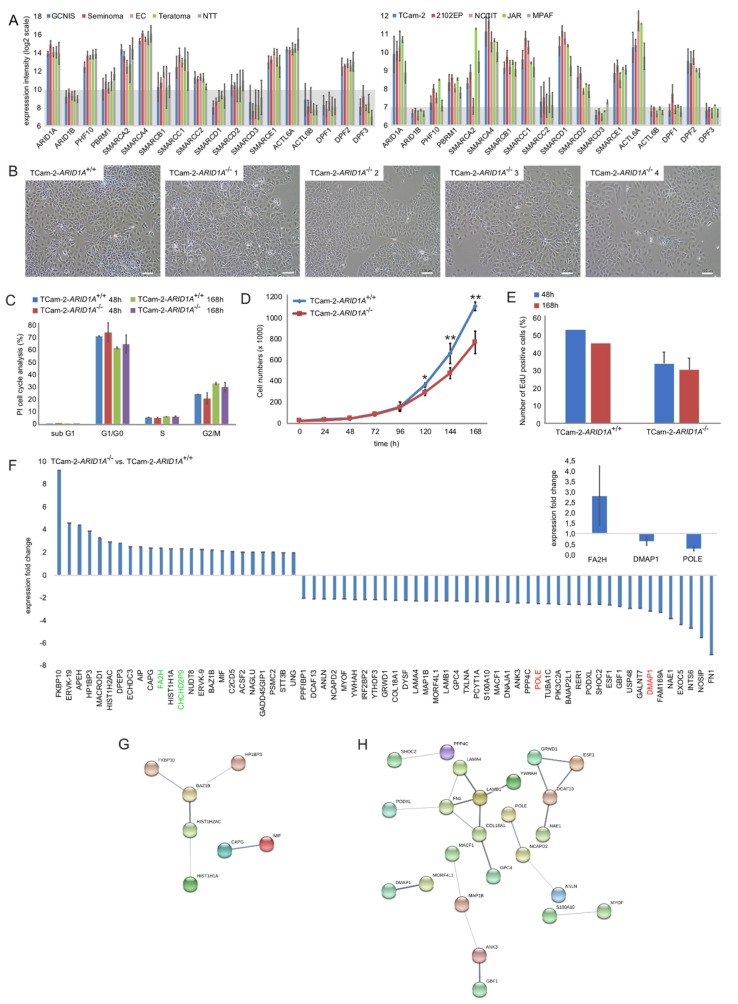
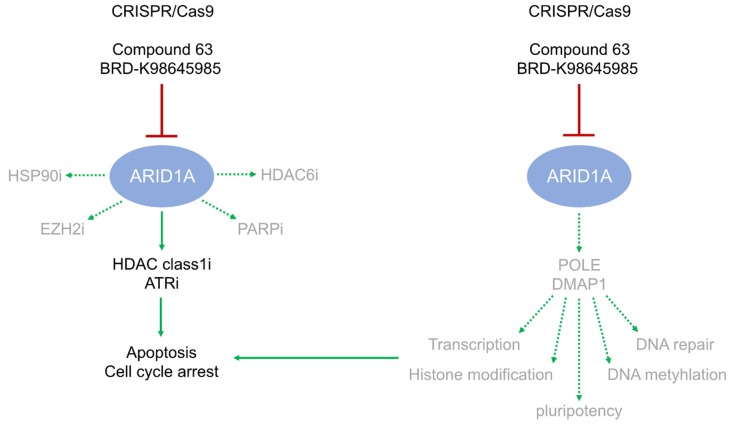
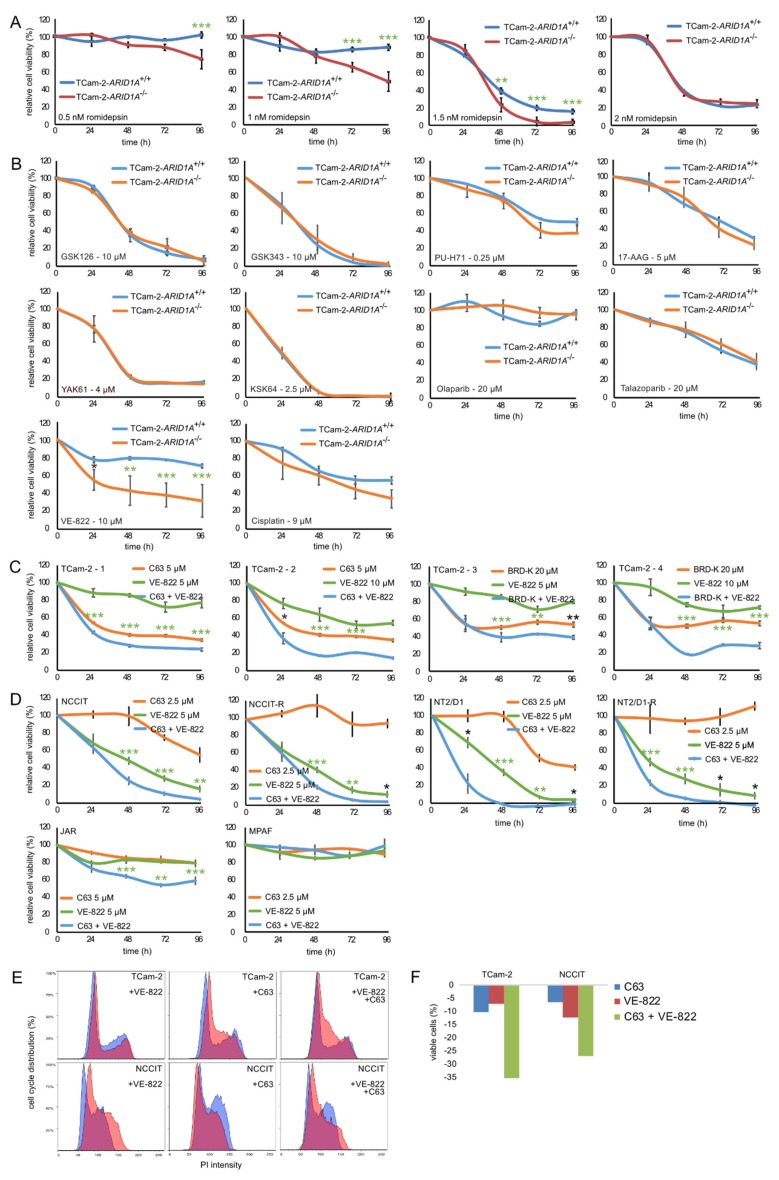
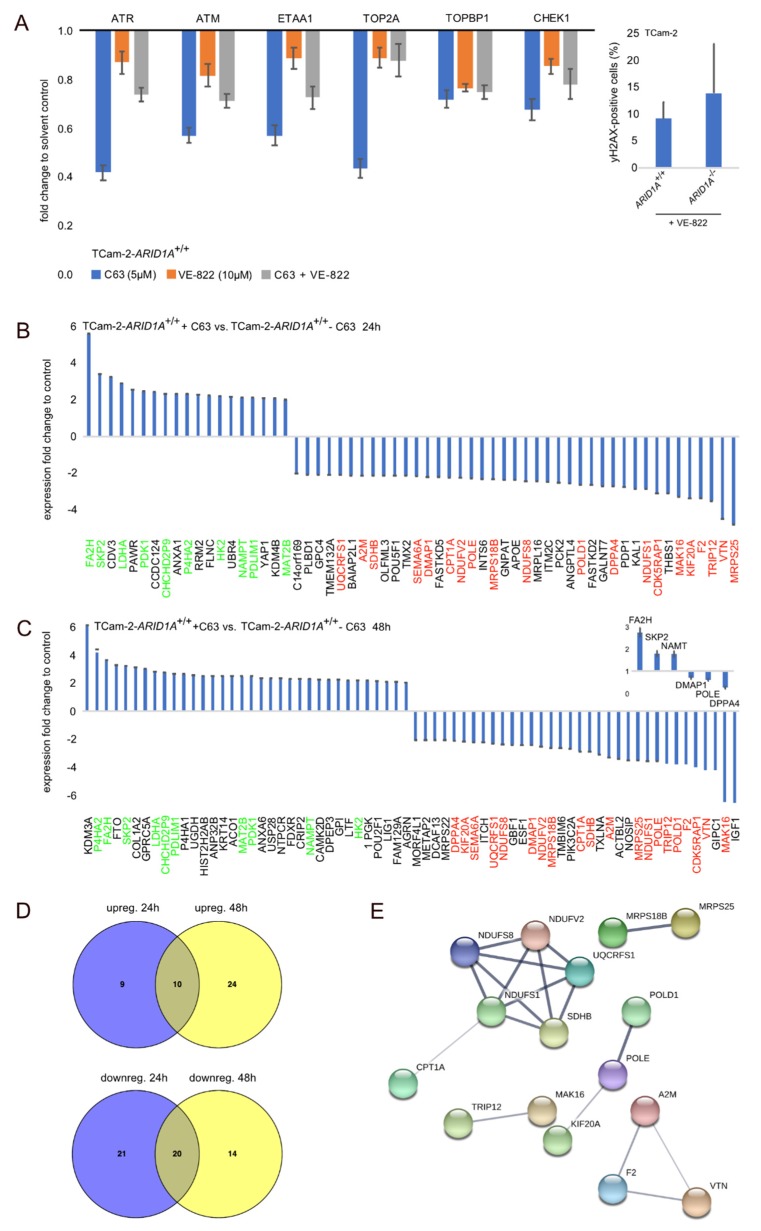
Germ cell tumors (GCTs) are the most common solid malignancies found in young men. Although they generally have high cure rates, metastases, resistance to cisplatin-based therapy, and late toxicities still represent a lethal threat, arguing for the need of new therapeutic options. In a previous study, we identified downregulation of the chromatin-remodeling SWI/SNF complex member ARID1A as a key event in the mode of action of the histone deacetylase inhibitor romidepsin. Additionally, the loss-of-function mutations re-sensitize different tumor types to various drugs, like EZH2-, PARP-, HDAC-, HSP90- or ATR-inhibitors. Thus, ARID1A presents as a promising target for synthetic lethality and combination therapy. In this study, we deciphered the molecular function of ARID1A and screened for the potential of two pharmacological ARID1A inhibitors as a new therapeutic strategy to treat GCTs. By CRISPR/Cas9, we generated -deficient GCT cells and demonstrate by mass spectrometry that is putatively involved in regulating transcription, DNA repair and the epigenetic landscape via DNA Polymerase POLE and the DNA methyltransferase 1-associated protein DMAP1. Additionally, deficiency or pharmacological inhibition increased the efficacy of romidepsin and considerably sensitized GCT cells, including cisplatin-resistant subclones, towards ATR inhibition. Thus, targeting ARID1A in combination with romidepsin and ATR inhibitors presents as a new putative option to treat GCTs.
生殖细胞肿瘤(GCTs)是年轻男性中最常见的实体恶性肿瘤。尽管它们通常具有较高的治愈率,但转移、对基于顺铂的治疗产生耐药性以及晚期毒性仍然构成致命威胁,这表明需要新的治疗选择。在先前的一项研究中,我们发现染色质重塑SWI/SNF复合物成员ARID1A的下调是组蛋白脱乙酰酶抑制剂罗米地辛作用模式中的关键事件。此外,功能丧失突变使不同肿瘤类型对多种药物重新敏感,如EZH2抑制剂、PARP抑制剂、HDAC抑制剂、HSP90抑制剂或ATR抑制剂。因此,ARID1A是合成致死和联合治疗的一个有前景的靶点。在本研究中,我们解析了ARID1A的分子功能,并筛选了两种ARID1A药理学抑制剂作为治疗GCTs的新治疗策略的潜力。通过CRISPR/Cas9,我们生成了ARID1A缺陷的GCT细胞,并通过质谱证明ARID1A可能通过DNA聚合酶POLE和与DNA甲基转移酶1相关的蛋白DMAP1参与调节转录、DNA修复和表观遗传格局。此外,ARID1A缺陷或药理学抑制增加了罗米地辛的疗效,并使GCT细胞,包括顺铂耐药亚克隆,对ATR抑制相当敏感。因此,将ARID1A作为靶点与罗米地辛和ATR抑制剂联合使用是治疗GCTs的一种新的假定选择。