Astellas Pharma Inc., 2-5-1, Nihonbashi-Honcho, Chuo-Ku, Tokyo, 103-8411, Japan.
Astellas Research Institute of America LLC, 1 Astellas Way, Northbrook, IL, 60062, USA.
Clin Drug Investig. 2020 May;40(5):469-484. doi: 10.1007/s40261-020-00910-w.
Peficitinib pharmacokinetics and pharmacodynamics have been characterized mainly in Caucasian subjects. This study investigated the pharmacokinetics, pharmacodynamics, safety, and tolerability of peficitinib in healthy Japanese subjects compared with Caucasian subjects.
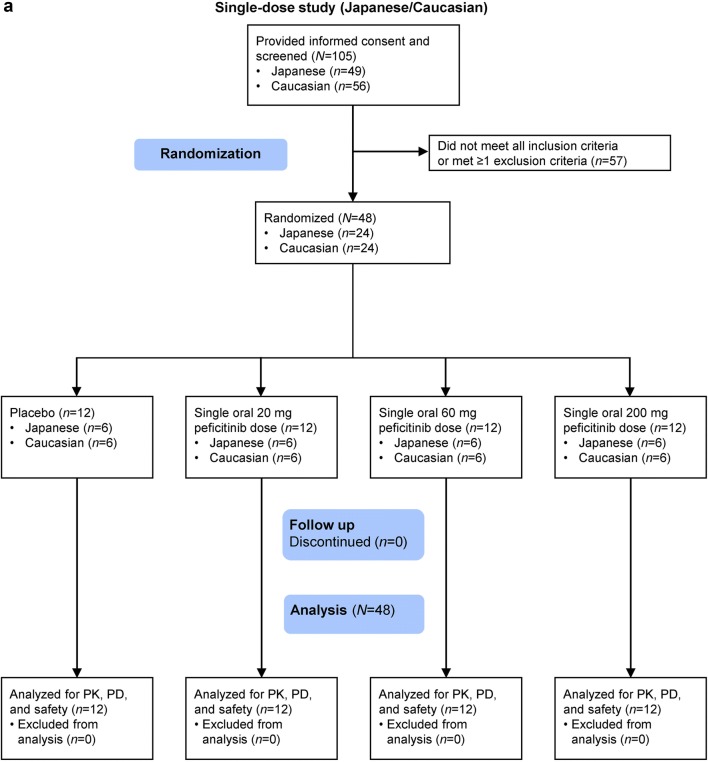
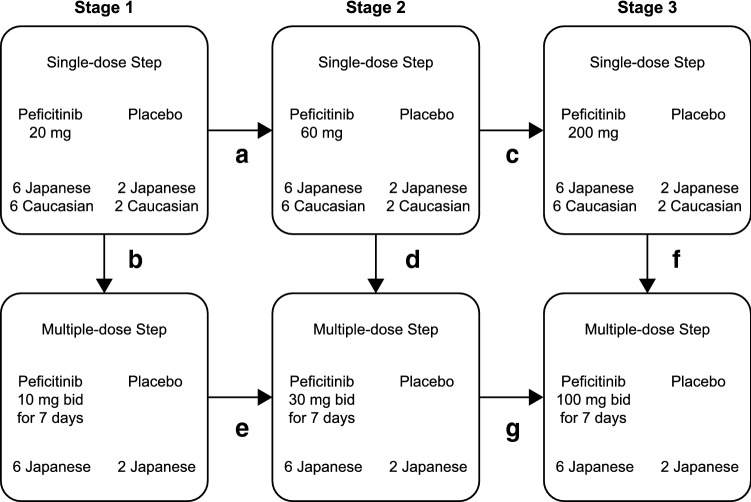
In this single-center, randomized, double-blind, placebo-controlled study, a cohort of healthy Japanese (n = 24) and Caucasian (n = 24) men received a single oral dose of peficitinib (20, 60, or 200 mg) or placebo. Another cohort of Japanese men (n = 24) received peficitinib (10, 30, or 100 mg) or placebo twice daily for 7 days. Pharmacokinetic and pharmacodynamic parameters were assessed, and adverse events (AEs) monitored throughout.
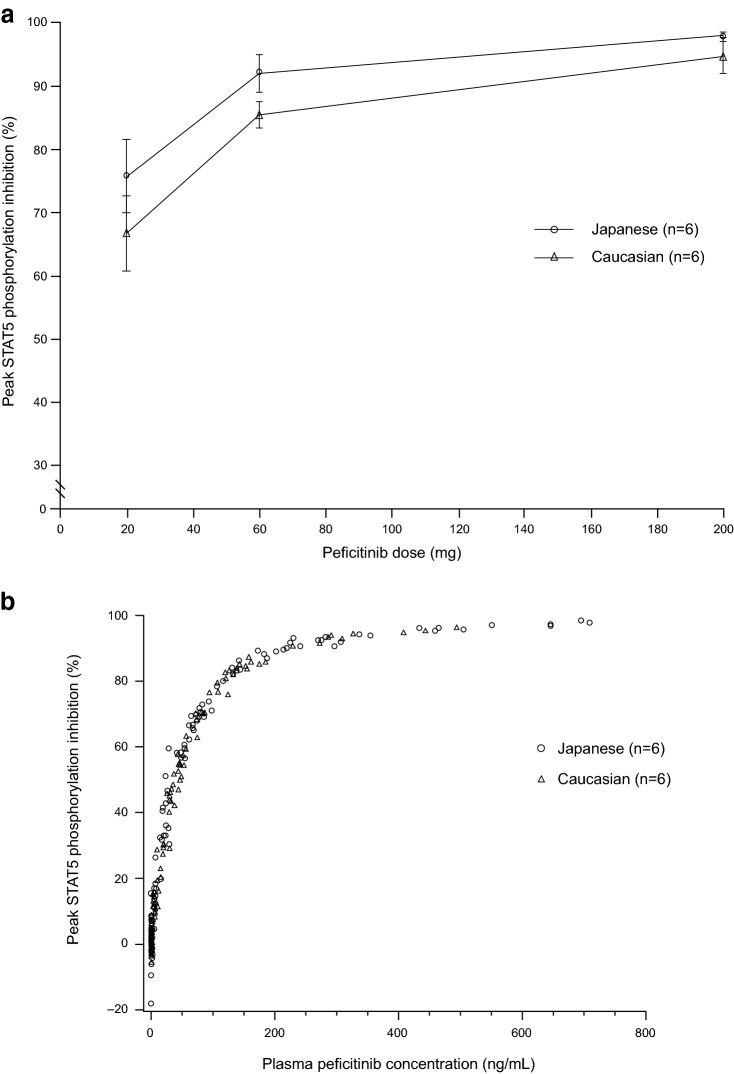
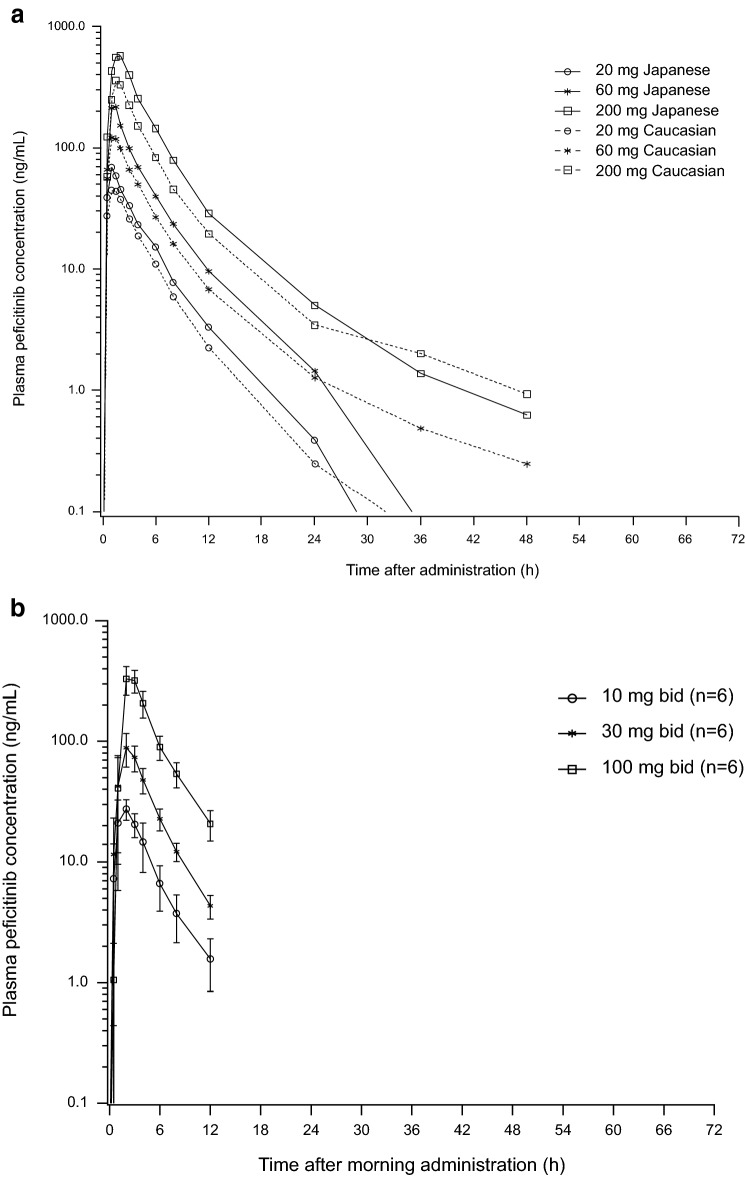
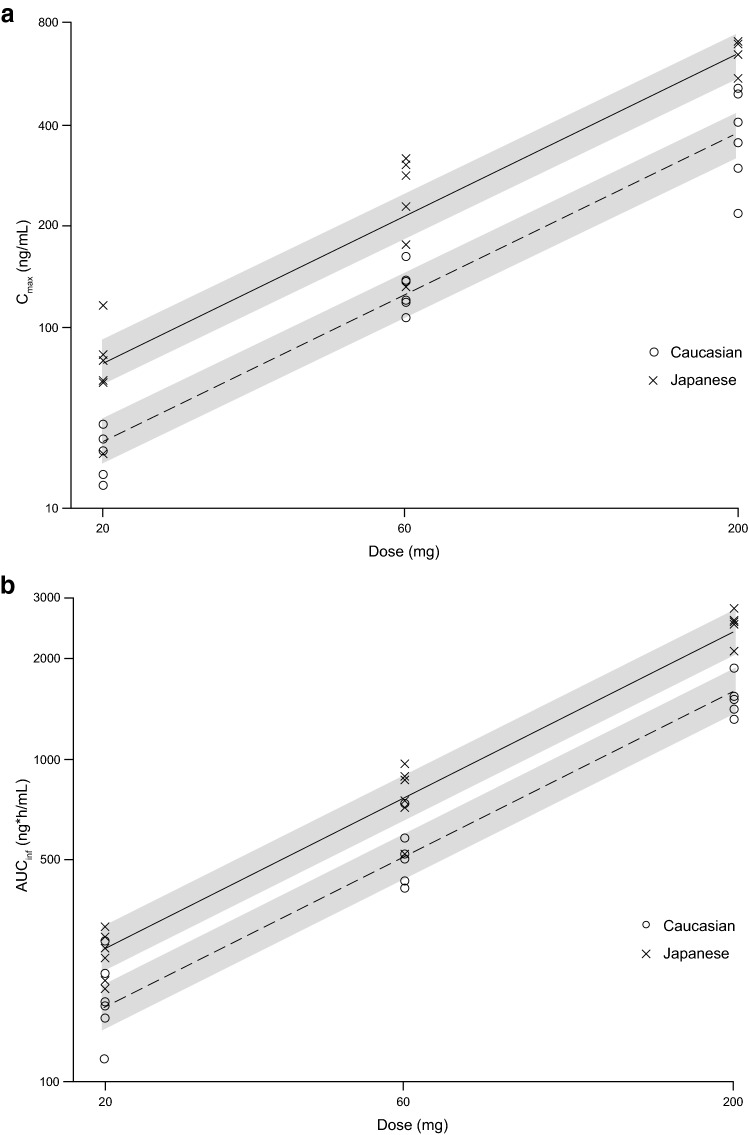
Dose proportionality of maximum plasma drug concentration (C) and area under the plasma concentration-time curve extrapolated to infinity (AUC) was demonstrated for both ethnicities. The geometric mean ratio for dose-normalized C was 45.7-98.8% higher and AUC was 33.8-66.4% higher in Japanese versus Caucasian subjects. Mean peak inhibition of STAT5 phosphorylation was higher in Japanese than Caucasian subjects for a given peficitinib dose, but inhibition was comparable across ethnicities for a given plasma peficitinib concentration. In the multiple-dose study, plasma peficitinib concentrations were similar on day 1 and day 7. All AEs were mild, and none resulted in study discontinuation.
Peficitinib was well tolerated at doses up to 200 mg daily for 7 days in healthy Japanese subjects. Dose-proportional exposure was demonstrated across the single-dose range of 20-200 mg, with greater peficitinib exposure in Japanese compared with Caucasian subjects. The pharmacokinetic/pharmacodynamic relationships were considered comparable between these populations. CLINICALTRIALS.
NCT01225224.
培非替尼的药代动力学和药效学主要在白种人群体中进行了描述。本研究旨在比较健康的日本人和白种人受试者中培非替尼的药代动力学、药效学、安全性和耐受性。
在这项单中心、随机、双盲、安慰剂对照研究中,一组健康的日本(n=24)和白种人(n=24)男性受试者单次口服培非替尼(20、60 或 200mg)或安慰剂。另一组日本男性(n=24)接受培非替尼(10、30 或 100mg)或安慰剂每日两次,连续 7 天。评估药代动力学和药效学参数,并监测整个研究期间的不良反应(AE)。
两种人群的最大血浆药物浓度(C)和血浆浓度-时间曲线下面积外推至无穷大(AUC)均表现出剂量比例性。与白种人相比,日本人的剂量标准化 C 的几何均数比值高 45.7-98.8%,AUC 高 33.8-66.4%。对于给定的培非替尼剂量,日本人的 STAT5 磷酸化抑制的平均峰值更高,但对于给定的血浆培非替尼浓度,两种人群的抑制作用相当。在多次剂量研究中,第 1 天和第 7 天的血浆培非替尼浓度相似。所有的 AE 均为轻度,且均未导致研究终止。
在健康的日本受试者中,培非替尼的剂量高达 200mg/天,连续 7 天使用,耐受性良好。在 20-200mg 的单剂量范围内,暴露量呈剂量比例性,与白种人相比,日本人的培非替尼暴露量更高。在这两个人群中,药代动力学/药效学关系被认为是相似的。临床试验。
.gov 标识符:NCT01225224。