Moura Rita A, Fonseca João Eurico
Instituto de Medicina Molecular João Lobo Antunes, Faculdade de Medicina, Universidade de Lisboa, Lisbon, Portugal.
Rheumatology Department, Hospital de Santa Maria, Centro Hospitalar Universitário Lisboa Norte (CHULN), Lisbon Academic Medical Centre, Lisbon, Portugal.
Front Med (Lausanne). 2021 Feb 5;7:607725. doi: 10.3389/fmed.2020.607725. eCollection 2020.
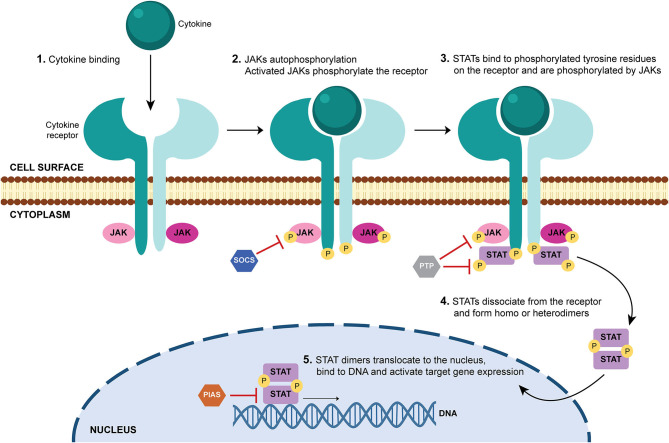
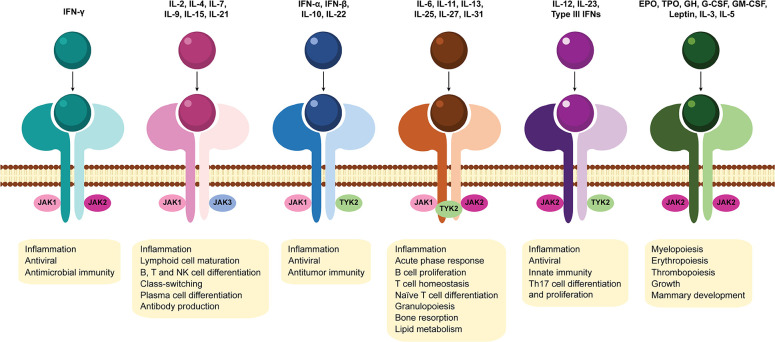
Rheumatoid arthritis (RA) is a chronic, systemic immune-mediated inflammatory disease that can lead to joint destruction, functional disability and substantial comorbidity due to the involvement of multiple organs and systems. B cells have several important roles in RA pathogenesis, namely through autoantibody production, antigen presentation, T cell activation, cytokine release and ectopic lymphoid neogenesis. The success of B cell depletion therapy with rituximab, a monoclonal antibody directed against CD20 expressed by B cells, has further supported B cell intervention in RA development. Despite the efficacy of synthetic and biologic disease modifying anti-rheumatic drugs (DMARDs) in the treatment of RA, few patients reach sustained remission and refractory disease is a concern that needs critical evaluation and close monitoring. Janus kinase (JAK) inhibitors or JAKi are a new class of oral medications recently approved for the treatment of RA. JAK inhibitors suppress the activity of one or more of the JAK family of tyrosine kinases, thus interfering with the JAK-Signal Transducer and Activator of Transcription (STAT) signaling pathway. To date, there are five JAK inhibitors (tofacitinib, baricitinib, upadacitinib, peficitinib and filgotinib) approved in the USA, Europe and/ or Japan for RA treatment. Evidence from the literature indicates that JAK inhibitors interfere with B cell functions. In this review, the main results obtained in clinical trials, pharmacokinetic, and studies concerning the effects of JAK inhibitors on B cell immune responses in RA are summarized.
类风湿关节炎(RA)是一种慢性全身性免疫介导的炎症性疾病,由于多个器官和系统受累,可导致关节破坏、功能残疾和严重的合并症。B细胞在RA发病机制中具有多种重要作用,即通过自身抗体产生、抗原呈递、T细胞活化、细胞因子释放和异位淋巴组织新生。用利妥昔单抗(一种针对B细胞表达的CD20的单克隆抗体)进行B细胞清除疗法的成功,进一步支持了B细胞干预在RA发展中的作用。尽管合成和生物改善病情抗风湿药物(DMARDs)在治疗RA方面有效,但很少有患者能达到持续缓解,难治性疾病是一个需要严格评估和密切监测的问题。Janus激酶(JAK)抑制剂是最近被批准用于治疗RA的一类新型口服药物。JAK抑制剂可抑制一种或多种JAK家族酪氨酸激酶的活性,从而干扰JAK-信号转导子和转录激活子(STAT)信号通路。迄今为止,有五种JAK抑制剂(托法替布、巴瑞替尼、乌帕替尼、培非替尼和非戈替尼)在美国、欧洲和/或日本被批准用于RA治疗。文献证据表明,JAK抑制剂会干扰B细胞功能。在本综述中,总结了在临床试验、药代动力学以及关于JAK抑制剂对RA中B细胞免疫反应影响的研究中获得的主要结果。