School of Materials, The University of Manchester, Oxford Road, M13 9PL Manchester, U.K.
Manchester Institute of Biotechnology, The University of Manchester, Oxford Road, M13 9PL Manchester, U.K.
Biomacromolecules. 2020 Jun 8;21(6):2285-2297. doi: 10.1021/acs.biomac.0c00229. Epub 2020 Apr 23.
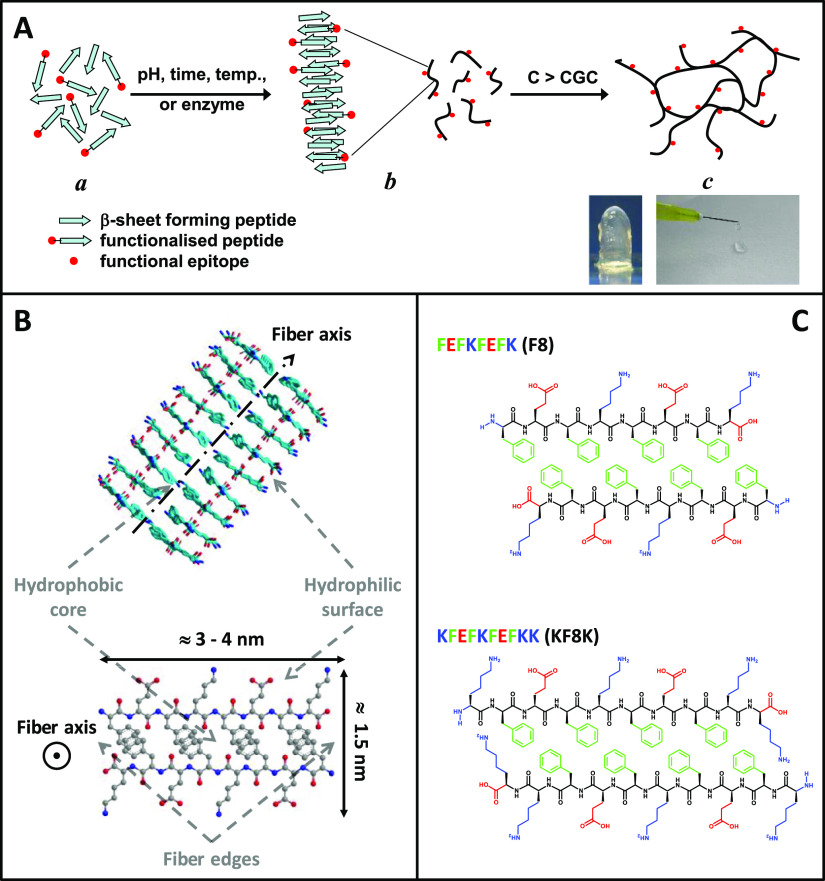
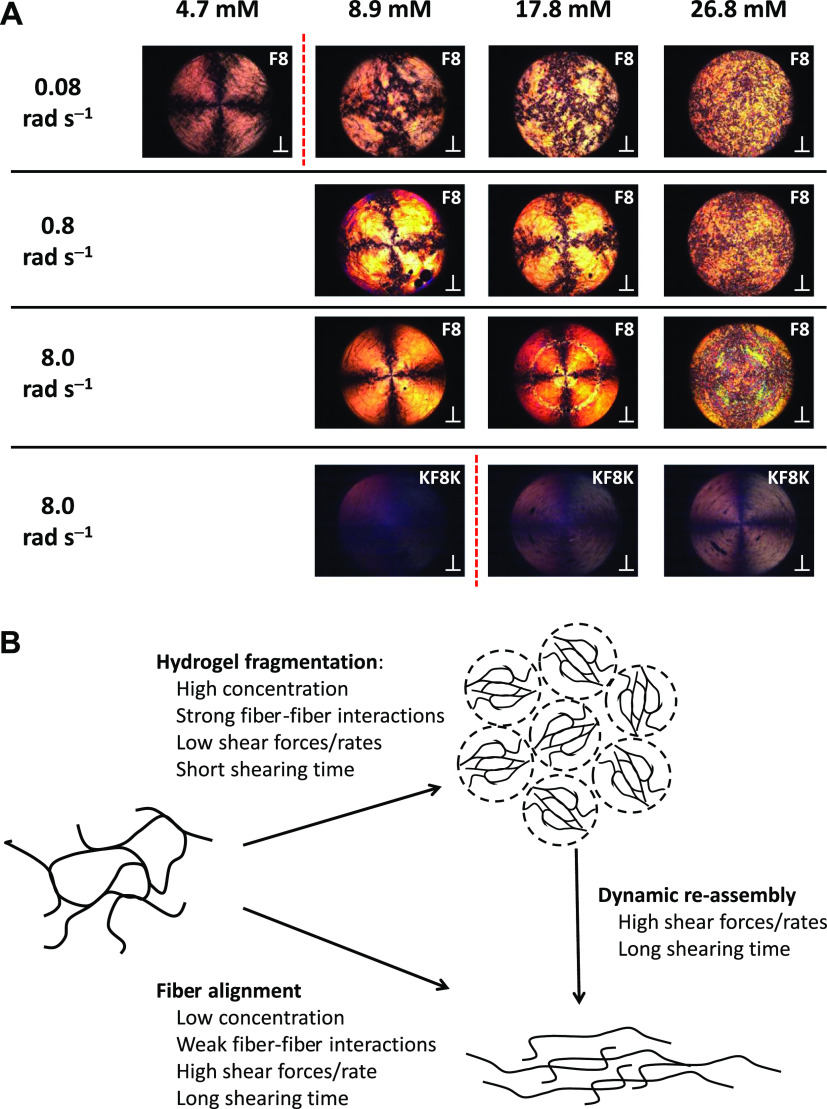
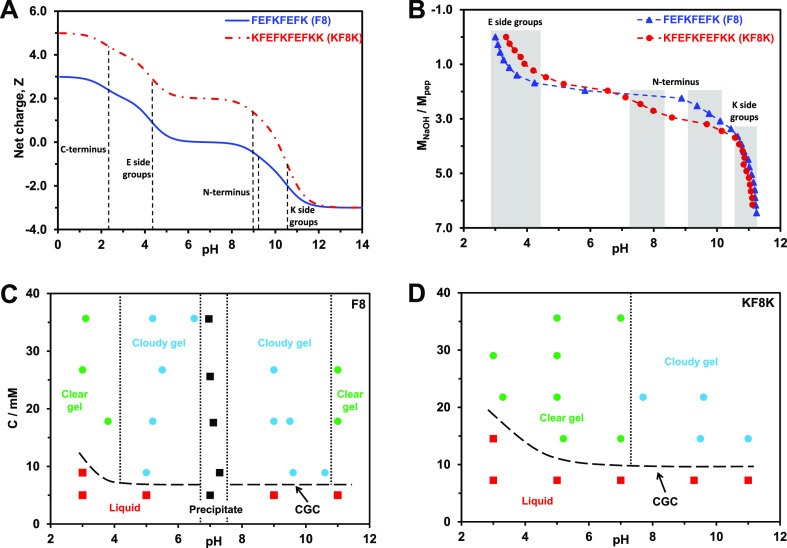
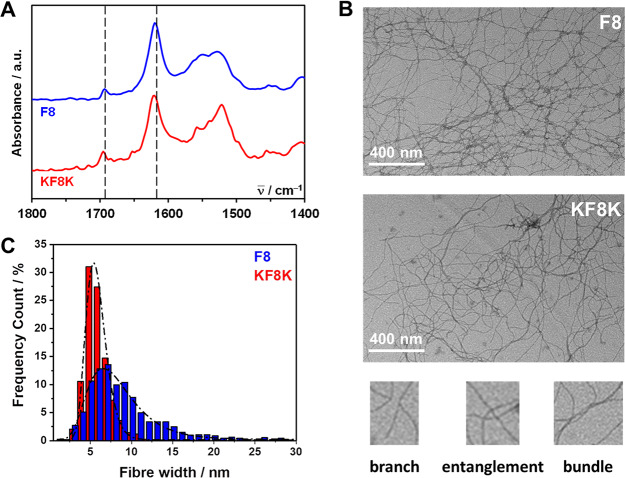
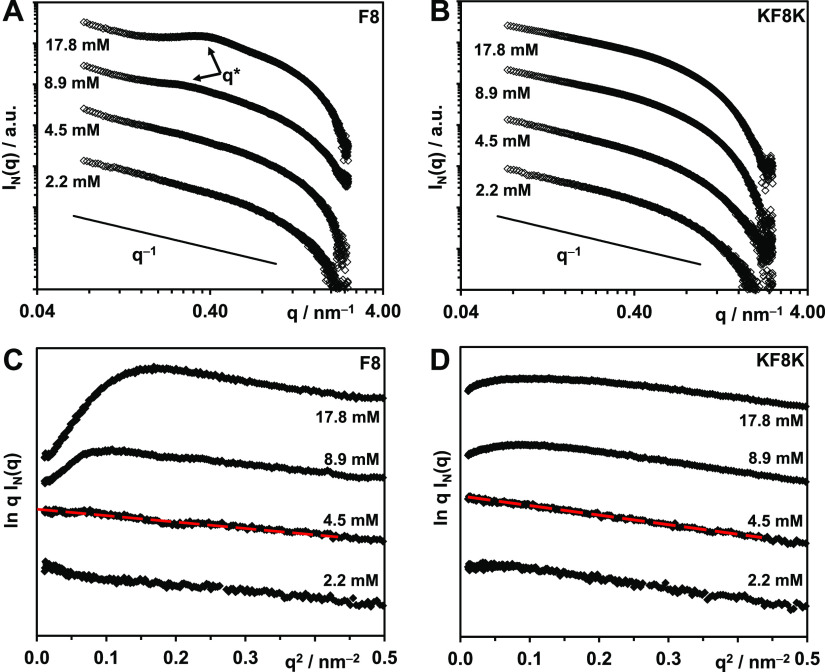
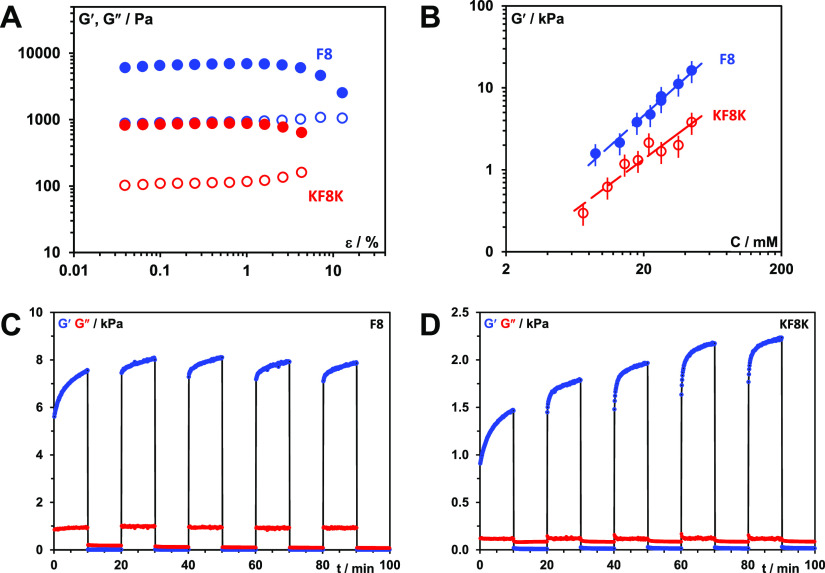
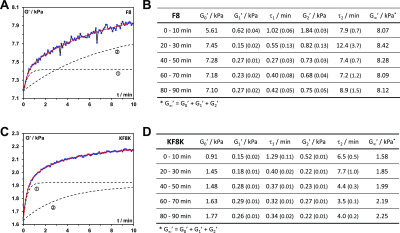
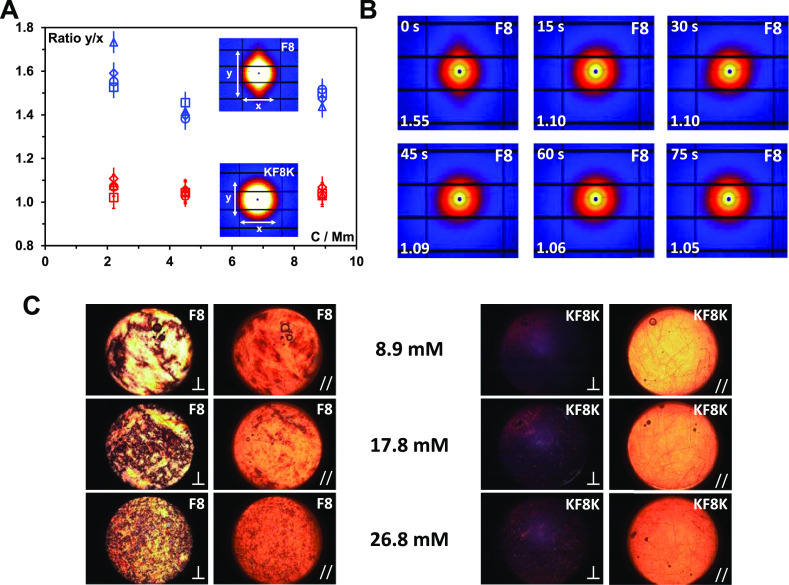
Hydrogels' hydrated fibrillar nature makes them the material of choice for the design and engineering of 3D scaffolds for cell culture, tissue engineering, and drug-delivery applications. One particular class of hydrogels which has been the focus of significant research is self-assembling peptide hydrogels. In the present work, we were interested in exploring how fiber-fiber edge interactions affect the self-assembly and gelation properties of amphipathic peptides. For this purpose, we investigated two β-sheet-forming peptides, FEFKFEFK (F8) and KFEFKFEFKK (KF8K), the latter one having the fiber edges covered by lysine residues. Our results showed that the addition of the two lysine residues did not affect the ability of the peptides to form β-sheet-rich fibers, provided that the overall charge carried by the two peptides was kept constant. However, it did significantly reduce edge-driven hydrophobic fiber-fiber associative interactions, resulting in reduced tendency for KF8K fibers to associate/aggregate laterally and form large fiber bundles and consequently network cross-links. This effect resulted in the formation of hydrogels with lower moduli but faster dynamics. As a result, KF8K fibers could be aligned only under high shear and at high concentration while F8 hydrogel fibers were found to align readily at low shear and low concentration. In addition, F8 hydrogels were found to fragment at high concentration because of the high aggregation state stabilizing the fiber bundles, resulting in fiber breakage rather than disentanglement and alignment.
水凝胶的水合纤维状性质使其成为细胞培养、组织工程和药物输送应用的 3D 支架设计和工程的首选材料。一类特别受关注的水凝胶是自组装肽水凝胶。在本工作中,我们感兴趣的是探索纤维-纤维边缘相互作用如何影响两亲肽的自组装和凝胶性质。为此,我们研究了两种β-折叠形成肽,FEFKFEFK(F8)和 KFEFKFEFKK(KF8K),后者的纤维边缘被赖氨酸残基覆盖。我们的结果表明,添加两个赖氨酸残基并不影响肽形成富含β-折叠的纤维的能力,只要两个肽所携带的总电荷保持不变。然而,它确实显著降低了边缘驱动的疏水性纤维-纤维缔合相互作用,导致 KF8K 纤维横向缔合/聚集的趋势降低,形成大纤维束,从而形成网络交联。这种效应导致形成的水凝胶模量降低,但动力学加快。因此,KF8K 纤维只能在高剪切力和高浓度下排列,而 F8 水凝胶纤维则在低剪切力和低浓度下很容易排列。此外,由于纤维束的高聚集状态稳定,F8 水凝胶在高浓度下会发生断裂,导致纤维断裂而不是解缠和排列。