From the Faculty of Health and Wellbeing, University of Central Lancashire, Preston, United Kingdom (N.E.M., M.B., V.B., E.P.B., R.F.G., J.M.E.G., A.J.C., C.E.L., C.L.W.).
Liverpool Centre for Cardiovascular Science, University of Liverpool & Liverpool Heart and Chest Hospital, United Kingdom (D.A.L., G.Y.H.L.).
Stroke. 2020 May;51(5):1419-1427. doi: 10.1161/STROKEAHA.119.027123. Epub 2020 Apr 13.
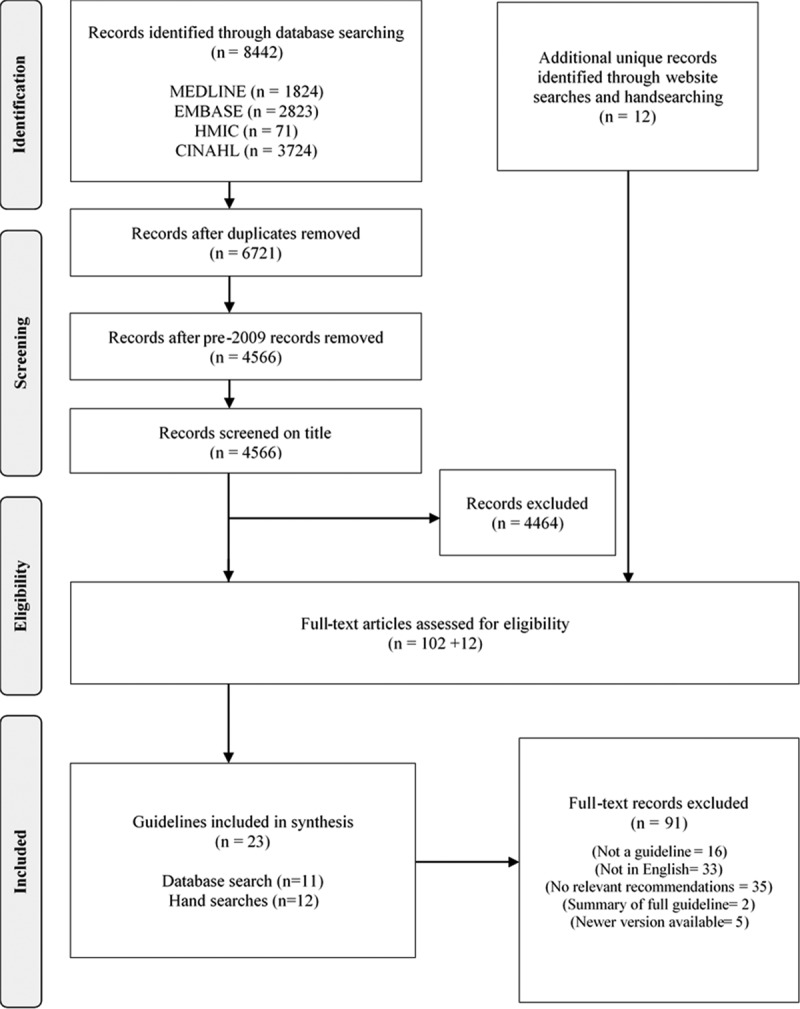
Background and Purpose- Identifying the etiology of acute ischemic stroke is essential for effective secondary prevention. However, in at least one third of ischemic strokes, existing investigative protocols fail to determine the underlying cause. Establishing etiology is complicated by variation in clinical practice, often reflecting preferences of treating clinicians and variable availability of investigative techniques. In this review, we systematically assess the extent to which there exists consensus, disagreement, and gaps in clinical practice recommendations on etiologic workup in acute ischemic stroke. Methods- We identified clinical practice guidelines/consensus statements through searches of 4 electronic databases and hand-searching of websites/reference lists. Two reviewers independently assessed reports for eligibility. We extracted data on report characteristics and recommendations relating to etiologic workup in acute ischemic stroke and in cases of cryptogenic stroke. Quality was assessed using the AGREE II tool (Appraisal of Guidelines for Research & Evaluation). Recommendations were synthesized according to a published algorithm for diagnostic evaluation in cryptogenic stroke. Results- We retrieved 16 clinical practice guidelines and 7 consensus statements addressing acute stroke management (n=12), atrial fibrillation (n=5), imaging (n=5), and secondary prevention (n=1). Five reports were of overall high quality. For all patients, guidelines recommended routine brain imaging, noninvasive vascular imaging, a 12-lead ECG, and routine blood tests/laboratory investigations. Additionally, ECG monitoring (>24 hours) was recommended for patients with suspected embolic stroke and echocardiography for patients with suspected cardiac source. Three reports recommended investigations for rarer causes of stroke. None of the reports provided guidance on the extent of investigation needed before classifying a stroke as cryptogenic. Conclusions- While consensus exists surrounding standard etiologic workup, there is little agreement on more advanced investigations for rarer causes of acute ischemic stroke. This gap in guidance, and in the underpinning evidence, demonstrates missed opportunities to better understand and protect against ongoing stroke risk. Registration- URL: https://www.crd.york.ac.uk/PROSPERO/; Unique identifier: CRD42019127822.
背景与目的-明确急性缺血性脑卒中的病因对于有效二级预防至关重要。然而,在至少三分之一的缺血性脑卒中患者中,现有的调查方案未能确定潜在病因。病因的确定受到临床实践差异的影响,这往往反映了治疗医生的偏好以及调查技术的可用性变化。在本综述中,我们系统评估了急性缺血性脑卒中病因学检查的临床实践建议在多大程度上存在共识、分歧和空白。
方法-我们通过 4 个电子数据库搜索和网站/参考文献列表的手工搜索,确定了临床实践指南/共识声明。两名审查员独立评估报告的合格性。我们提取了有关急性缺血性脑卒中及隐匿性脑卒中病因学检查的报告特征和建议的数据。使用 AGREE II 工具(评估研究和评价指南)评估质量。根据隐匿性脑卒中诊断评估的已发表算法,综合推荐意见。
结果-我们检索到 16 项针对急性脑卒中管理(n=12)、心房颤动(n=5)、影像学(n=5)和二级预防(n=1)的临床实践指南和 7 项共识声明。其中 5 项报告的整体质量较高。对于所有患者,指南建议常规进行脑部成像、非侵入性血管成像、12 导联心电图和常规血液检查/实验室检查。此外,对于疑似栓塞性脑卒中的患者建议进行心电图监测(>24 小时),对于疑似心源性脑卒中的患者建议进行超声心动图检查。有 3 项报告建议对更罕见的脑卒中病因进行检查。但没有任何一份报告就将脑卒中分类为隐匿性前需要进行的检查范围提供指导。
结论-虽然标准病因学检查存在共识,但对于更罕见的急性缺血性脑卒中病因的进一步检查,意见并不一致。这种指导上的差距以及基础证据的缺乏表明,人们错失了更好地了解和防范持续卒中风险的机会。
注册-网址:https://www.crd.york.ac.uk/PROSPERO/;唯一标识符:CRD42019127822。