Dhandapani Ramya, Krishnan Priya Dharshini, Zennifer Allen, Kannan Vishal, Manigandan Amrutha, Arul Michael R, Jaiswal Devina, Subramanian Anuradha, Kumbar Sangamesh Gurappa, Sethuraman Swaminathan
Centre for Nanotechnology & Advanced Biomaterials, SASTRA Deemed University, Thanjavur, 613401, India.
Department of Orthopaedics, UConn Health, Farmington, CT, 06030, USA.
Bioact Mater. 2020 Apr 6;5(3):458-467. doi: 10.1016/j.bioactmat.2020.03.009. eCollection 2020 Sep.
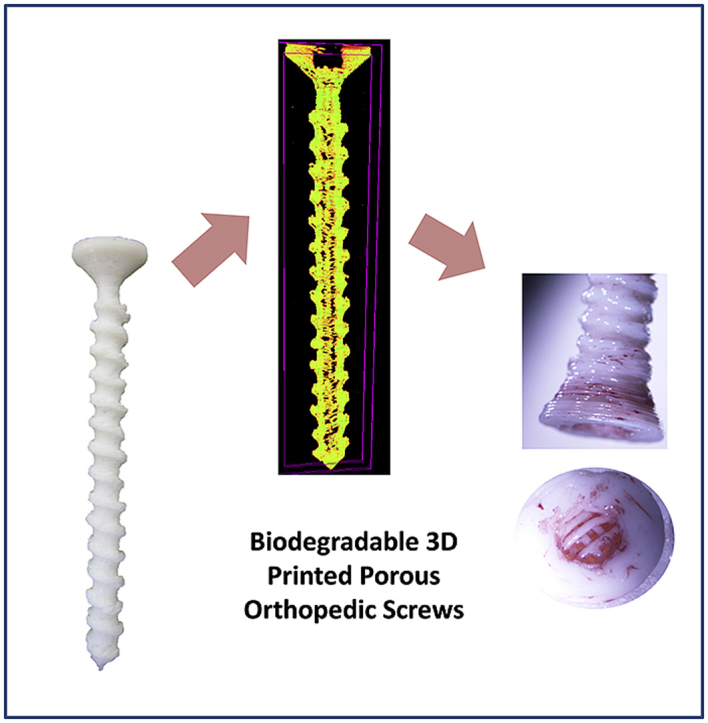
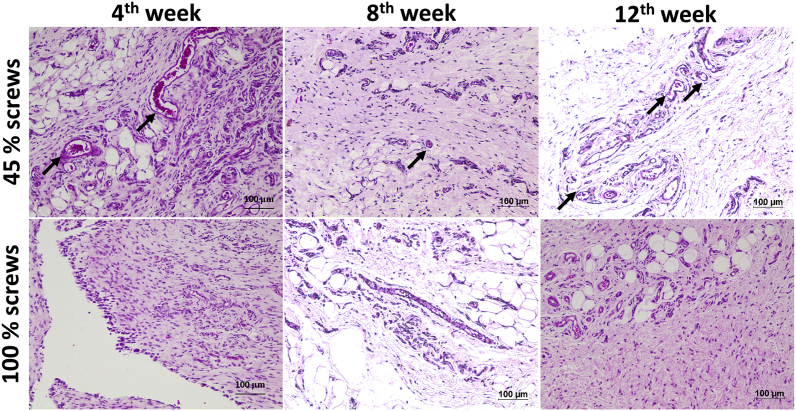
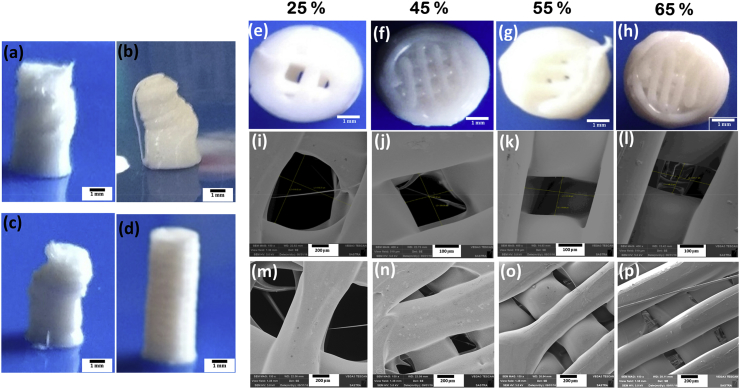
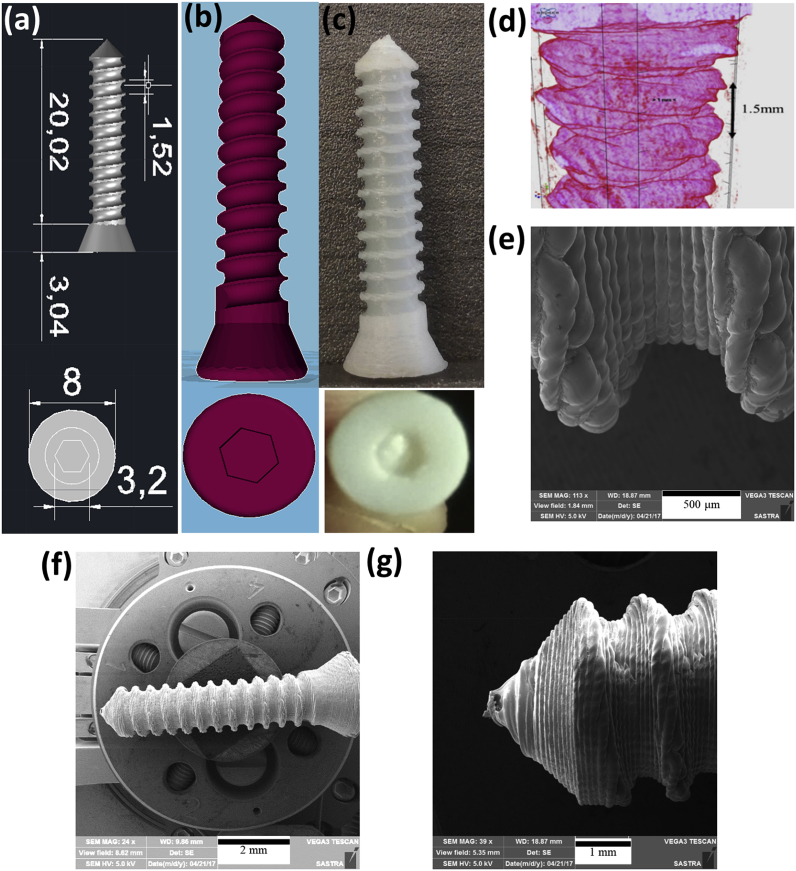
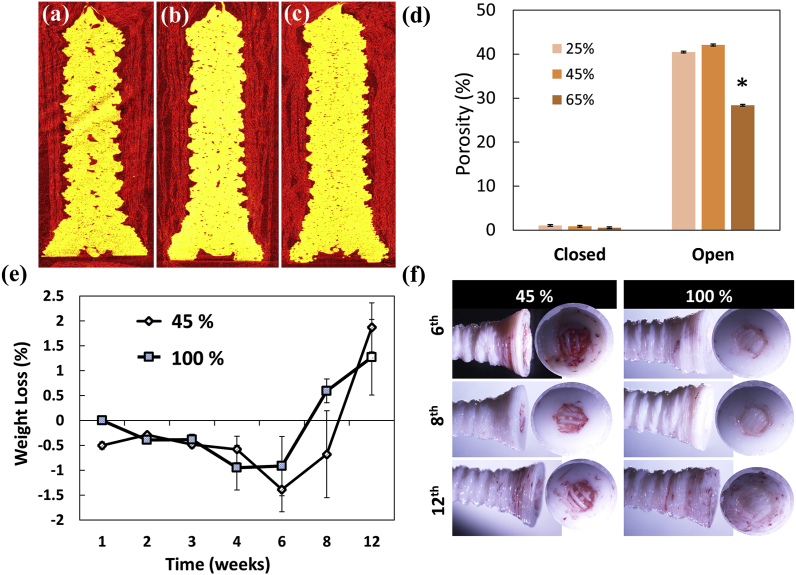
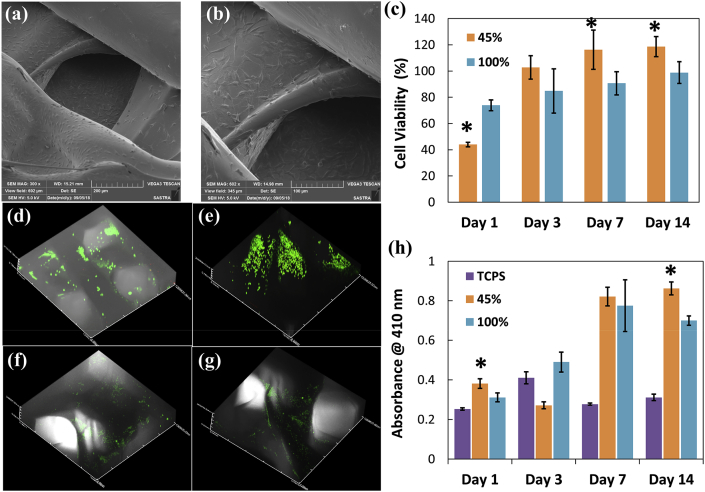
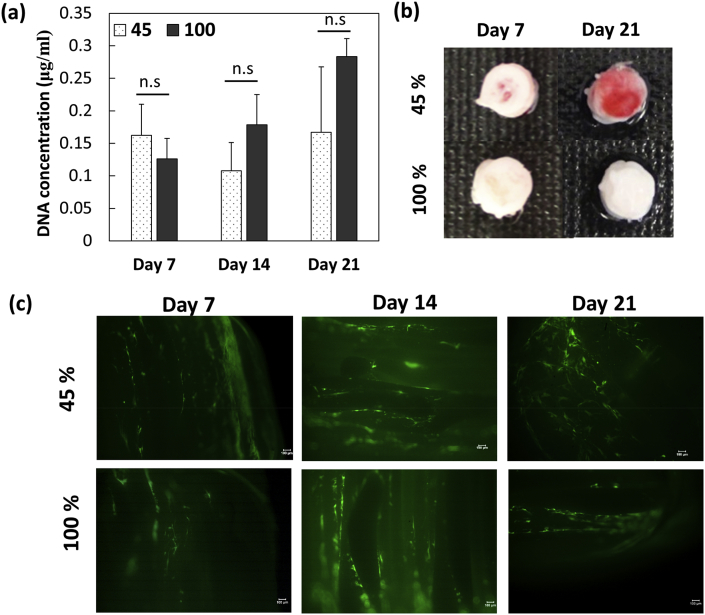
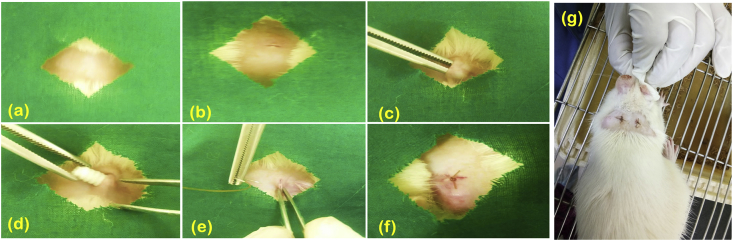
Advent of additive manufacturing in biomedical field has nurtured fabrication of complex, customizable and reproducible orthopaedic implants. Layer-by-layer deposition of biodegradable polymer employed in development of porous orthopaedic screws promises gradual dissolution and complete metabolic resorption thereby overcoming the limitations of conventional metallic screws. In the present study, screws with different pore sizes (916 × 918 μm to 254 × 146 μm) were 3D printed at 200 μm layer height by varying printing parameters such as print speed, fill density and travel speed to augment the bone ingrowth. Micro-CT analysis and scanning electron micrographs of screws with 45% fill density confirmed porous interconnections (40.1%) and optimal pore size (259 × 207 × 200 μm) without compromising the mechanical strength (24.58 ± 1.36 MPa). Due to the open pore structure, the 3D printed screws showed increased weight gain due to the deposition of calcium when incubated in simulated body fluid. Osteoblast-like cells attached on screw and infiltrated into the pores over 14 days of culture. Further, the screws also supported greater human mesenchymal stem cell adhesion, proliferation and mineralized matrix synthesis over a period of 21 days culture as compared to non-porous screws. These porous screws showed significantly increased vascularization in a rat subcutaneous implantation as compared to control screws. Porous screws produced by additive manufacturing may promote better osteointegration due to enhanced mineralization and vascularization.
生物医学领域增材制造的出现推动了复杂、可定制且可重复生产的骨科植入物的制造。用于多孔骨科螺钉开发的可生物降解聚合物的逐层沉积有望实现逐渐溶解和完全代谢吸收,从而克服传统金属螺钉的局限性。在本研究中,通过改变打印速度、填充密度和行进速度等打印参数,以200μm的层高3D打印出不同孔径(916×918μm至254×146μm)的螺钉,以促进骨长入。对填充密度为45%的螺钉进行的显微CT分析和扫描电子显微镜图像证实了多孔互连(40.1%)和最佳孔径(259×207×200μm),同时不影响机械强度(24.58±1.36MPa)。由于具有开放的孔隙结构,3D打印的螺钉在模拟体液中孵育时,由于钙的沉积而显示出重量增加。在14天的培养过程中,成骨样细胞附着在螺钉上并渗入孔隙。此外,与无孔螺钉相比,在21天的培养期内,这些螺钉还支持更多人间充质干细胞的粘附、增殖和矿化基质合成。与对照螺钉相比,通过增材制造生产的多孔螺钉在大鼠皮下植入时显示出明显增加的血管化。增材制造生产的多孔螺钉可能由于矿化和血管化增强而促进更好的骨整合。