Aix-Marseille Université, CNRS UMR 7257, Architecture et Fonction des Macromolécules Biologiques, 163 Avenue de Luminy, 13288, Marseille, France.
Department of Biochemistry and Molecular Biology, Colorado State University, Fort Collins, CO, USA; Aix-Marseille Université, CNRS UMR 7257, Architecture et Fonction des Macromolécules Biologiques, 163 Avenue de Luminy, 13288, Marseille, France.
Antiviral Res. 2020 Jun;178:104793. doi: 10.1016/j.antiviral.2020.104793. Epub 2020 Apr 10.
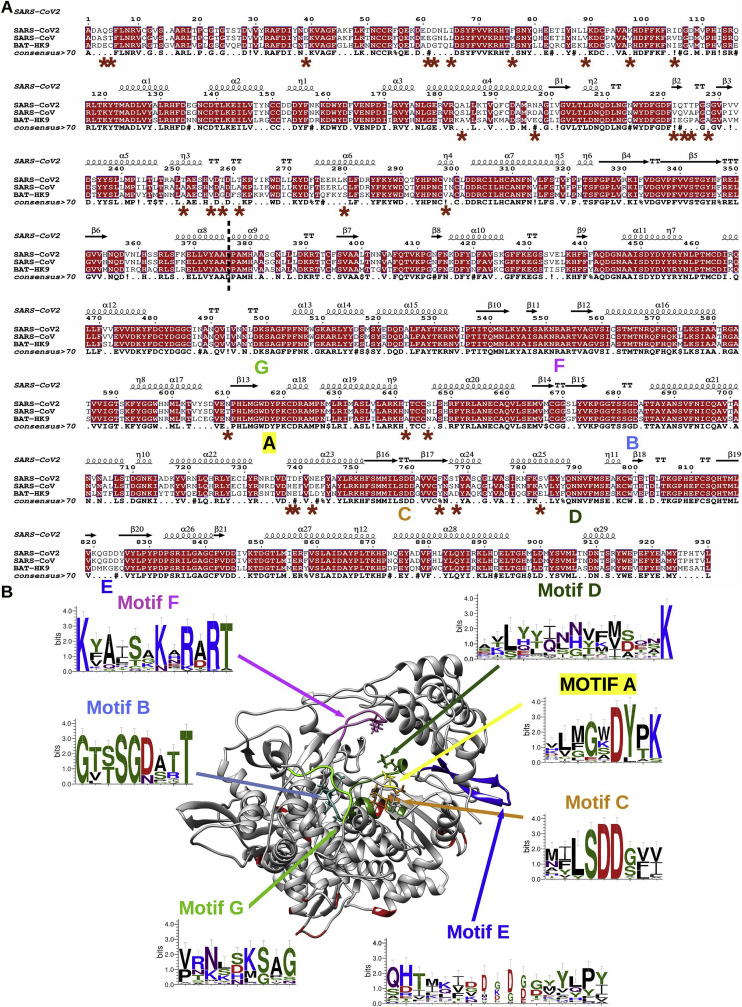
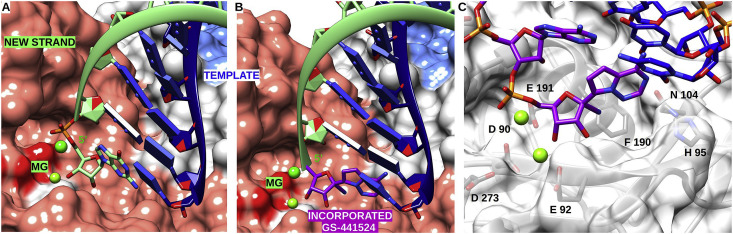
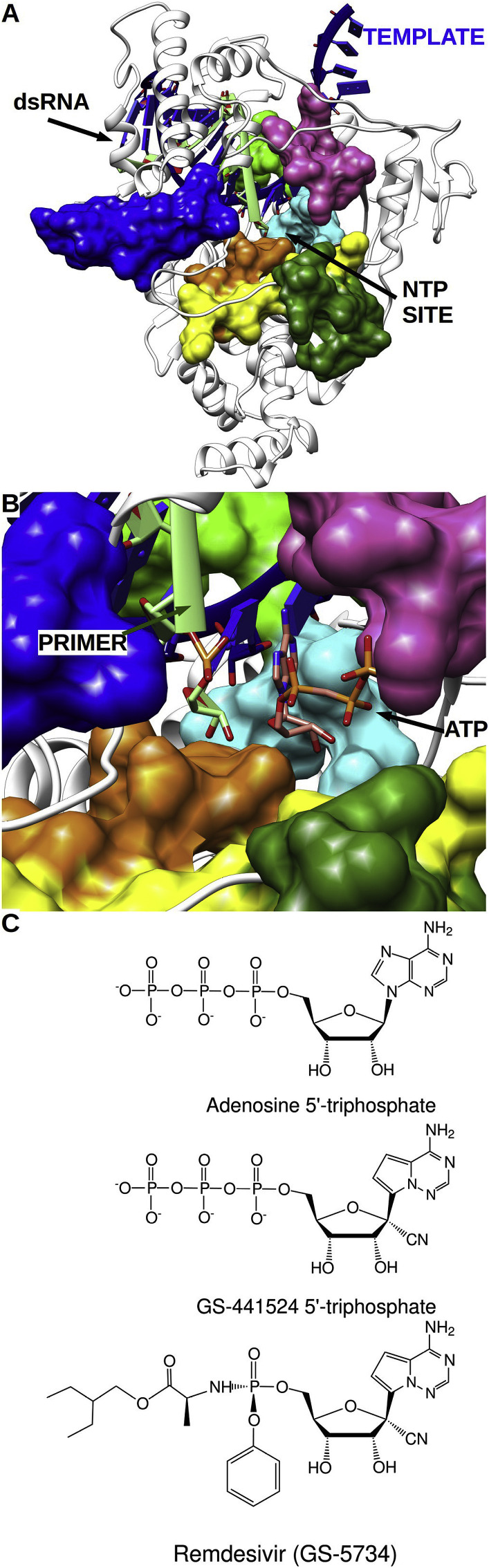
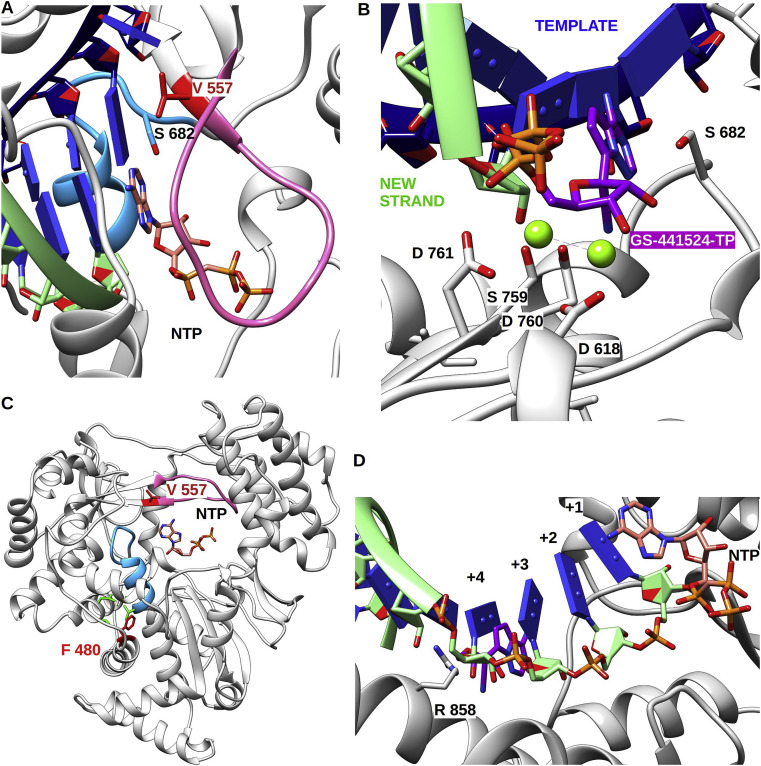
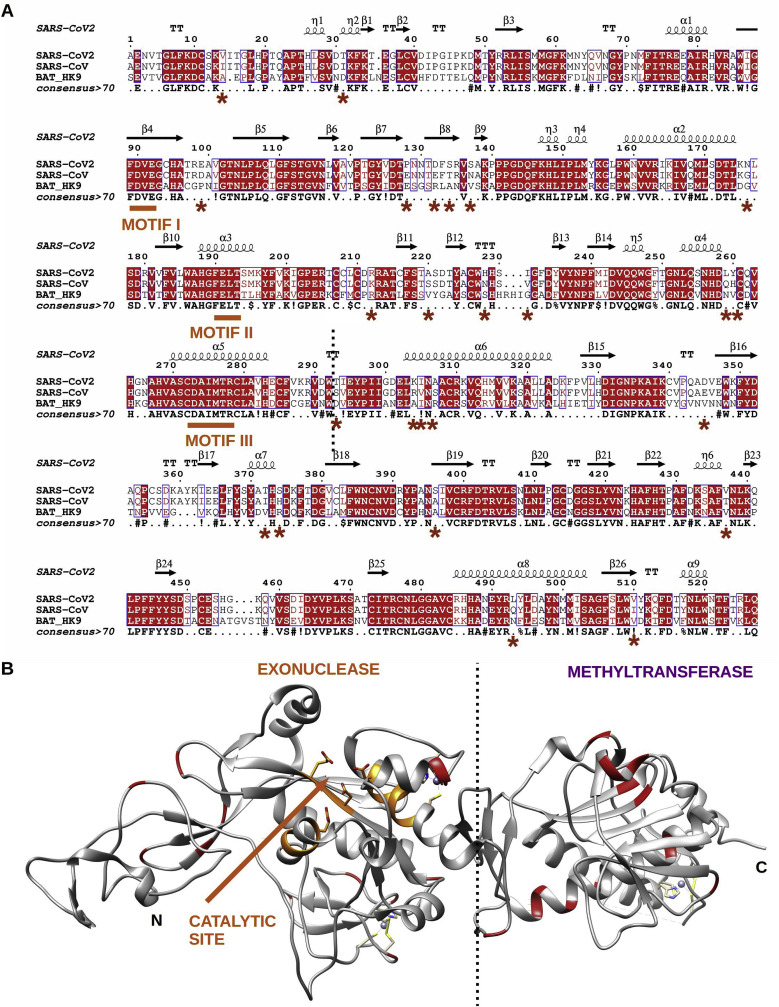
The rapid global emergence of SARS-CoV-2 has been the cause of significant health concern, highlighting the immediate need for antivirals. Viral RNA-dependent RNA polymerases (RdRp) play essential roles in viral RNA synthesis, and thus remains the target of choice for the prophylactic or curative treatment of several viral diseases, due to high sequence and structural conservation. To date, the most promising broad-spectrum class of viral RdRp inhibitors are nucleoside analogues (NAs), with over 25 approved for the treatment of several medically important viral diseases. However, Coronaviruses stand out as a particularly challenging case for NA drug design due to the presence of an exonuclease (ExoN) domain capable of excising incorporated NAs and thus providing resistance to many of these available antivirals. Here we use the available structures of the SARS-CoV RdRp and ExoN proteins, as well as Lassa virus N exonuclease to derive models of catalytically competent SARS-CoV-2 enzymes. We then map a promising NA candidate, GS-441524 (the active metabolite of Remdesivir) to the nucleoside active site of both proteins, identifying the residues important for nucleotide recognition, discrimination, and excision. Interestingly, GS-441524 addresses both enzyme active sites in a manner consistent with significant incorporation, delayed chain termination, and altered excision due to the ribose 1'-CN group, which may account for the increased antiviral effect compared to other available analogues. Additionally, we propose structural and function implications of two previously identified RdRp resistance mutations in relation to resistance against Remdesivir. This study highlights the importance of considering the balance between incorporation and excision properties of NAs between the RdRp and ExoN.
SARS-CoV-2 在全球范围内的迅速出现引起了人们对健康的极大关注,凸显了对抗病毒药物的迫切需求。病毒 RNA 依赖性 RNA 聚合酶(RdRp)在病毒 RNA 合成中发挥着重要作用,由于其高度的序列和结构保守性,它仍然是预防或治疗多种病毒疾病的首选靶标。迄今为止,最有前途的广谱病毒 RdRp 抑制剂是核苷类似物(NAs),其中超过 25 种被批准用于治疗几种重要的医学病毒疾病。然而,冠状病毒在 NA 药物设计方面是一个特别具有挑战性的案例,因为它存在一个能够切除已掺入的 NAs 的外切核酸酶(ExoN)结构域,从而对许多现有抗病毒药物产生耐药性。在这里,我们使用 SARS-CoV RdRp 和 ExoN 蛋白的现有结构,以及拉沙病毒 N 外切核酸酶,来推导具有催化能力的 SARS-CoV-2 酶模型。然后,我们将一种有前途的 NA 候选药物 GS-441524(Remdesivir 的活性代谢物)映射到两种蛋白质的核苷活性位点,确定了对核苷酸识别、区分和切除重要的残基。有趣的是,GS-441524 以一种与显著掺入、延迟链终止和由于核糖 1'-CN 基团而改变的切除相一致的方式作用于两种酶的活性位点,这可能解释了与其他可用类似物相比,它具有更高的抗病毒效果。此外,我们还提出了先前确定的两种 RdRp 耐药突变与 Remdesivir 耐药性之间的结构和功能关系。这项研究强调了在 RdRp 和 ExoN 之间考虑 NAs 的掺入和切除特性之间的平衡的重要性。