Nagasawa Ikuko, Koido Masaru, Tani Yuri, Tsukahara Satomi, Kunimasa Kazuhiro, Tomida Akihiro
Cancer Chemotherapy Center, Japanese Foundation for Cancer Research, Tokyo 135-8550, Japan.
Cancer Chemotherapy Center, Japanese Foundation for Cancer Research, Tokyo 135-8550, Japan.
iScience. 2020 Apr 24;23(4):101028. doi: 10.1016/j.isci.2020.101028. Epub 2020 Mar 31.
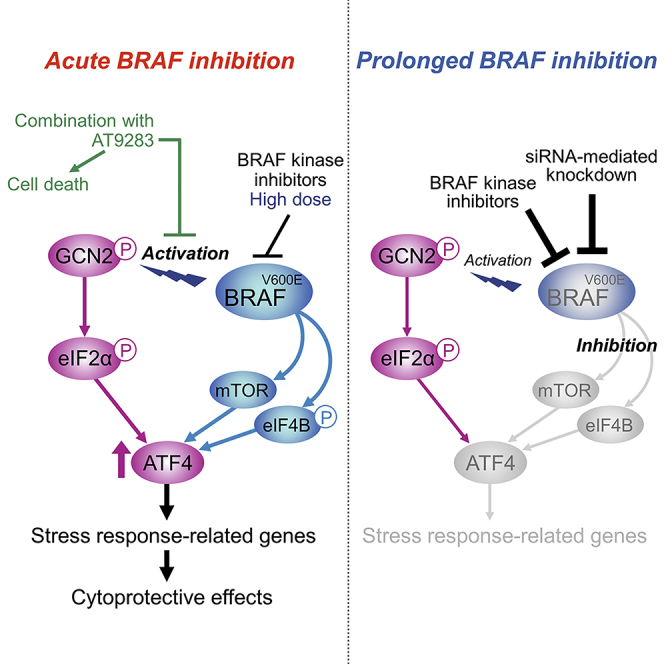
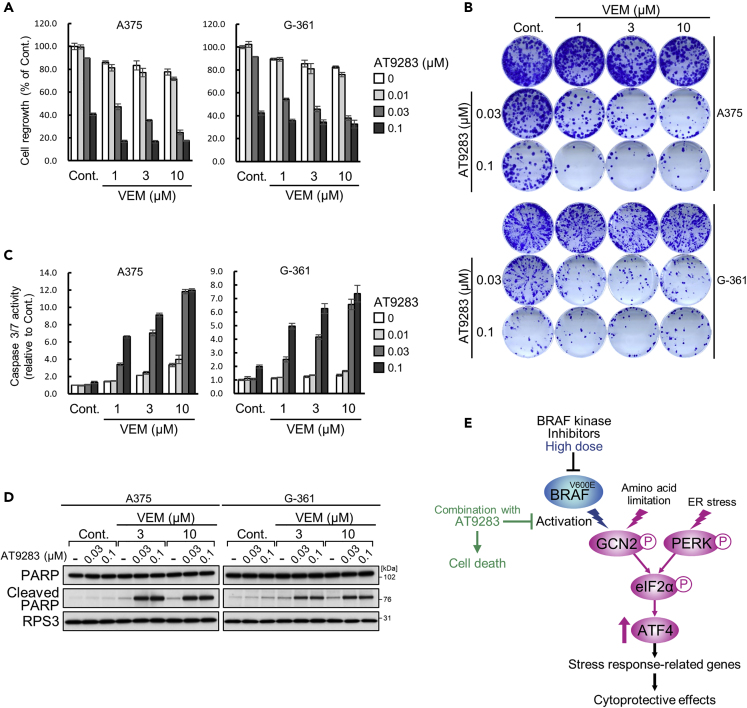
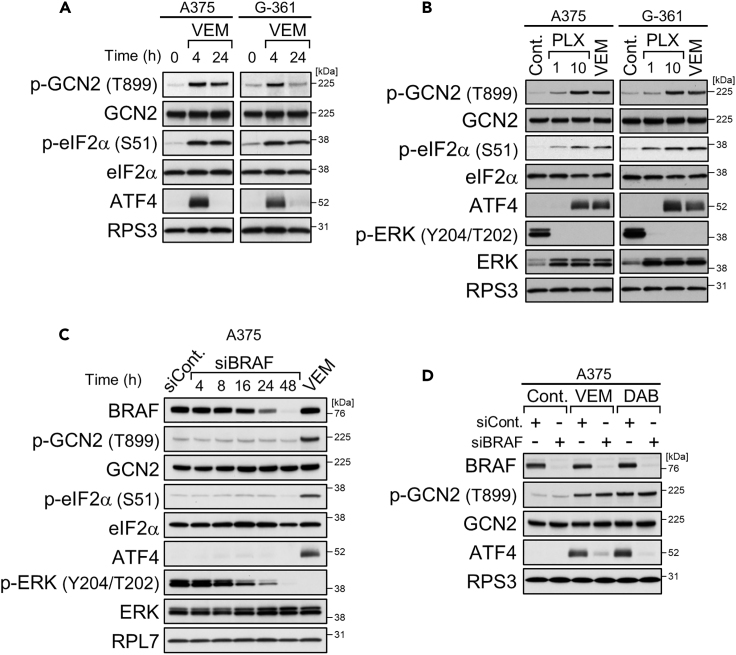
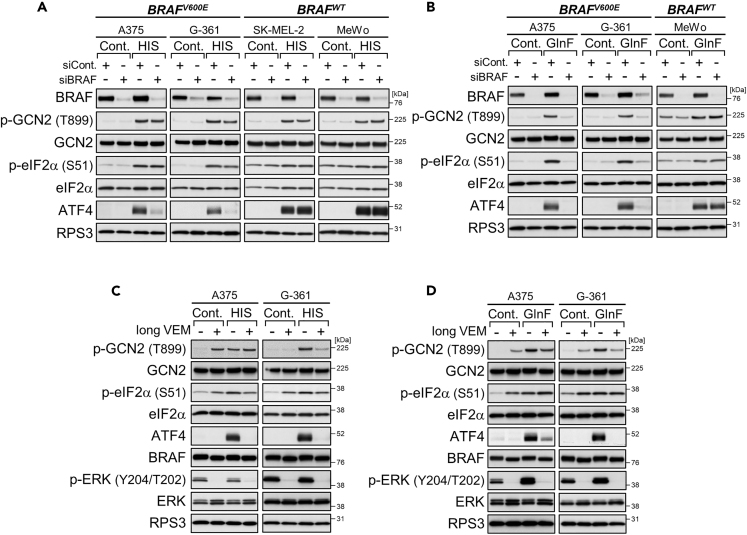
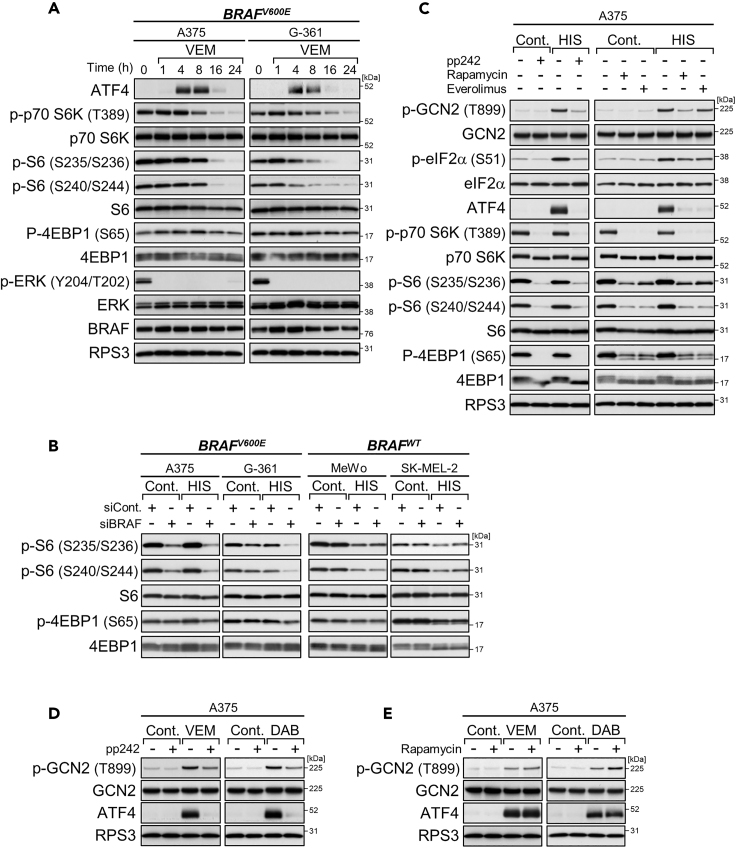
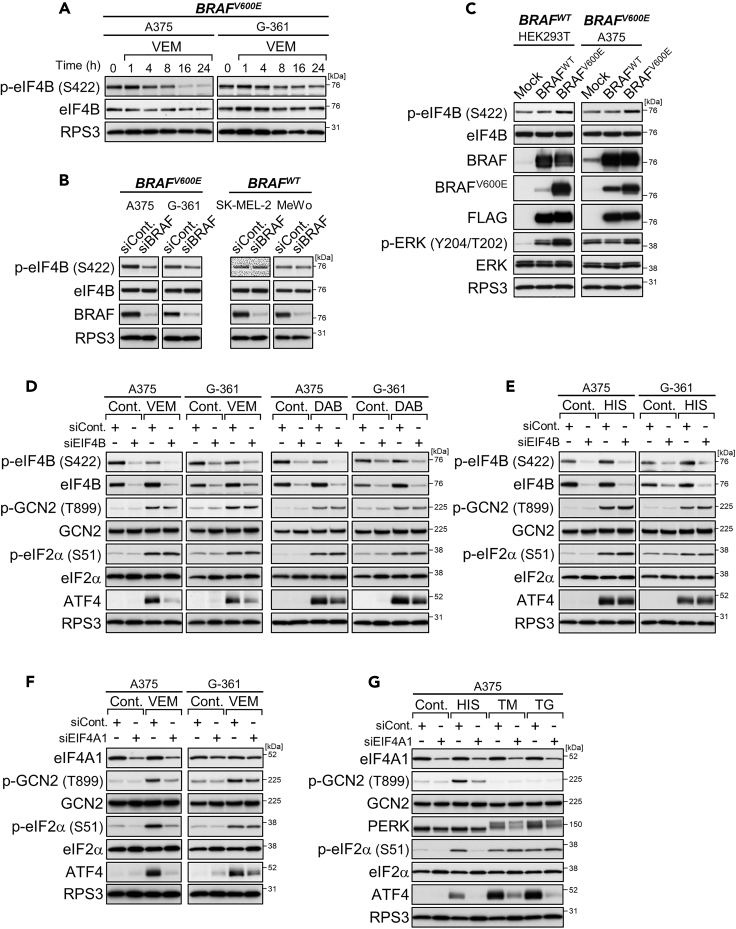
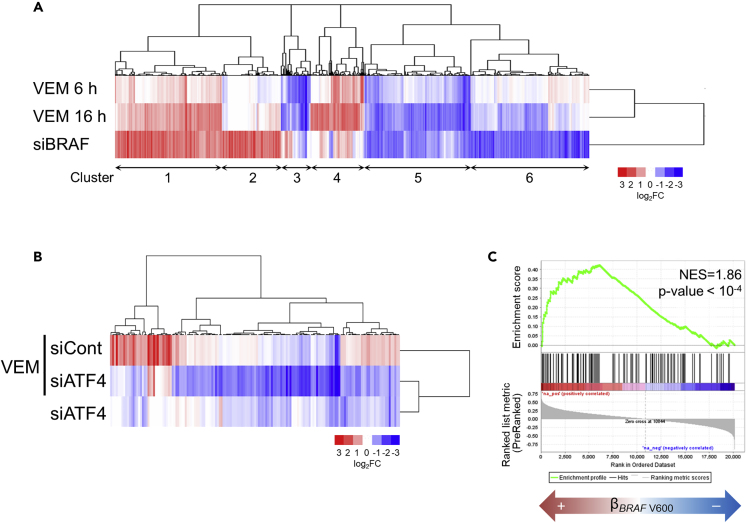
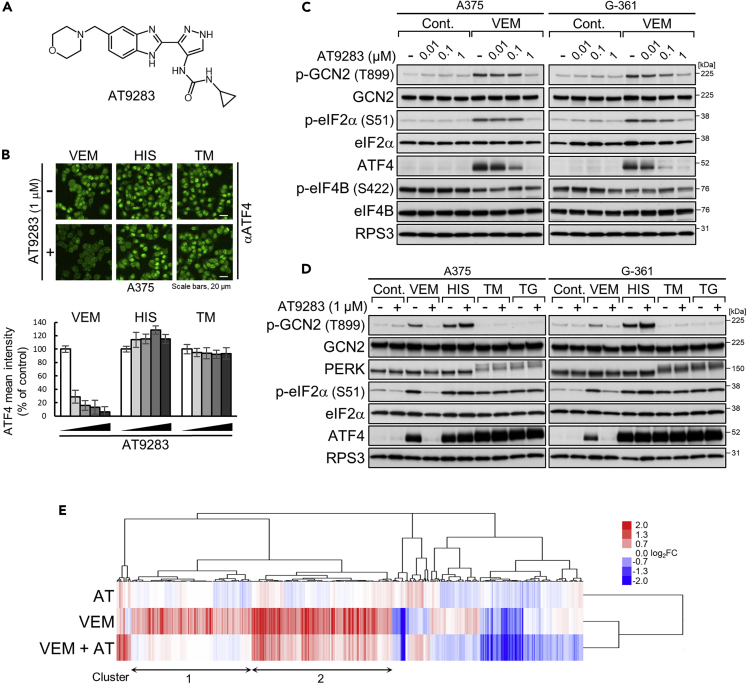
BRAF V600 mutation influences cellular signaling pathways for melanoma development. However, the role of oncogenic BRAF in adaptive stress response pathways is not fully understood. Here, we show that oncogenic BRAF plays an essential role in the induction of ATF4 following the activation of general control non-derepressible 2 (GCN2) kinase during nutrient stress and BRAF-targeted, therapeutic stress. Under GCN2 activation, BRAF ensures ATF4 induction by utilizing mTOR and eIF4B as downstream regulators. In contrast to the MEK-ERK pathway, this signaling pathway remains temporarily active even during treatment with BRAF inhibitors, thereby enabling the transient induction of ATF4. We also identify a chemical compound that prevents BRAF inhibitor-induced activation of the GCN2-ATF4 pathway and produces synergistic cell killing with BRAF inhibitors. Our findings establish a collaborative relationship between oncogenic BRAF and the GCN2-ATF4 signaling pathway, which may provide a novel therapeutic approach to target the adaptive stress response.
BRAF V600突变影响黑色素瘤发展的细胞信号通路。然而,致癌性BRAF在适应性应激反应通路中的作用尚未完全明确。在此,我们表明,在营养应激和BRAF靶向治疗应激期间,致癌性BRAF在一般控制非抑制性2(GCN2)激酶激活后诱导激活转录因子4(ATF4)的过程中发挥着重要作用。在GCN2激活的情况下,BRAF通过利用雷帕霉素靶蛋白(mTOR)和真核生物翻译起始因子4B(eIF4B)作为下游调节因子来确保ATF4的诱导。与丝裂原活化蛋白激酶/细胞外信号调节激酶(MEK-ERK)通路不同,即使在用BRAF抑制剂治疗期间,该信号通路仍保持暂时活跃,从而实现ATF4的短暂诱导。我们还鉴定出一种化合物,它可阻止BRAF抑制剂诱导的GCN2-ATF4通路激活,并与BRAF抑制剂产生协同细胞杀伤作用。我们的研究结果确立了致癌性BRAF与GCN2-ATF4信号通路之间的协同关系,这可能为靶向适应性应激反应提供一种新的治疗方法。