Physical and Theoretical Chemistry Laboratory, Department of Chemistry, University of Oxford, South Parks Road, Oxford, OX1 3QZ, UK.
Research Institute of Molecular Pathology (IMP), Vienna BioCenter (VBC), Campus-Vienna-Biocenter 1, 1030, Vienna, Austria.
Nat Commun. 2020 Apr 14;11(1):1772. doi: 10.1038/s41467-020-15642-w.
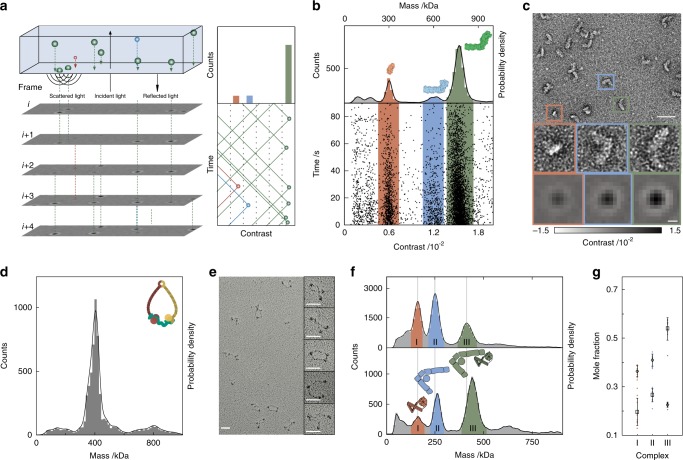
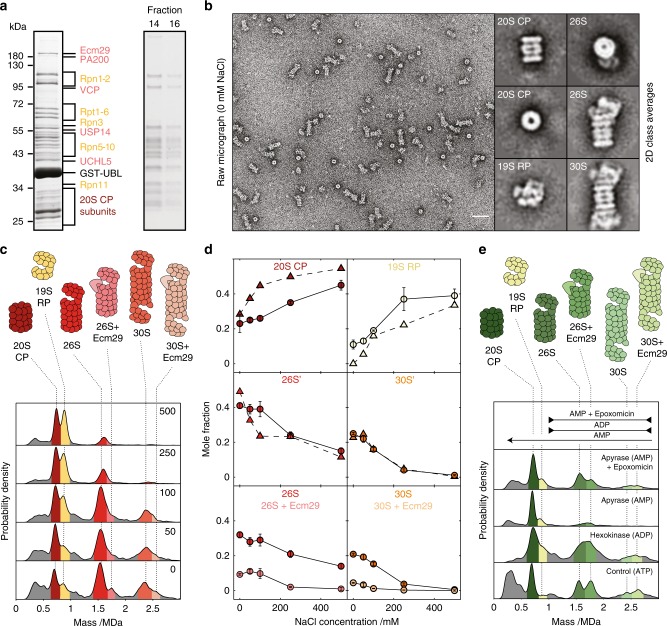
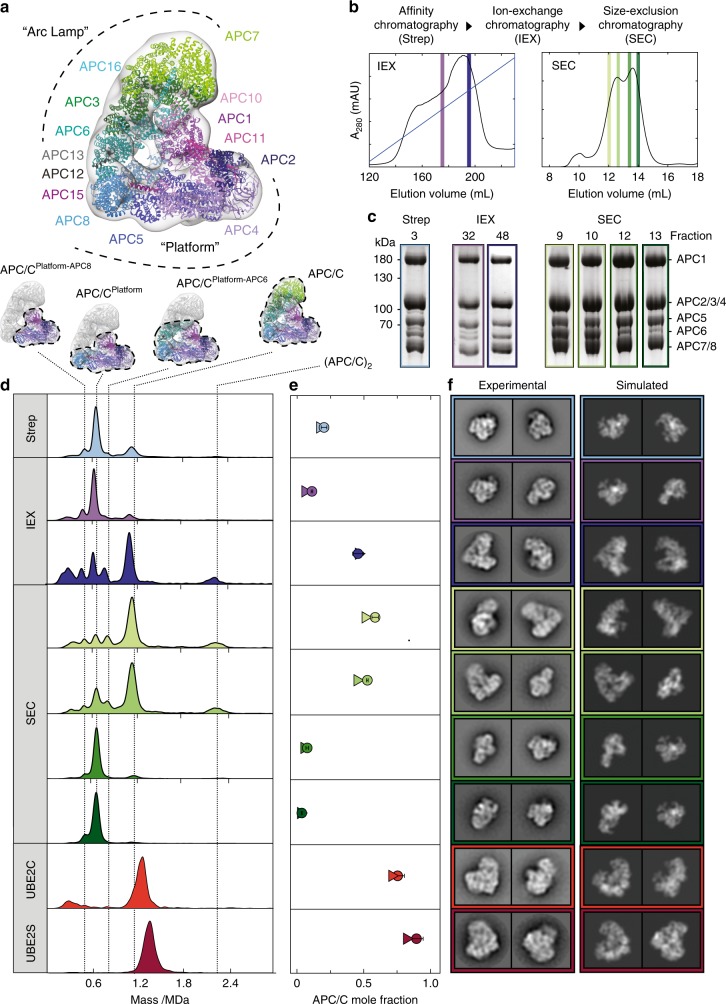
Sample purity is central to in vitro studies of protein function and regulation, and to the efficiency and success of structural studies using techniques such as x-ray crystallography and cryo-electron microscopy (cryo-EM). Here, we show that mass photometry (MP) can accurately characterize the heterogeneity of a sample using minimal material with high resolution within a matter of minutes. To benchmark our approach, we use negative stain electron microscopy (nsEM), a popular method for EM sample screening. We include typical workflows developed for structure determination that involve multi-step purification of a multi-subunit ubiquitin ligase and chemical cross-linking steps. When assessing the integrity and stability of large molecular complexes such as the proteasome, we detect and quantify assemblies invisible to nsEM. Our results illustrate the unique advantages of MP over current methods for rapid sample characterization, prioritization and workflow optimization.
样品纯度是研究蛋白质功能和调控的关键,也是利用 X 射线晶体学和冷冻电镜(cryo-EM)等技术进行结构研究的效率和成功的关键。在这里,我们展示了质量光度法(MP)可以使用最少的材料在几分钟内以高分辨率准确地描述样品的异质性。为了基准我们的方法,我们使用负染色电子显微镜(nsEM),这是一种用于 EM 样品筛选的流行方法。我们包括为结构确定开发的典型工作流程,涉及多步纯化多亚基泛素连接酶和化学交联步骤。在评估蛋白酶体等大型分子复合物的完整性和稳定性时,我们可以检测和量化 nsEM 不可见的组装。我们的结果说明了 MP 相对于当前快速样品表征、优先级划分和工作流程优化方法的独特优势。