Departamento de Imunobiologia, Instituto de Biologia -Universidade Federal Fluminense (UFF), Niterói, Brazil.
Laboratório de Imunologia Viral, Instituto Oswaldo Cruz (IOC) - Fundação Oswaldo Cruz (FIOCRUZ), Rio de Janeiro, Brazil.
Sci Rep. 2020 Apr 14;10(1):6351. doi: 10.1038/s41598-020-62776-4.
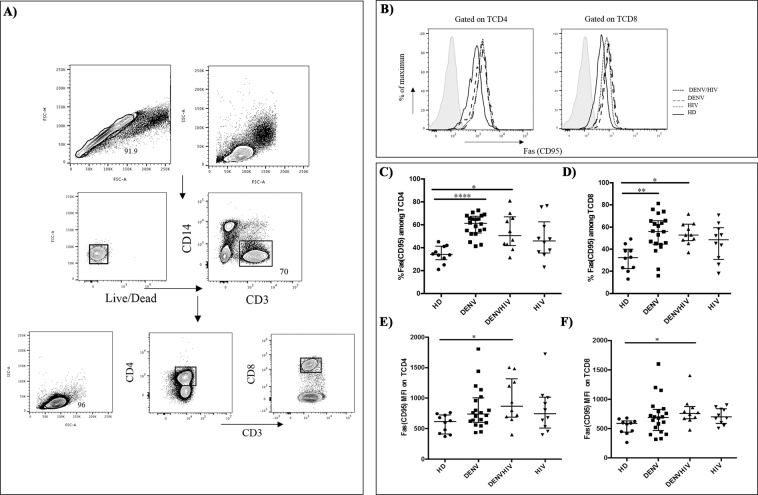
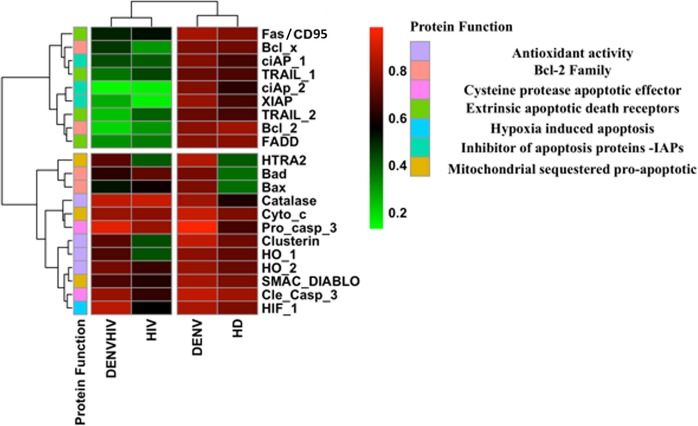
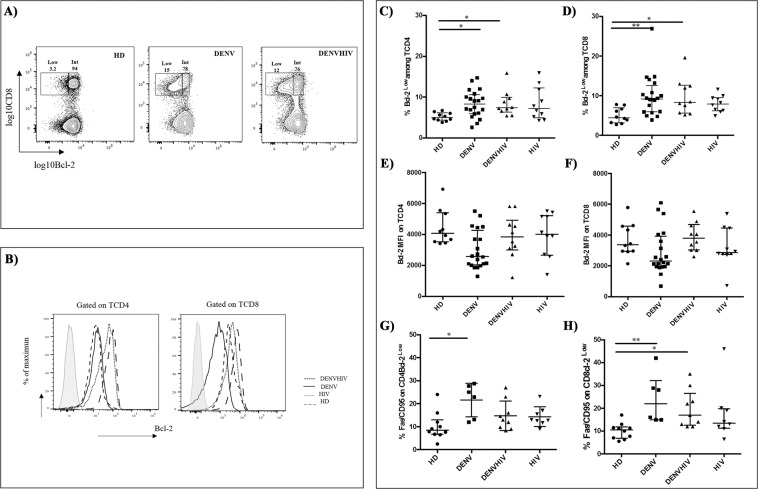
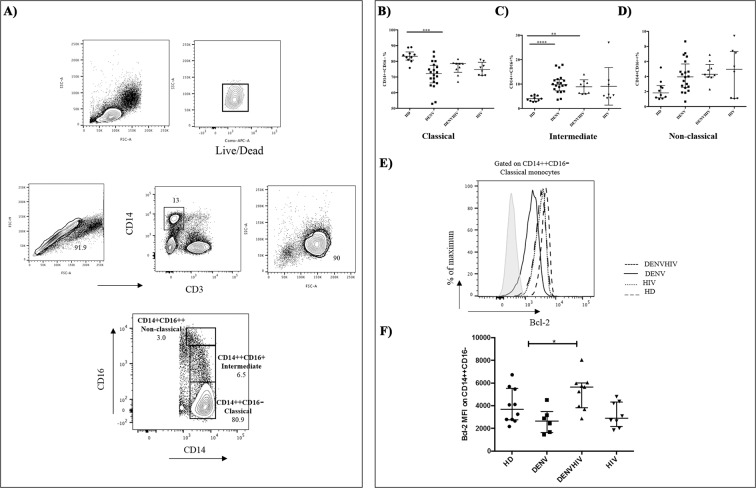
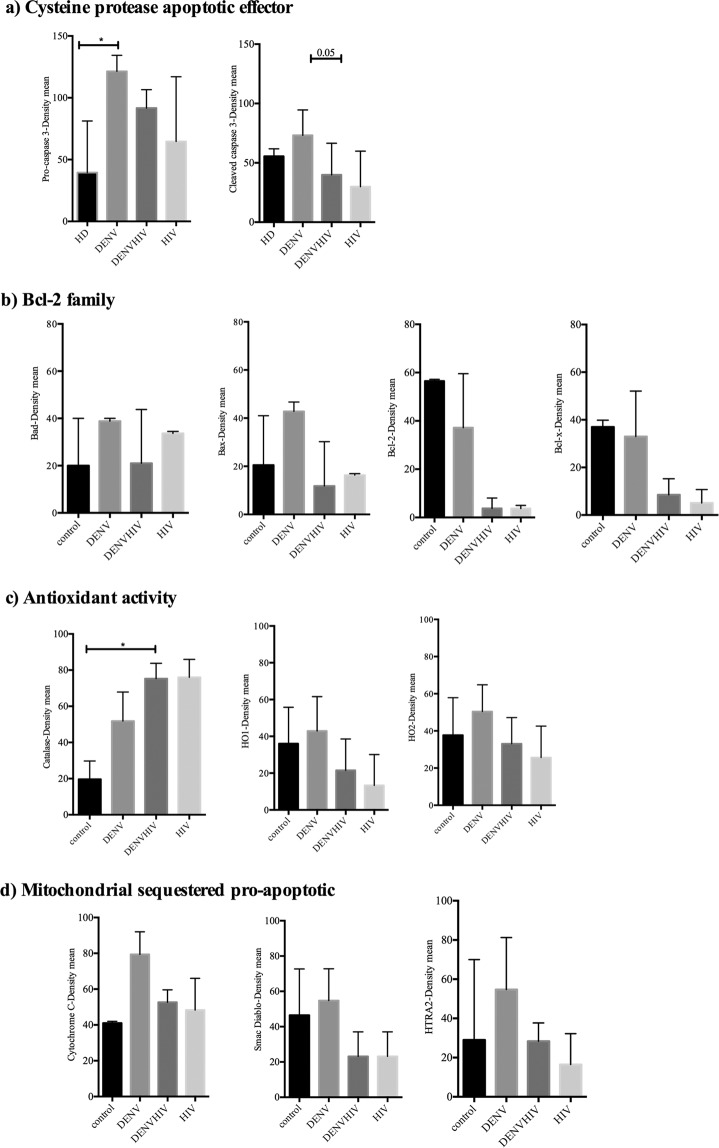
Dengue virus (DENV) co-circulation in Brazil represents a challenge for treatment and vaccine development. Despite public health impact, the occurrence of coinfections with other viruses is a common event. Increased T cell activation and altered inflammatory response are found during DENV coinfection with Human Immunodeficiency Virus (HIV) impacting HIV-pathogenesis. Even with Antiretroviral therapy (ART), HIV- treated patients had chronic immune activation and lymphocyte apoptosis. However, apoptotic mechanisms have not been investigated during coinfection with DENV. Our attention was attracted to apoptotic cell markers expressions in PBMCs from DENV and DENV/HIV coinfected patients. We found CD4/CD8 ratio inversion in most coinfected patients. CD4 T and CD8 T-cell subsets from DENV and DENV/HIV groups expressed low levels of anti-apoptotic protein Bcl-2. Furthermore, CD8 CD95 double positive cells frequency expressing low levels of Bcl-2 were significantly higher in these patients. Additionally, the density of Bcl-2 on classical monocytes (CD14CD16) was significantly lower during DENV infection. Upregulation of pro-apoptotic proteins and anti-apoptotic proteins were found in DENV and DENV/HIV, while catalase, an antioxidant protein, was upregulated mainly in DENV/HIV coinfection. These findings provide evidence of apoptosis triggering during DENV/HIV coinfection, which may contribute to knowledge of immunological response during DENV acute infection in HIV-patients treated with ART.
登革热病毒(DENV)在巴西的共同传播对治疗和疫苗开发构成了挑战。尽管对公共卫生有影响,但与其他病毒的合并感染是常见事件。在登革热病毒与人类免疫缺陷病毒(HIV)合并感染时,T 细胞的激活和炎症反应会发生改变,从而影响 HIV 的发病机制。即使接受抗逆转录病毒治疗(ART),HIV 治疗患者仍存在慢性免疫激活和淋巴细胞凋亡。然而,在登革热病毒合并感染期间,凋亡机制尚未得到研究。我们注意到登革热病毒和登革热病毒/ HIV 合并感染患者外周血单个核细胞(PBMC)中凋亡细胞标志物的表达。我们发现大多数合并感染患者的 CD4/CD8 比值发生反转。登革热病毒和登革热病毒/ HIV 组的 CD4 T 和 CD8 T 细胞亚群表达低水平的抗凋亡蛋白 Bcl-2。此外,这些患者中 CD8 CD95 双阳性细胞表达低水平 Bcl-2的频率显著更高。此外,在登革热病毒感染期间,经典单核细胞(CD14 CD16)上的 Bcl-2 密度明显降低。在登革热病毒和登革热病毒/ HIV 中发现了促凋亡蛋白和抗凋亡蛋白的上调,而抗氧化蛋白过氧化氢酶主要在登革热病毒/ HIV 合并感染时上调。这些发现为登革热病毒/ HIV 合并感染期间触发凋亡提供了证据,这可能有助于了解接受 ART 治疗的 HIV 患者登革热急性感染期间的免疫反应。