Chen Peng, Su Bin, Zhang Tong, Zhu Xiaojing, Xia Wei, Fu Yan, Zhao Guoxian, Xia Huan, Dai Lili, Sun Lijun, Liu Lifeng, Wu Hao
Center for Infectious Diseases, Beijing You'an Hospital, Capital Medical University, Beijing, China; Beijing Key Laboratory for HIV/AIDS Research, Beijing, China.
Center for Infectious Diseases, Beijing You'an Hospital, Capital Medical University , Beijing , China.
Front Immunol. 2017 Mar 13;8:272. doi: 10.3389/fimmu.2017.00272. eCollection 2017.
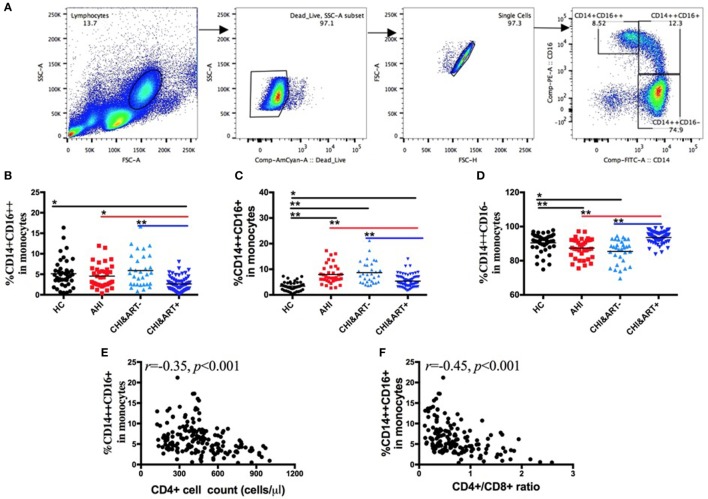
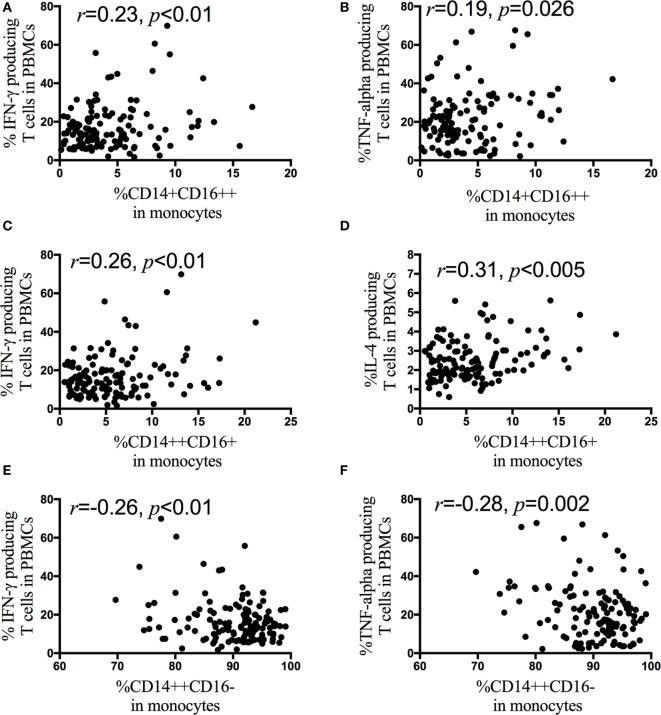
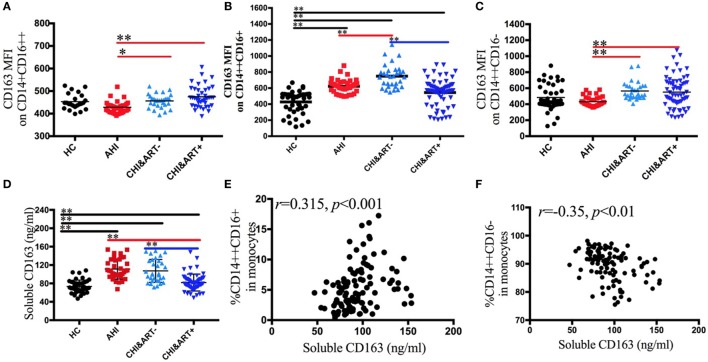
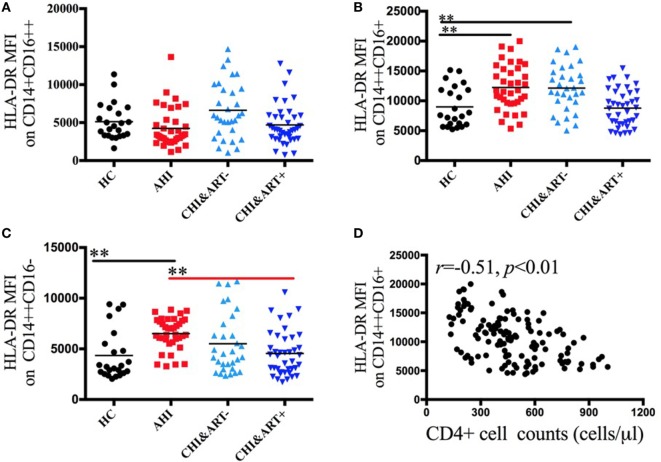
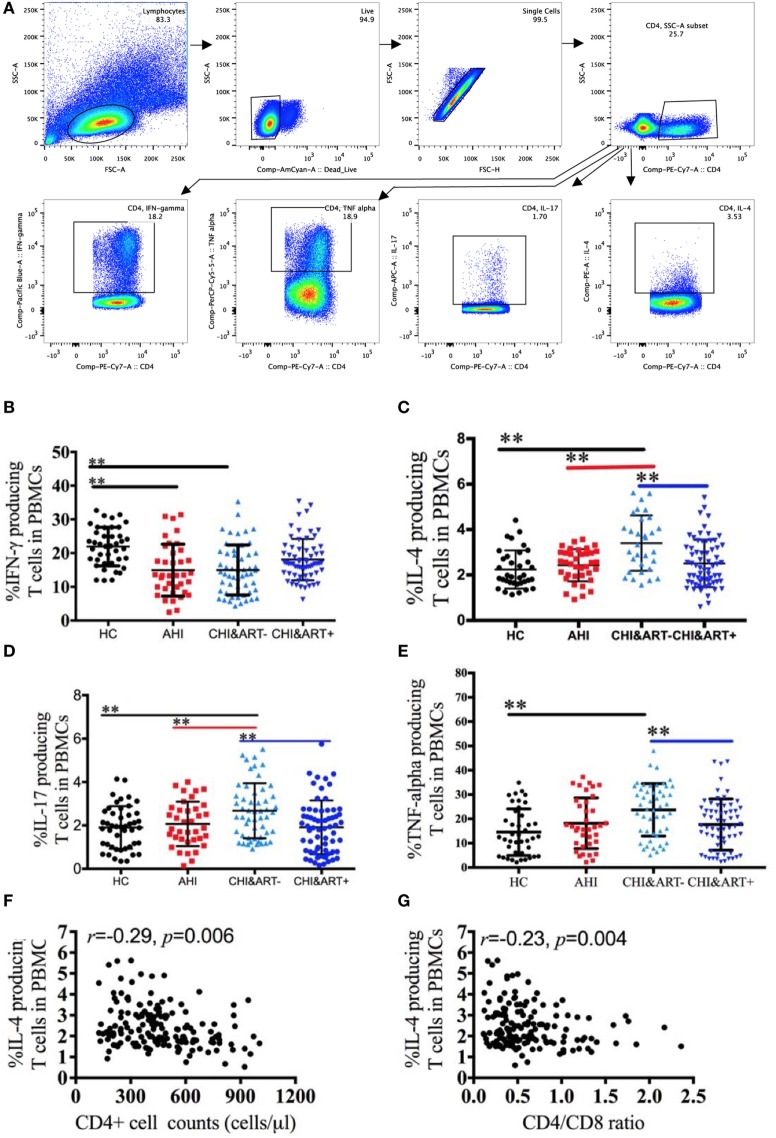
Monocytes have been recently subdivided into three subsets: classical (CD14++CD16-), intermediate (CD14++CD16+), and non-classical (CD14+CD16++) subsets, but phenotypic and functional abnormalities of the three monocyte subsets in HIV-1 infection have not been fully characterized, especially in acute HIV-1 infection (AHI). In the study, we explored the dynamic changes of monocyte subsets and their surface markers, and the association between monocyte subsets and the IFN-γ, interleukin (IL)-4, IL-17, and TNF-α producing CD4+ T cells in acute and chronic HIV-1-infected patients. We found that, in the acute HIV-1-infected individuals, the frequency of the intermediate CD14++CD16+ monocyte subsets, the CD163 density and HLA-DR density on intermediate CD14++CD16+ monocytes, and plasma soluble form of CD163 (sCD163) were significantly higher than that in healthy controls. Intermediate CD14++CD16+ monocyte subsets and their HLA-DR expression levels were inversely correlated with the CD4+ T cell counts, and the intermediate CD14++CD16+ monocytes were positively correlated with plasma sCD163. In contrast to the non-classical CD14+CD16++ and classical CD14++CD16- monocyte subsets, the frequency of the intermediate CD14++CD16+ monocytes was positively associated with the frequency of IFN-γ and IL-4 producing CD4+ T cells in HIV-1-infected patients. Taken together, our observations provide new insight into the roles of the monocyte subsets in HIV pathogenesis, particularly during AHI, and our findings may be helpful for the treatment of HIV-related immune activation.
经典型(CD14++CD16-)、中间型(CD14++CD16+)和非经典型(CD14+CD16++)亚群,但HIV-1感染中这三个单核细胞亚群的表型和功能异常尚未完全明确,尤其是在急性HIV-1感染(AHI)中。在本研究中,我们探讨了急性和慢性HIV-1感染患者单核细胞亚群及其表面标志物的动态变化,以及单核细胞亚群与产生IFN-γ、白细胞介素(IL)-4、IL-17和TNF-α的CD4+T细胞之间的关联。我们发现,在急性HIV-1感染个体中,中间型CD14++CD16+单核细胞亚群的频率、中间型CD14++CD16+单核细胞上的CD163密度和HLA-DR密度以及血浆可溶性CD163(sCD163)均显著高于健康对照。中间型CD14++CD16+单核细胞亚群及其HLA-DR表达水平与CD4+T细胞计数呈负相关,而中间型CD14++CD16+单核细胞与血浆sCD163呈正相关。与非经典型CD14+CD16++和经典型CD14++CD16-单核细胞亚群不同,HIV-1感染患者中中间型CD14++CD16+单核细胞的频率与产生IFN-γ和IL-4的CD4+T细胞的频率呈正相关。综上所述,我们的观察结果为单核细胞亚群在HIV发病机制中的作用提供了新的见解,尤其是在AHI期间,我们的发现可能有助于治疗HIV相关的免疫激活。