School of Sport, Nutrition and Exercise, Massey University, Auckland 0745, New Zealand.
School of Food and Advanced Technology, Massey University, Auckland 0745, New Zealand.
Nutrients. 2020 Apr 10;12(4):1046. doi: 10.3390/nu12041046.
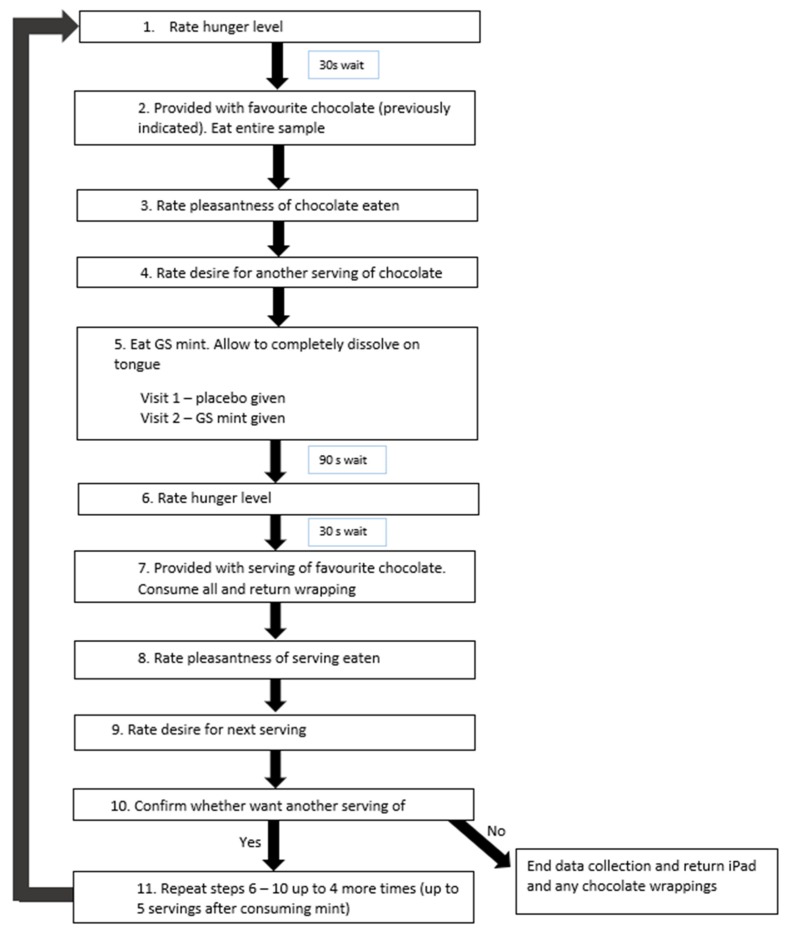
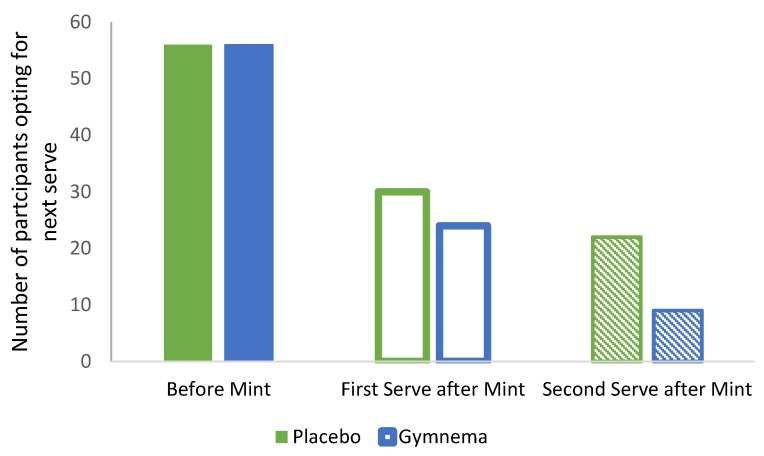
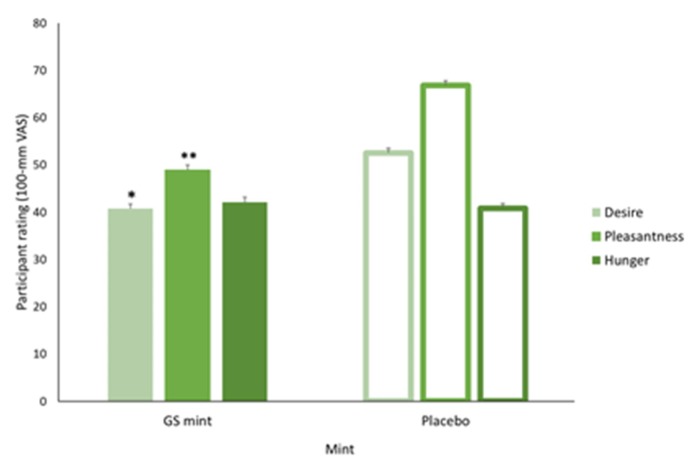
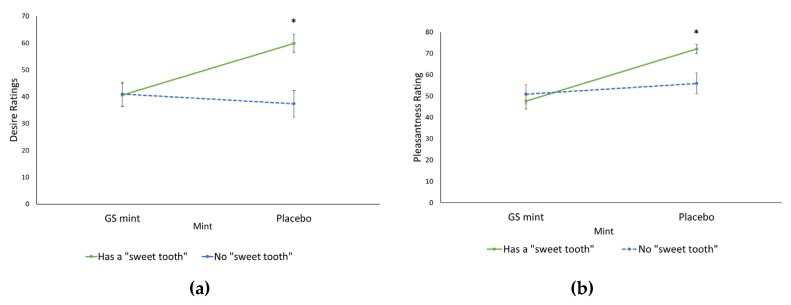
. Gymnemic acids, from the plant (GS), selectively suppress taste responses to sweet compounds without affecting the perception of other taste elements. The aim of this study was to investigate the effect of consuming a GS-containing mint on the desire to consume high-sugar sweet foods directly thereafter. . This study utilized a single-blind, crossover design comparing the consumption of a mint (dissolving tablet) containing 4 mg of gymnemic acids with an isocaloric placebo in 56 healthy young men and women. Participants were given samples of their favourite chocolate (varied between 14-18 g; energy varied between 292-370 kJ) and were directed to rate on their hunger on 100-mm visual analogue scales 30 s prior to consuming high-sugar sweet food (chocolate). They then consumed the GS mint or placebo mint and rated their perceived pleasantness and desire for more chocolate on separate visual analogue scales immediately following consumption of the high-sugar sweet food before being offered up to five additional servings (and asked to rate hunger, pleasantness and desire to eat more chocolate between each ingestion period). . The number of chocolate bars eaten decreased by 0.48 bars (21.3%) within a 15-min period of consumption of the GS mint ( = 0.006). Desire to eat more of the high-sugar sweet food ( = 0.011) and pleasantness of the high-sugar sweet food ( < 0.001) was reduced after GS mint intake. Those who reported having a 'sweet tooth' had a greater reduction in the pleasantness of chocolate ( = 0.037) and desire to eat more ( = 0.004) after consuming the GS mint for the first serving of a high-sugar sweet food following the mint. . Consuming gymnema-containing mints compared to placebo significantly reduced the quantity of chocolate eaten mainly due to a decrease in the desire and pleasantness of consuming it.
. 匙羹藤酸(从匙羹藤植物中提取)可选择性地抑制对甜味化合物的味觉反应,而不影响对其他味觉元素的感知。本研究旨在调查食用含有匙羹藤酸的薄荷糖后立即对高糖甜食的渴望程度的影响。. 本研究采用单盲、交叉设计,比较了 56 名健康年轻男性和女性食用含有 4 毫克匙羹藤酸的薄荷糖(溶解片)与等热量安慰剂的效果。参与者被给予他们最喜欢的巧克力(14-18 克;能量在 292-370 千焦之间)样本,并在食用高糖甜食(巧克力)前 30 秒使用 100 毫米视觉模拟量表对饥饿感进行评分。然后,他们食用匙羹藤酸薄荷糖或安慰剂薄荷糖,并在食用高糖甜食后立即使用单独的视觉模拟量表对感知的愉悦度和对更多巧克力的渴望度进行评分,之后再提供多达五份额外的巧克力(并要求在每次摄入期间对饥饿感、愉悦度和想吃更多巧克力的欲望进行评分)。. 在食用匙羹藤酸薄荷糖的 15 分钟内,巧克力棒的摄入量减少了 0.48 根(21.3%)( = 0.006)。食用匙羹藤酸薄荷糖后,对高糖甜食的渴望( = 0.011)和愉悦度(<0.001)降低。那些报告有“嗜甜”的人在首次食用高糖甜食后,食用匙羹藤酸薄荷糖后巧克力的愉悦度( = 0.037)和想吃更多的欲望( = 0.004)有更大的降低。. 与安慰剂相比,食用含匙羹藤的薄荷糖可显著减少巧克力的摄入量,主要原因是食用巧克力的欲望和愉悦度降低。