Yang Wenwei, Yang Xia, Li Shuntao
School of Civil and Hydraulic Engineering, Ningxia University, Yinchuan 750021, China.
Sensors (Basel). 2020 Apr 10;20(7):2149. doi: 10.3390/s20072149.
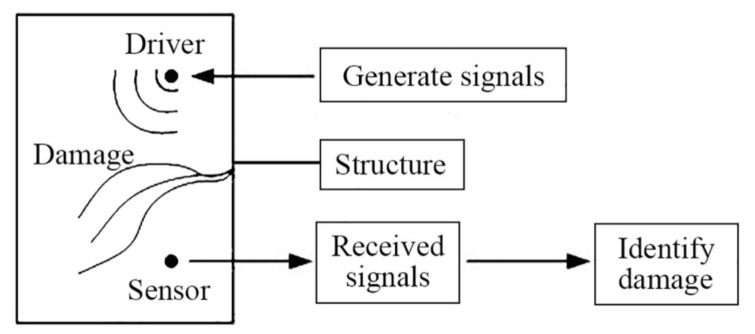
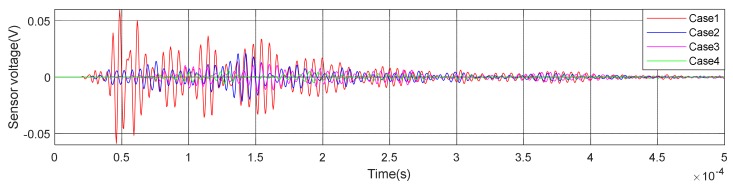
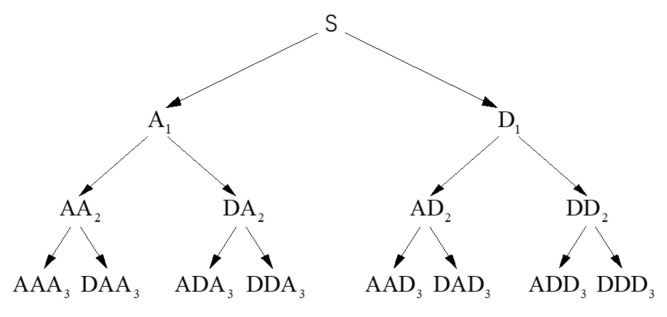
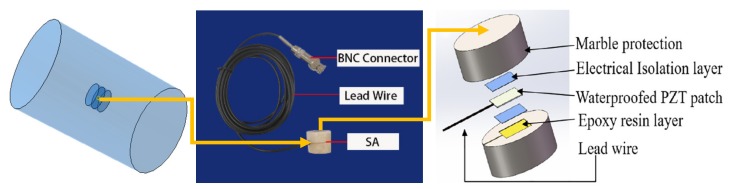
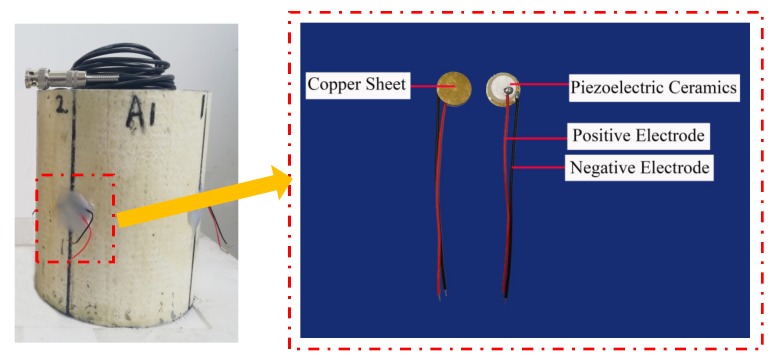
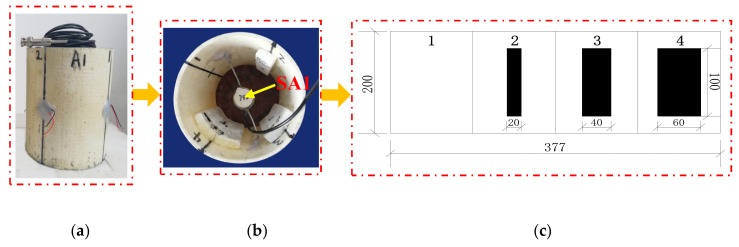
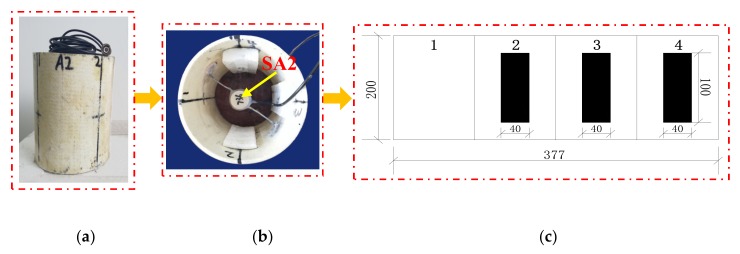
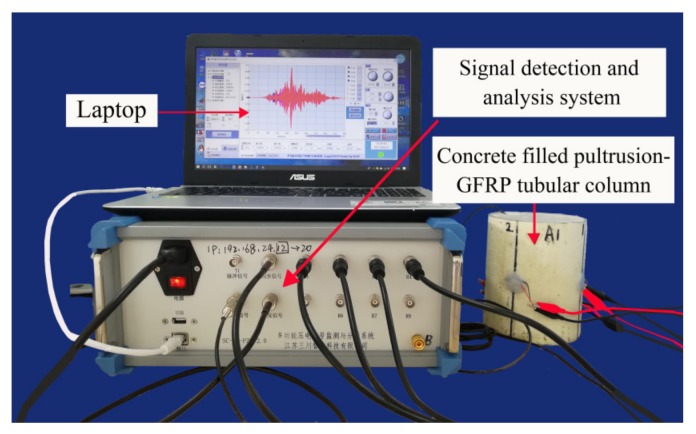
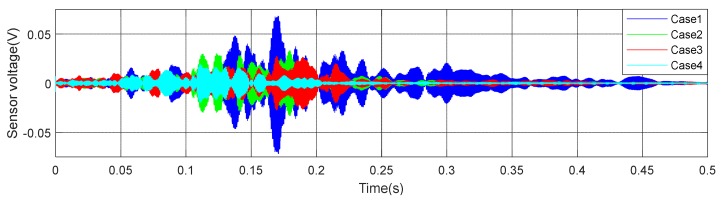
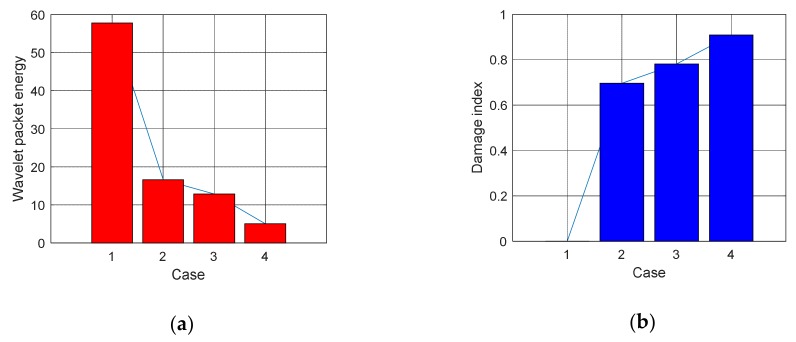
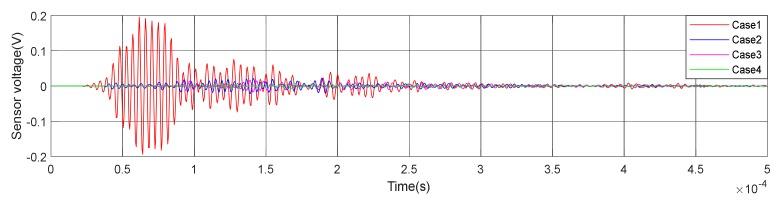
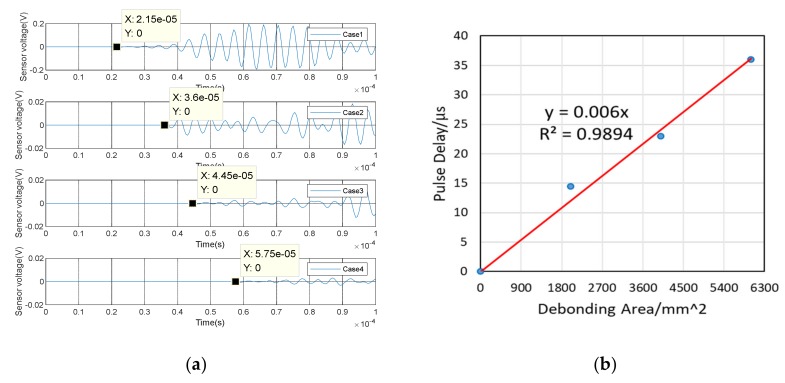
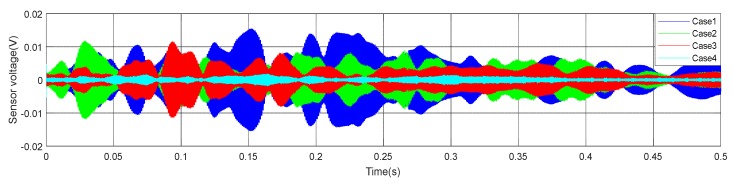
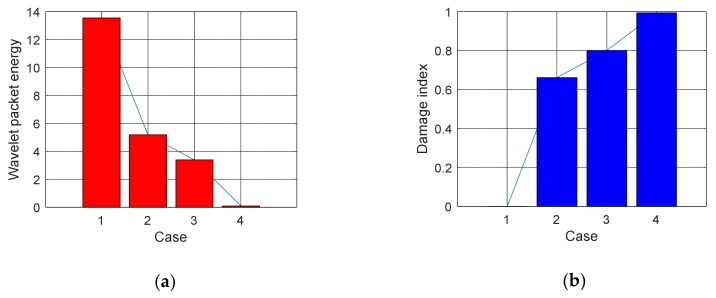
The concrete filled pultrusion-GFRP (Glass Fiber Reinforced Polymer) tubular column (CFGC) is popular in hydraulic structures or regions with poor environmental conditions due to its excellent corrosion resistance. Considering the influence of concrete hydration heat, shrinkage, and creep, debonding may occur in the interface between the GFRP tube and the concrete, which will greatly reduce the cooperation of the GFRP tube and concrete, and will weaken the mechanical property of CFGC. This paper introduces an active monitoring method based on the piezoelectric transducer. In the active sensing approach, the smart aggregate (SA) embedded in the concrete acted as a driver to transmit a modulated stress wave, and the PZT (Lead Zirconate Titanate) patches attached on the outer surface of CFGC serve as sensors to receive signals and transfer them to the computer for saving. Two groups of experiments were designed with the different debonding areas and thicknesses. The artificial damage of CFGC was identified and located by comparing the value of the delay under pulse excitation and the difference of wavelet-based energy under sweep excitation, and the damage indexes were defined based on the wavelet packet energy to quantify the level of the interface damage. The results showed that the debonding damage area of CFGC can be identified effectively through the active monitoring method, and the damage index can accurately reflect the damage level of the interface of GFRP tube and concrete. Therefore, this method can be used to identify and evaluate the interface debonding of CFGC in real time. In addition, if the method can be combined with remote sensing technology, it can be used as a real-time remote sensing monitoring technology to provide a solution for interface health monitoring of CFGC.
填充混凝土的拉挤玻璃纤维增强聚合物(GFRP)管柱(CFGC)因其优异的耐腐蚀性,在水工结构或环境条件恶劣的地区很受欢迎。考虑到混凝土水化热、收缩和徐变的影响,GFRP管与混凝土之间的界面可能会发生脱粘,这将大大降低GFRP管与混凝土的协同作用,并削弱CFGC的力学性能。本文介绍了一种基于压电换能器的主动监测方法。在主动传感方法中,埋入混凝土中的智能骨料(SA)作为驱动器传输调制应力波,粘贴在CFGC外表面的锆钛酸铅(PZT)贴片作为传感器接收信号并传输到计算机进行保存。设计了两组不同脱粘面积和厚度的实验。通过比较脉冲激励下的延迟值和扫频激励下基于小波的能量差,对CFGC的人工损伤进行识别和定位,并基于小波包能量定义损伤指标来量化界面损伤程度。结果表明,通过主动监测方法能够有效识别CFGC的脱粘损伤面积,损伤指标能够准确反映GFRP管与混凝土界面的损伤程度。因此,该方法可用于实时识别和评估CFGC的界面脱粘情况。此外,如果该方法能与遥感技术相结合,可作为一种实时遥感监测技术,为CFGC的界面健康监测提供解决方案。