Arrigo Rossella, Bartoli Mattia, Malucelli Giulio
Department of Applied Science and Technology, and local INSTM Unit, Viale Teresa Michel 5, 15121 Alessandria, Italy.
Department of Applied Science and Technology, C.so Duca degli Abruzzi 24, 10129 Torino, Italy.
Polymers (Basel). 2020 Apr 12;12(4):892. doi: 10.3390/polym12040892.
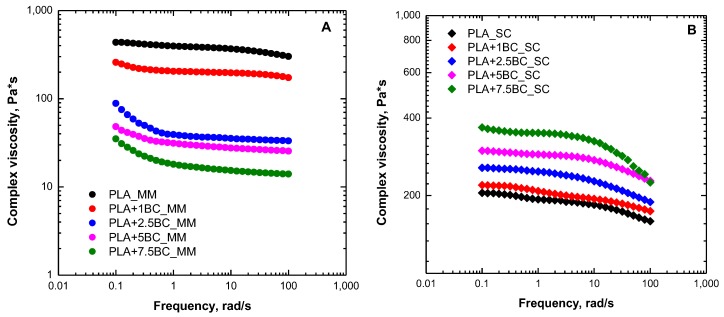
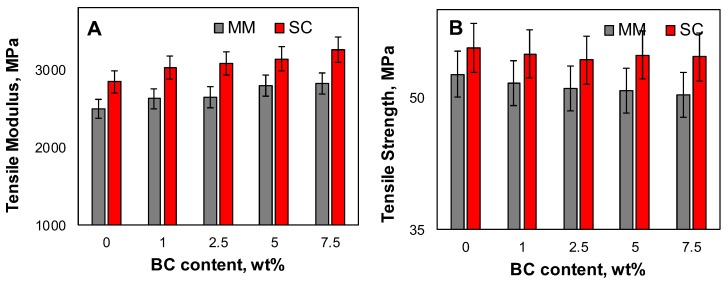
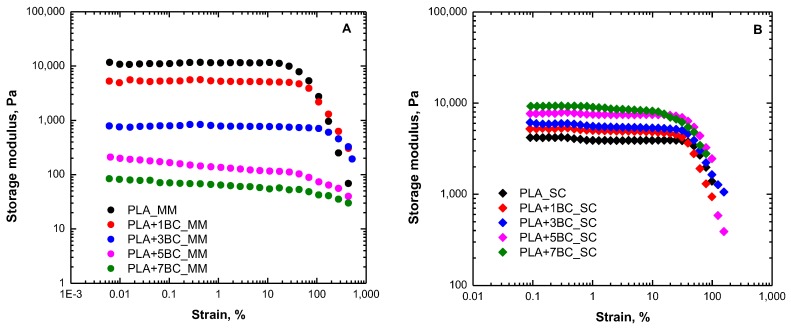
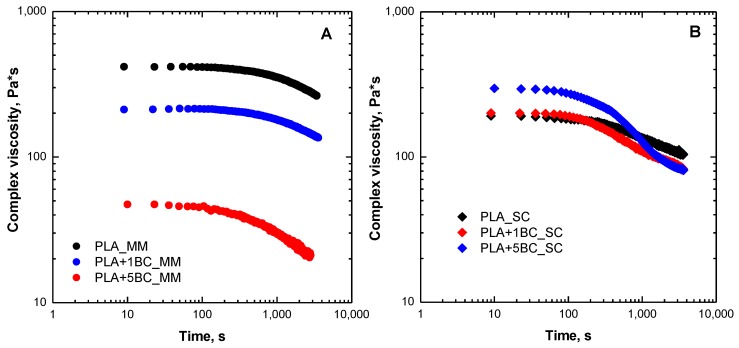
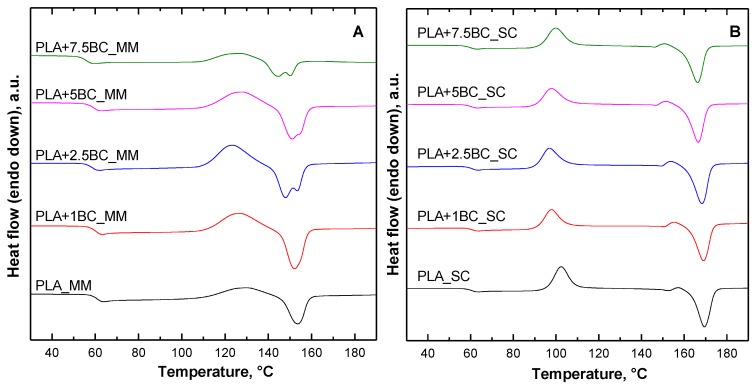
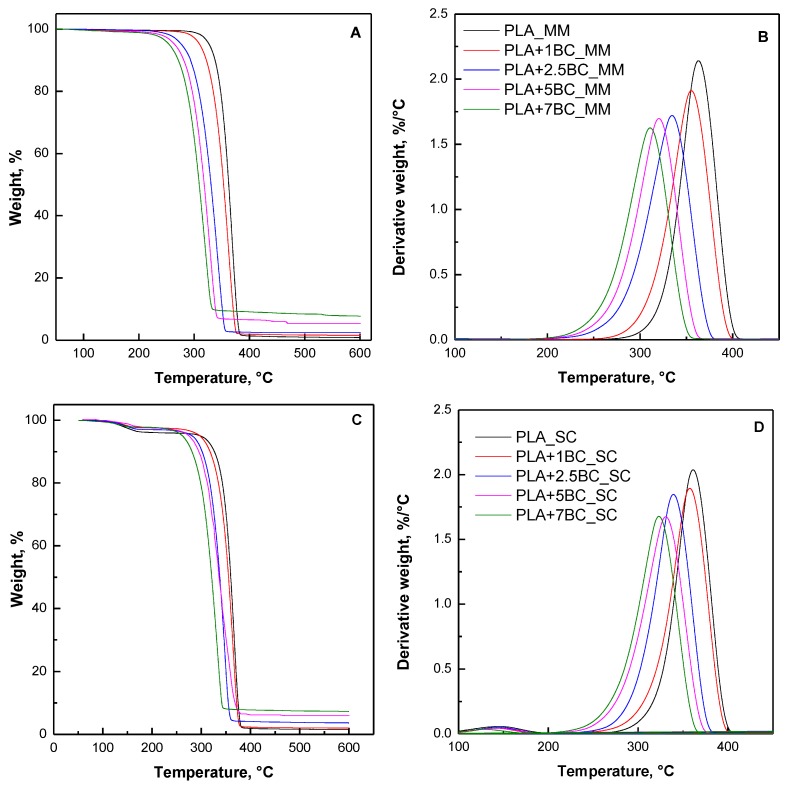
Biocomposites based on poly(lactic acid) (PLA) and biochar (BC) particles derived from spent ground coffee were prepared using two different processing routes, namely melt mixing and solvent casting. The formulated biocomposites were characterized through rheological, thermal, and mechanical analyses, aiming at evaluating the effects of the filler content and of the processing method on their final properties. The rheological characterization demonstrated the effectiveness of both exploited strategies in achieving a good level of filler dispersion within the matrix, notwithstanding the occurrence of a remarkable decrease of the PLA molar mass during the processing at high temperature. Nevertheless, significant alterations of the PLA rheological behavior were observed in the composites obtained by melt mixing. Differential scanning calorimetry (DSC) measurements indicated a remarkable influence of the processing method on the thermal behavior of biocomposites. More specifically, melt mixing caused the appearance of two melting peaks, though the structure of the materials remained almost amorphous; conversely, a significant increase of the crystalline phase content was observed for solvent cast biocomposites containing low amounts of filler that acted as nucleating agents. Finally, thermogravimetric analyses suggested a catalytic effect of BC particles on the degradation of PLA; its biocomposites showed decreased thermal stability as compared with the neat PLA matrix.
基于聚乳酸(PLA)和由废弃咖啡渣衍生的生物炭(BC)颗粒制备了生物复合材料,采用了两种不同的加工路线,即熔融共混和溶液浇铸。对所制备的生物复合材料进行了流变学、热学和力学分析,旨在评估填料含量和加工方法对其最终性能的影响。流变学表征表明,尽管在高温加工过程中聚乳酸的摩尔质量显著降低,但两种所采用的策略在实现填料在基体中良好分散程度方面都是有效的。然而,在通过熔融共混获得的复合材料中观察到聚乳酸流变行为有显著变化。差示扫描量热法(DSC)测量表明加工方法对生物复合材料的热行为有显著影响。更具体地说,熔融共混导致出现两个熔融峰,尽管材料结构几乎仍为非晶态;相反,对于含有少量作为成核剂的填料的溶液浇铸生物复合材料,观察到结晶相含量显著增加。最后,热重分析表明生物炭颗粒对聚乳酸的降解有催化作用;与纯聚乳酸基体相比,其生物复合材料的热稳定性降低。