Gonçalves Carolina, Gonçalves Inês C, Magalhães Fernão D, Pinto Artur M
LEPABE-Faculdade de Engenharia, Universidade do Porto, rua Dr. Roberto Frias, Porto 4200-465, Portugal.
INEB-National Institute of Biomedical Engineering, University of Porto, Rua do Campo Alegre, 823, Porto 4150-180, Portugal.
Polymers (Basel). 2017 Jul 6;9(7):269. doi: 10.3390/polym9070269.
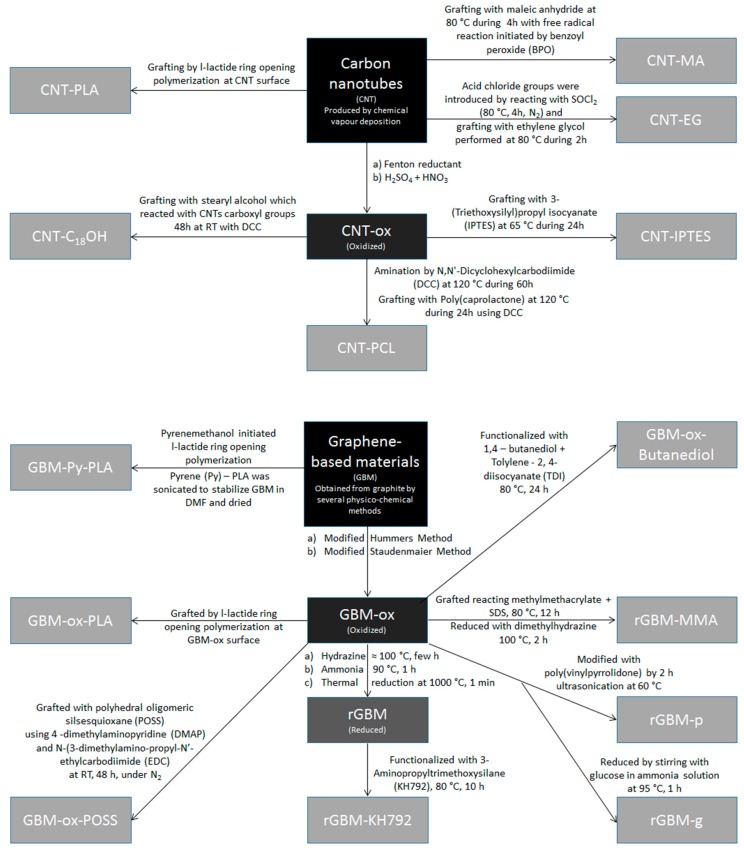
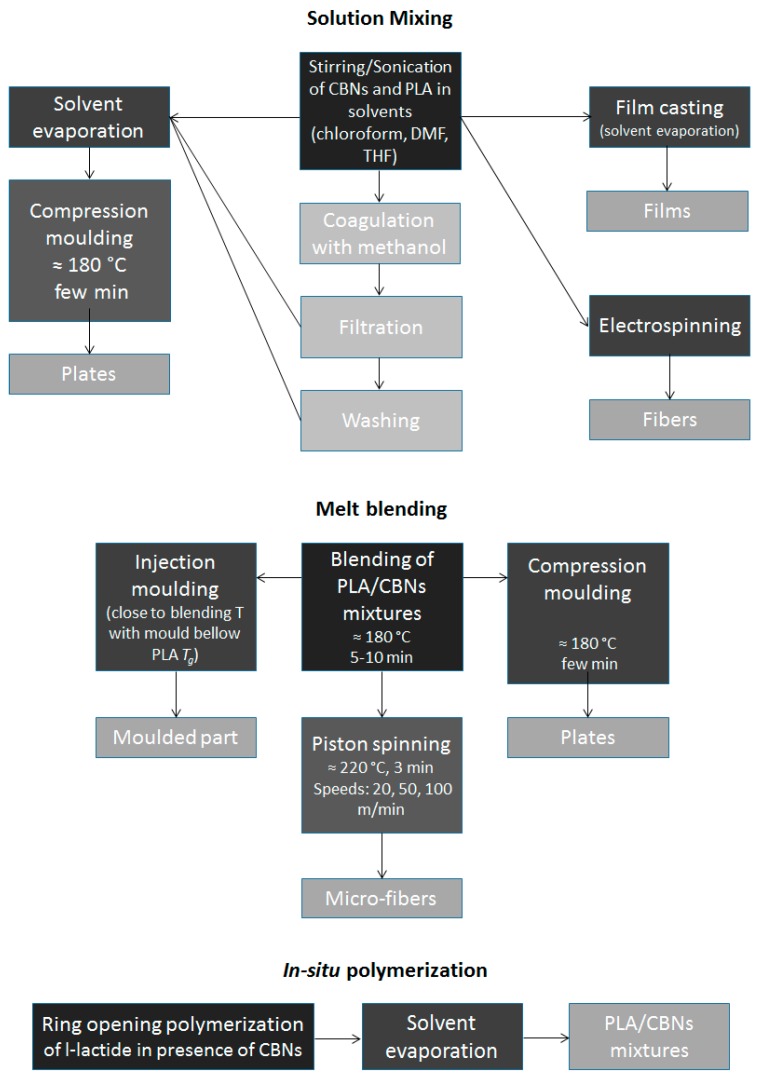
Poly(lactic acid) (PLA) is a green alternative to petrochemical commodity plastics, used in packaging, agricultural products, disposable materials, textiles, and automotive composites. It is also approved by regulatory authorities for several biomedical applications. However, for some uses it is required that some of its properties be improved, namely in terms of thermo-mechanical and electrical performance. The incorporation of nanofillers is a common approach to attain this goal. The outstanding properties of carbon-based nanomaterials (CBN) have caused a surge in research works dealing with PLA/CBN composites. The available information is compiled and reviewed, focusing on PLA/CNT (carbon nanotubes) and PLA/GBM (graphene-based materials) composites. The production methods, and the effects of CBN loading on PLA properties, namely mechanical, thermal, electrical, and biological, are discussed.
聚乳酸(PLA)是石化商品塑料的绿色替代品,用于包装、农产品、一次性材料、纺织品和汽车复合材料。它也被监管机构批准用于多种生物医学应用。然而,对于某些用途,需要改善其某些性能,即在热机械和电气性能方面。加入纳米填料是实现这一目标的常用方法。碳基纳米材料(CBN)的优异性能导致了大量关于PLA/CBN复合材料的研究工作。现有的信息被汇编和综述,重点是PLA/CNT(碳纳米管)和PLA/GBM(石墨烯基材料)复合材料。讨论了生产方法以及CBN负载量对PLA性能(即机械性能、热性能、电性能和生物性能)的影响。