Herrera-Silveira Jorge A, Pech-Cardenas Monica A, Morales-Ojeda Sara M, Cinco-Castro Siuling, Camacho-Rico Andrea, Caamal Sosa Juan P, Mendoza-Martinez Juan E, Pech-Poot Eunice Y, Montero Jorge, Teutli-Hernandez Claudia
Departamento Recursos del Mar, Centro de Investigación y de Estudios Avanzados (CINVESTAV) del Instituto Politécnico Nacional Unidad Mérida, Mérida, Yucatán, México.
Laboratorio de Ecología, Unidad Multidisciplinaria de Docencia e Investigación de la Facultad de Ciencias, Unidad Sisal, Universidad Nacional Autónoma de México, Mérida, Yucatán, México.
PeerJ. 2020 Apr 6;8:e8790. doi: 10.7717/peerj.8790. eCollection 2020.
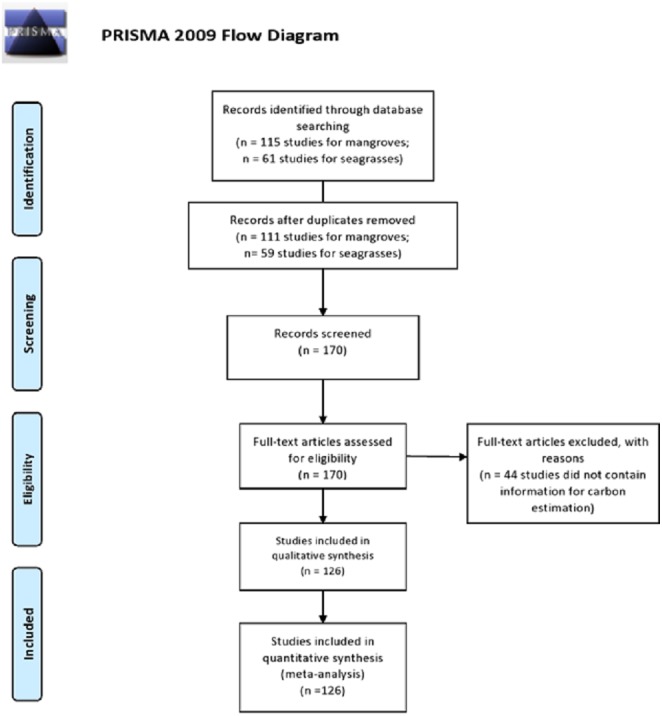
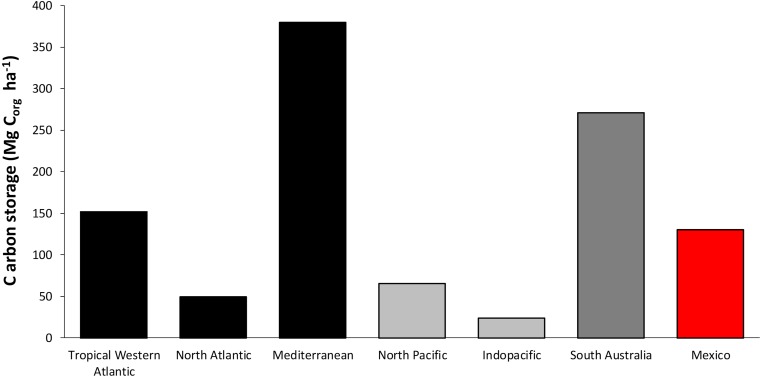
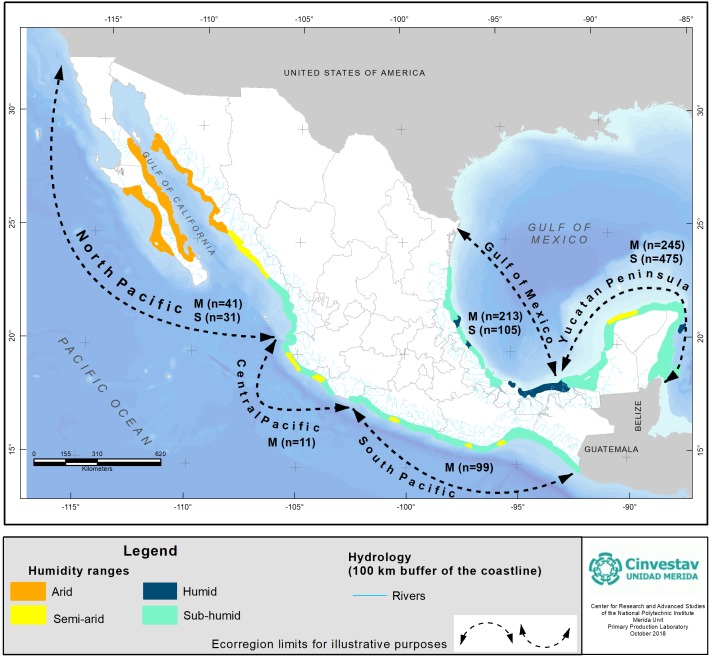
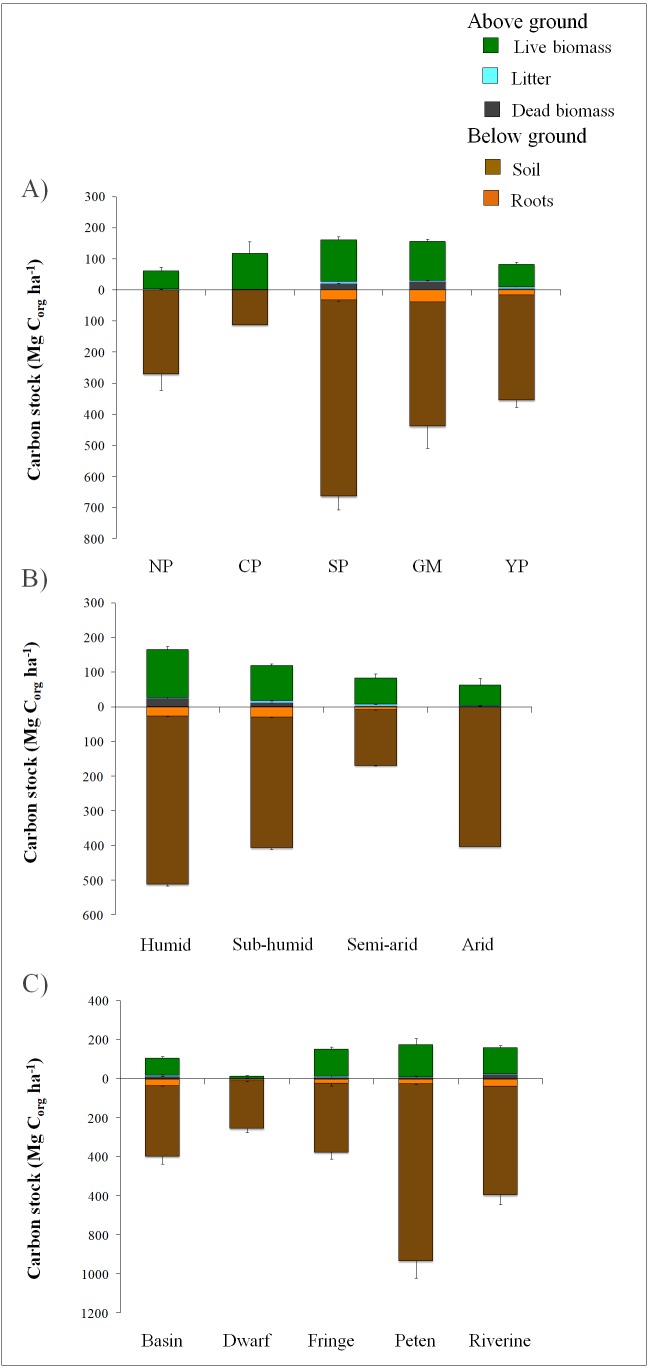
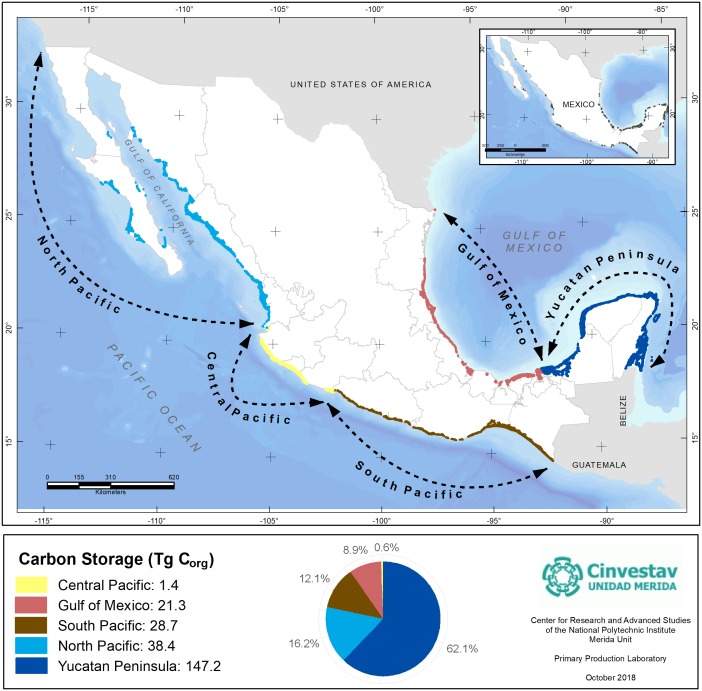
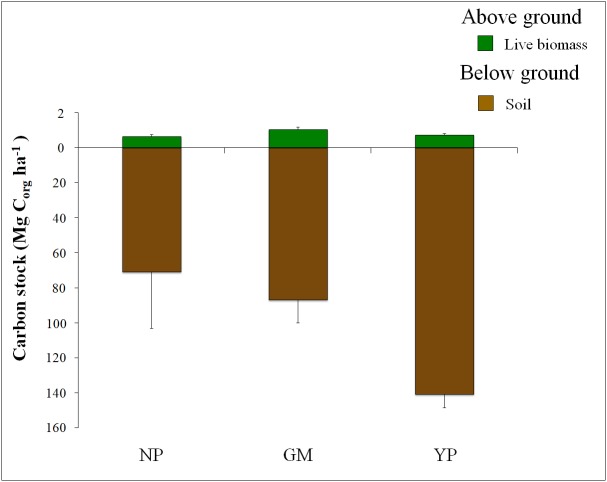
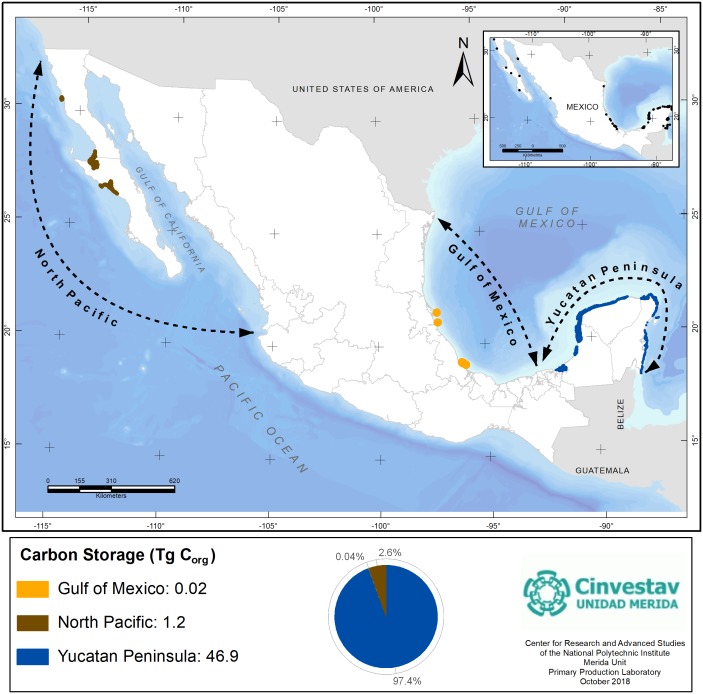
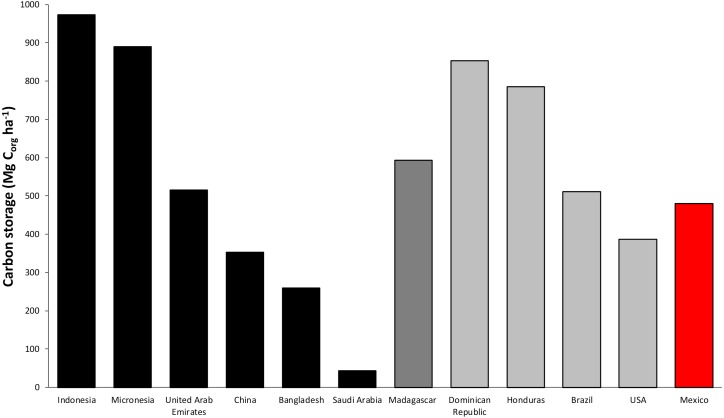
Mexico has more than 750,000 ha of mangroves and more than 400,000 ha of seagrasses. However, approximately 200,000 ha of mangroves and an unknown area of seagrass have been lost due to coastal development associated with urban, industrial and tourist purposes. In 2018, the approved reforms to the General Law on Climate Change (LGCC) aligned the Mexican law with the international objectives established in the 2nd Article of the Paris Agreement. This action proves Mexico's commitment to contributing to the global target of stabilizing the greenhouse gas emissions concentration in the planet. Thus, restoring and conserving mangrove and seagrass habitats could contribute to fulfilling this commitment. Therefore, as a first step in establishing a mitigation and adaptation plan against climate change with respect to conservation and restoration actions of these ecosystems, we evaluated Mexican blue carbon ecosystems through a systematic review of the carbon stock using the standardized method of Preferred Reporting Items for Systematic Reviews and Meta-Analyses (PRISMA). We used the data from 126 eligible studies for both ecosystems ( = 1220). The results indicated that information is missing at the regional level. However, the average above and below ground organic carbon stocks from mangroves in Mexico is 113.6 ± 5.5 (95% CI [99.3-118.4]) Mg C ha and 385.1 ± 22 (95% CI [344.5-431.9]) Mg C ha, respectively. The variability in the C stocks for both blue carbon ecosystems in Mexico is related to variations in climate, hydrology and geomorphology observed along the country's coasts in addition to the size and number of plots evaluated with respect to the spatial cover. The highest values for mangroves were related to humid climate conditions, although in the case of seagrasses, they were related to low levels of hydrodynamic stress. Based on the official extent of mangrove and seagrass area in Mexico, we estimate a total carbon stock of 237.7 Tg C from mangroves and 48.1 Tg C from seagrasses. However, mangroves and seagrasses are still being lost due to land use change despite Mexican laws meant to incorporate environmental compensation. Such losses are largely due to loopholes in the legal framework that dilute the laws' effectiveness and thus ability to protect the ecosystem. The estimated emissions from land use change under a conservative approach in mangroves of Mexico were approximately 24 Tg COe in the last 20 years. Therefore, the incorporation of blue carbon into the carbon market as a viable source of supplemental finance for mangrove and seagrass protection is an attractive win-win opportunity.
墨西哥拥有超过75万公顷的红树林和超过40万公顷的海草床。然而,由于与城市、工业和旅游相关的沿海开发,约20万公顷的红树林和面积未知的海草已经消失。2018年,《气候变化总法》(LGCC)的批准改革使墨西哥法律与《巴黎协定》第二条确立的国际目标保持一致。这一行动证明了墨西哥致力于为稳定地球温室气体排放浓度的全球目标做出贡献。因此,恢复和保护红树林和海草栖息地有助于履行这一承诺。因此,作为制定针对这些生态系统的保护和恢复行动的气候变化缓解和适应计划的第一步,我们通过使用系统评价和元分析的首选报告项目(PRISMA)的标准化方法对碳储量进行系统评价,评估了墨西哥的蓝碳生态系统。我们使用了来自126项符合条件的关于这两种生态系统的研究的数据(n = 1220)。结果表明,区域层面的信息缺失。然而,墨西哥红树林地上和地下有机碳储量的平均值分别为113.6±5.5(95%置信区间[99.3 - 118.4])Mg C/公顷和385.1±22(95%置信区间[344.5 - 431.9])Mg C/公顷。墨西哥这两种蓝碳生态系统碳储量的变异性与该国沿海观察到的气候、水文和地貌变化有关,此外还与相对于空间覆盖评估的样地大小和数量有关。红树林的最高值与湿润的气候条件有关,而海草床的最高值则与低水平的水动力应力有关。根据墨西哥红树林和海草床的官方面积,我们估计红树林的总碳储量为237.7 Tg C,海草床的总碳储量为48.1 Tg C。然而,尽管墨西哥有旨在纳入环境补偿的法律,但由于土地利用变化,红树林和海草床仍在减少。这种损失主要是由于法律框架中的漏洞削弱了法律的效力,从而削弱了保护生态系统的能力。在保守方法下,墨西哥红树林过去20年土地利用变化的估计排放量约为24 Tg CO₂e。因此,将蓝碳纳入碳市场,作为保护红树林和海草床的可行补充资金来源,是一个有吸引力的双赢机会。