Department of Neurosurgery, Zhejiang Provincial Hospital of Traditional Chinese Medicine/The First Affiliated Hospital of Zhejiang Chinese Medical University, No. 54, Youdian Road, Shangcheng District, Hangzhou, Zhejiang, 310006, People's Republic of China.
The First Clinical Medical College, Zhejiang Chinese Medical University, Hangzhou, Zhejiang, 310053, People's Republic of China.
J Exp Clin Cancer Res. 2020 Apr 15;39(1):63. doi: 10.1186/s13046-020-01567-1.
Glioma is a common brain malignancy with high mortality. The competing endogenous RNA (ceRNA) networks may play key roles in cancer progression. This study was conducted to probe the role of long noncoding RNA (lncRNA) NCK1-AS1 in glioma progression and the involved mechanisms.
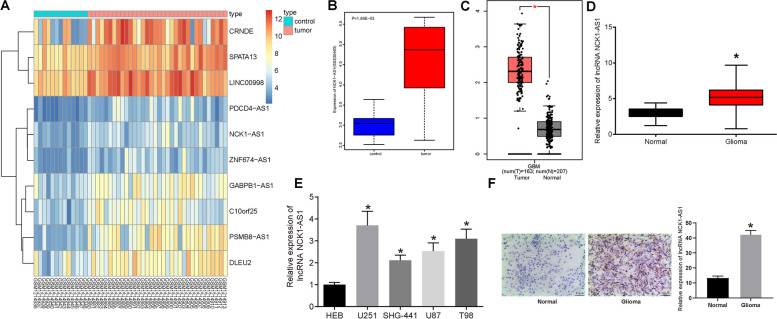
Microarray analyses were performed to explore the lncRNAs/miRNAs/genes with differential expression in glioma. NCK1-AS1 levels in glioma tissues and normal brain tissues, and in glioma cell lines and normal human glial cells were identified. The interactions among NCK1-AS1, miR-138-2-3p and TRIM24 were validated through luciferase reporter, RNA immunoprecipitation and RNA pull-down assays. Gain- and loss-of functions of NCK1-AS1, miR-138-2-3p and TRIM24 were performed to identify their roles in the behaviors of glioma cells. The activity of the Wnt/β-catenin pathway was measured. In vivo experiments were performed as well.
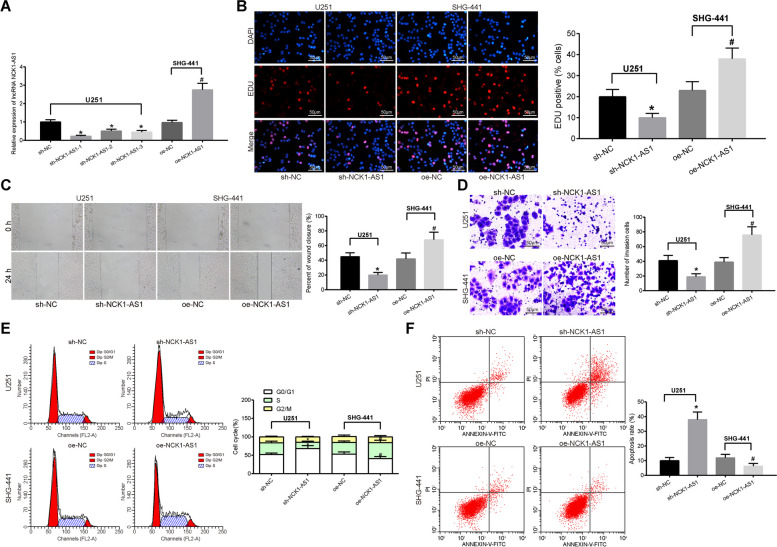
High expression of NCK1-AS1 was found in glioma tissues and cells, especially in U251 cells. Online predictions and the integrated experiments identified that NCK1-AS1 elevated the TRIM24 expression through sponging miR-138-2-3p, and further activated the Wnt/β-catenin pathway. Artificial silencing of NCK1-AS1 or up-regulation of miR-138-2-3p led to inhibited proliferation, invasion and migration but promoted cell apoptosis of U251 cells, while up-regulation of TRIM24 reversed these changes, and it activated the Wnt/β-catenin pathway. The in vitro results were reproduced in in vivo experiments.
Our study suggested that NCK1-AS1 might elevate TRIM24 expression and further activate the Wnt/β-catenin pathway via acting as a ceRNA for miR-138-2-3p. Silencing of NCK1-AS1 might inhibit the progression of glioma.
神经胶质瘤是一种常见的脑恶性肿瘤,死亡率很高。竞争内源性 RNA(ceRNA)网络可能在癌症进展中发挥关键作用。本研究旨在探讨长链非编码 RNA(lncRNA)NCK1-AS1 在神经胶质瘤进展中的作用及其相关机制。
通过微阵列分析探讨神经胶质瘤中差异表达的 lncRNA/miRNA/基因。检测神经胶质瘤组织和正常脑组织、神经胶质瘤细胞系和正常胶质细胞中 NCK1-AS1 的水平。通过荧光素酶报告、RNA 免疫沉淀和 RNA 下拉实验验证 NCK1-AS1、miR-138-2-3p 和 TRIM24 之间的相互作用。通过过表达和敲低 NCK1-AS1、miR-138-2-3p 和 TRIM24 来研究它们在神经胶质瘤细胞行为中的作用。测量 Wnt/β-catenin 通路的活性。也进行了体内实验。
发现 NCK1-AS1 在神经胶质瘤组织和细胞中高表达,尤其是在 U251 细胞中。在线预测和综合实验表明,NCK1-AS1 通过海绵吸附 miR-138-2-3p 来提高 TRIM24 的表达,进而激活 Wnt/β-catenin 通路。人工沉默 NCK1-AS1 或上调 miR-138-2-3p 可抑制 U251 细胞的增殖、侵袭和迁移,但促进细胞凋亡,而上调 TRIM24 则逆转了这些变化,并激活了 Wnt/β-catenin 通路。体内实验结果与体外实验结果一致。
本研究表明,NCK1-AS1 可能通过作为 miR-138-2-3p 的 ceRNA 来提高 TRIM24 的表达,进而激活 Wnt/β-catenin 通路。沉默 NCK1-AS1 可能抑制神经胶质瘤的进展。