Department of Neurosurgery, The First Affiliated Hospital of Xi'an Jiaotong University, Xi'an, 710000, China.
Department of Medical Oncology, Anyang Cancer Hospital, An Yang, 455000, China.
BMC Complement Med Ther. 2023 Oct 21;23(1):371. doi: 10.1186/s12906-023-04215-1.
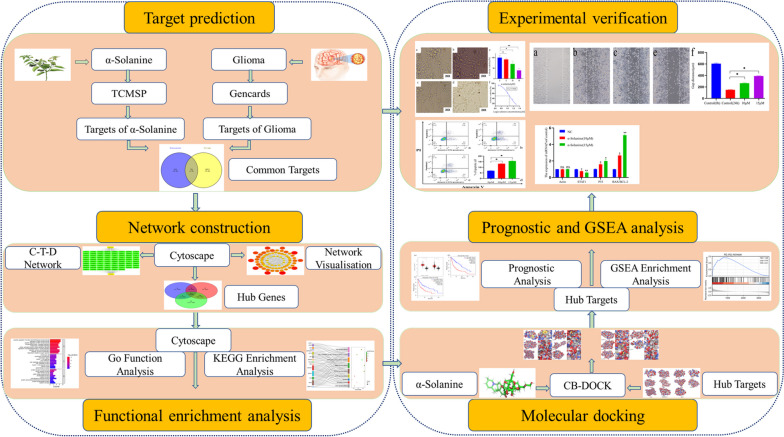
An anti-tumour activity has been demonstrated for α-solanine, a bioactive compound extracted from the traditional Chinese herb Solanum nigrum L. However, its efficacy in the treatment of gliomas and the underlying mechanisms remain unclear. The aim of this study was to investigate the inhibitory effects of α-solanine on glioma and elucidate its mechanisms and targets using network pharmacology, molecular docking, and molecular biology experiments.
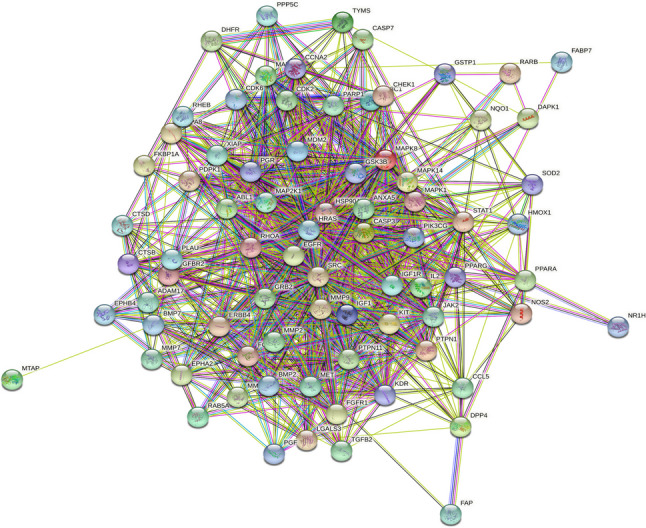
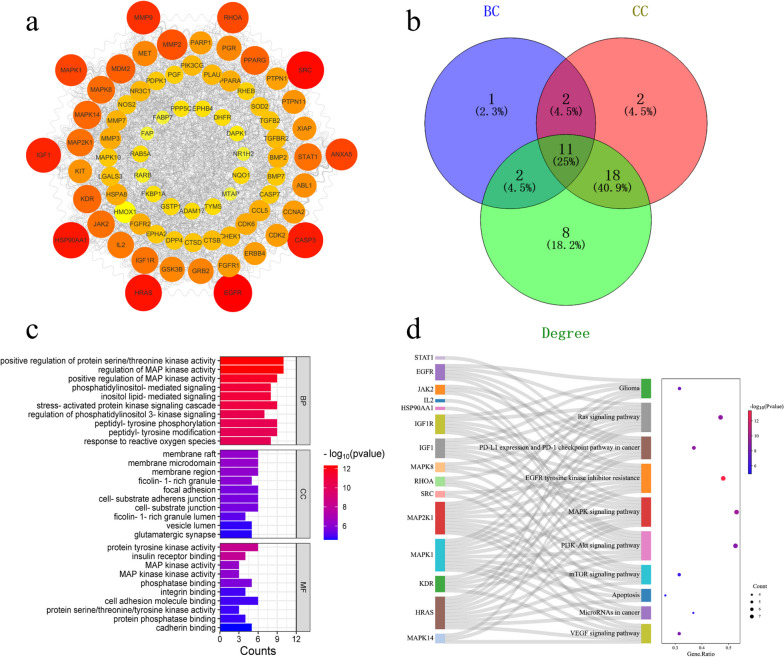
Traditional Chinese Medicine Systems Pharmacology Database and Analysis Platform (TCMSP) was utilized to predict the potential targets of α-solanine. GeneCards was used to gather glioma-related targets, and the STRING online database was used to analyze protein-protein interaction (PPI) networks for the shared targets. Hub genes were identified from the resulting PPI network and further investigated using Gene Ontology (GO) enrichment and Kyoto Encyclopedia of Genes and Genomes (KEGG) pathway analysis. Additionally, prognostic and gene set enrichment analyses (GSEA) were carried out to identify potential therapeutic targets and their underlying mechanisms of action in relation to the prognosis of gliomas. In vitro experiments were conducted to verify the findings from the network pharmacology analysis.
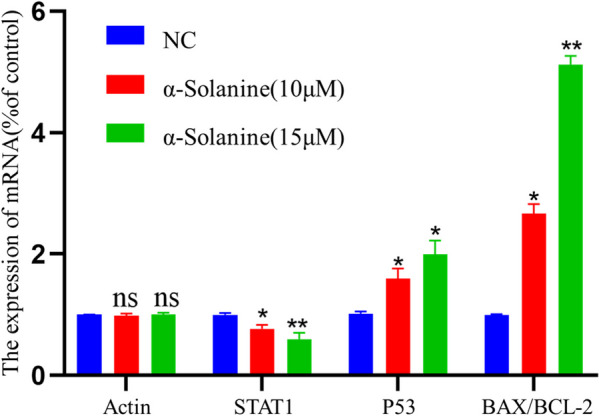
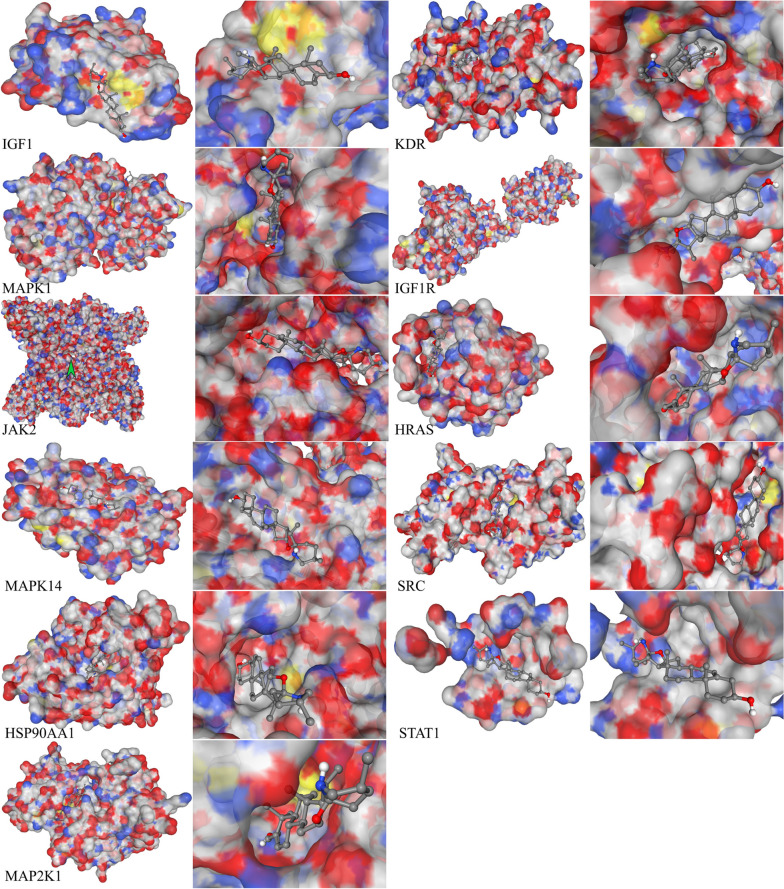
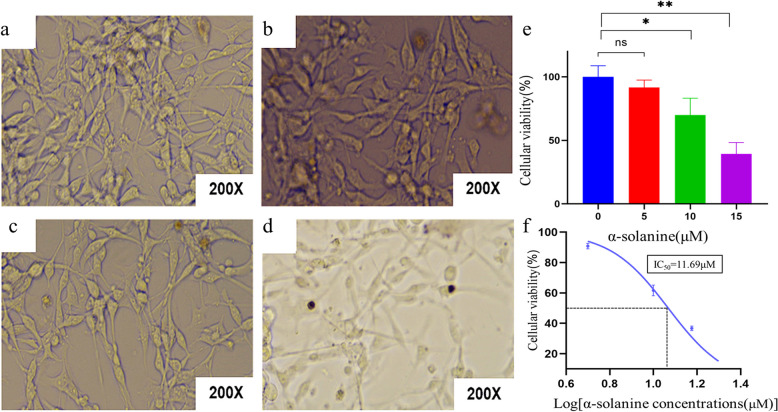
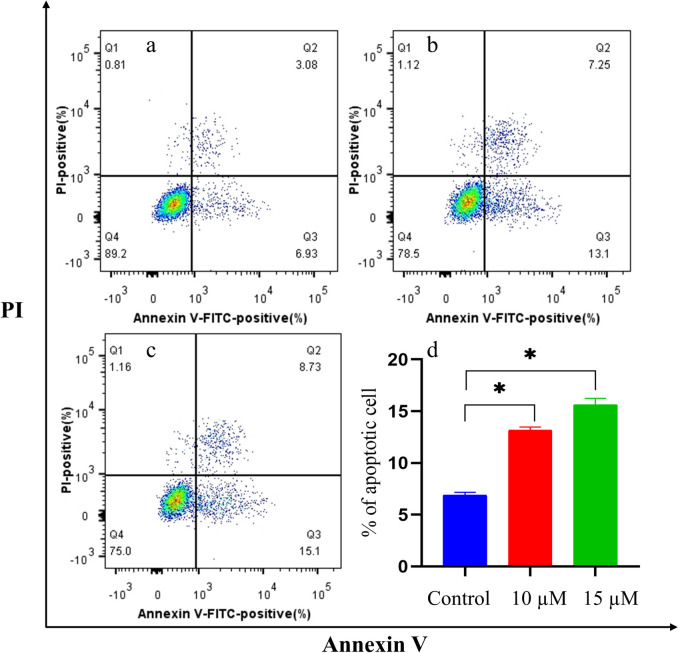
A total of 289 α-solanine targets and 1149 glioma-related targets were screened, of which 78 were common targets. 11 hub genes were obtained, including SRC, HRAS, HSP90AA1, IGF1, MAPK1, MAPK14, KDR, STAT1, JAK2, MAP2K1, and IGF1R. The GO and KEGG pathway analyses unveiled that α-solanine was strongly associated with several signaling pathways, including positive regulation of MAP kinase activity and PI3K-Akt. Moreover, α-solanine (10 µM and 15 µM) inhibited the proliferation and migration but promoted the apoptosis of glioma cells. Finally, STAT1 was identified as a potential mediator of the effect of α-solanine on glioma prognosis.
α-Solanine can inhibit the proliferation and migration of gliomas by regulating multiple targets and signalling pathways. These findings lay the foundation for the creation of innovative clinical anti-glioma agents.
从传统中药龙葵中提取的生物活性化合物α-龙葵碱已被证明具有抗肿瘤活性。然而,其在治疗脑胶质瘤中的疗效及其潜在机制尚不清楚。本研究旨在通过网络药理学、分子对接和分子生物学实验,探讨α-龙葵碱对脑胶质瘤的抑制作用及其机制和靶点。
利用中药系统药理学数据库和分析平台(TCMSP)预测α-龙葵碱的潜在靶点。使用基因卡片收集脑胶质瘤相关靶点,并使用 STRING 在线数据库分析共享靶点的蛋白质-蛋白质相互作用(PPI)网络。从所得 PPI 网络中识别出枢纽基因,并进一步进行基因本体(GO)富集和京都基因与基因组百科全书(KEGG)通路分析。此外,还进行了预后和基因集富集分析(GSEA),以确定潜在的治疗靶点及其对脑胶质瘤预后的作用机制。进行体外实验以验证网络药理学分析的结果。
共筛选出 289 个α-龙葵碱靶点和 1149 个脑胶质瘤相关靶点,其中 78 个为共同靶点。获得 11 个枢纽基因,包括 SRC、HRAS、HSP90AA1、IGF1、MAPK1、MAPK14、KDR、STAT1、JAK2、MAP2K1 和 IGF1R。GO 和 KEGG 通路分析表明,α-龙葵碱与多种信号通路密切相关,包括 MAP 激酶活性和 PI3K-Akt 的正调控。此外,α-龙葵碱(10 μM 和 15 μM)抑制脑胶质瘤细胞的增殖和迁移,但促进其凋亡。最后,鉴定出 STAT1 是α-龙葵碱影响脑胶质瘤预后的潜在介质。
α-龙葵碱可以通过调节多个靶点和信号通路抑制脑胶质瘤的增殖和迁移。这些发现为开发创新的临床抗脑胶质瘤药物奠定了基础。