Centre for Emerging Zoonotic and Parasitic Diseases, National Institute for Communicable Diseases, a Division of the National Health Laboratory Service, Johannesburg, Gauteng, South Africa.
Wits Research Institute for Malaria, Faculty of Health Sciences, University of Witwatersrand, Johannesburg, Gauteng, South Africa.
Malar J. 2020 Apr 15;19(1):152. doi: 10.1186/s12936-020-03227-3.
KwaZulu-Natal, one of South Africa's three malaria endemic provinces, is nearing malaria elimination, reporting fewer than 100 locally-acquired cases annually since 2010. Despite sustained implementation of essential interventions, including annual indoor residual spraying, prompt case detection using malaria rapid diagnostics tests and treatment with effective artemisinin-based combination therapy, low-level focal transmission persists in the province. This malaria prevalence and entomological survey was therefore undertaken to identify the drivers of this residual transmission.
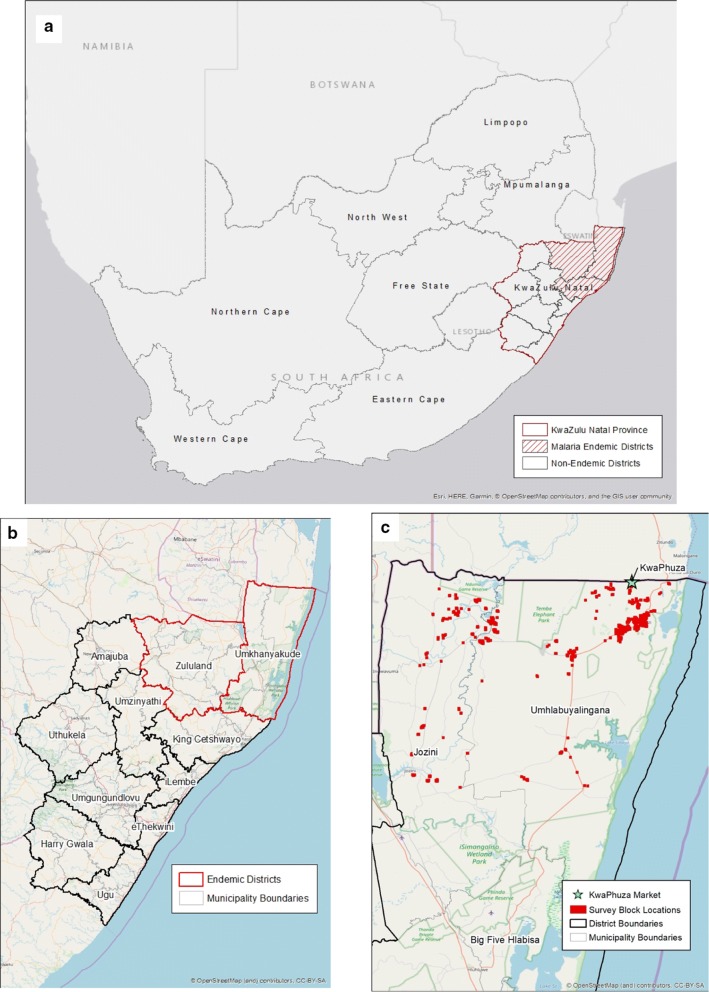
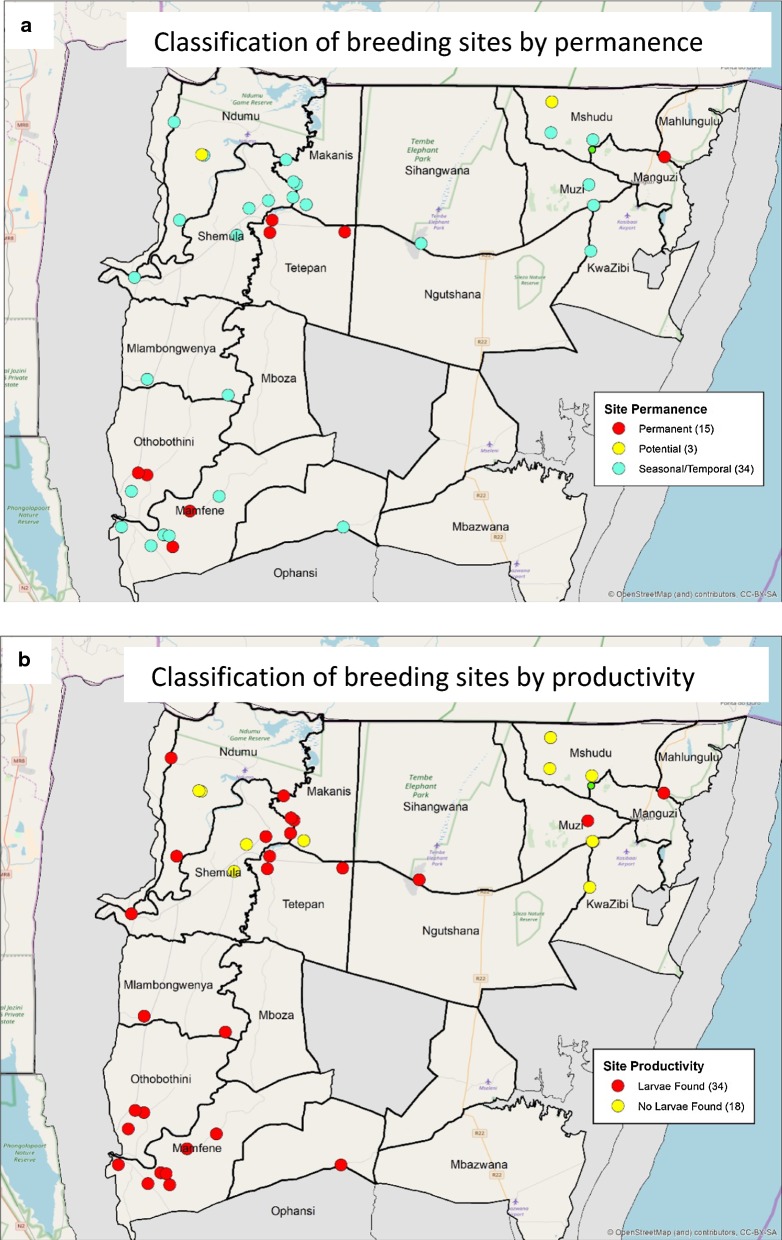
Malaria prevalence as well as malaria knowledge, attitudes and practices among community members and mobile migrant populations within uMkhanyakude district, KwaZulu-Natal were assessed during a community-based malaria prevalence survey. All consenting participants were tested for malaria by both conventional and highly-sensitive falciparum-specific rapid diagnostic tests. Finger-prick filter-paper blood spots were also collected from all participants for downstream parasite genotyping analysis. Entomological investigations were conducted around the surveyed households, with potential breeding sites geolocated and larvae collected for species identification and insecticide susceptibility testing. A random selection of households were assessed for indoor residual spray quality by cone bioassay.
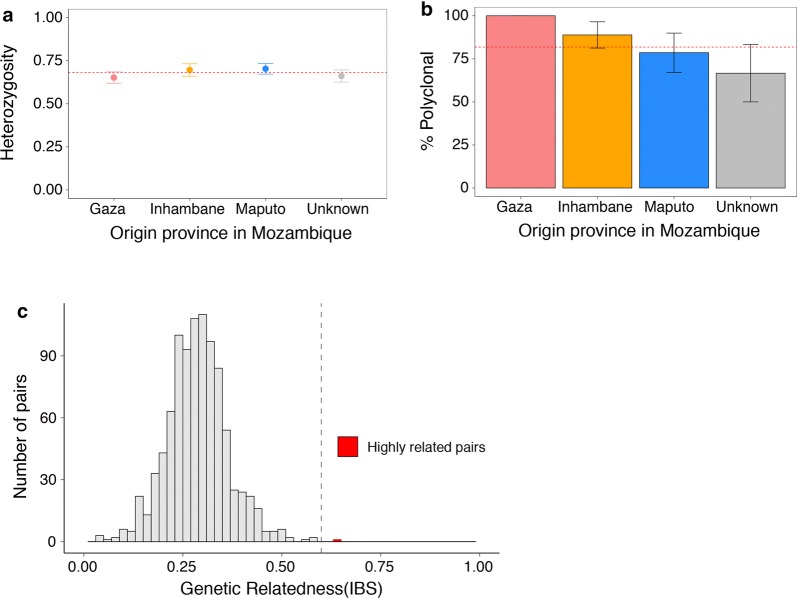
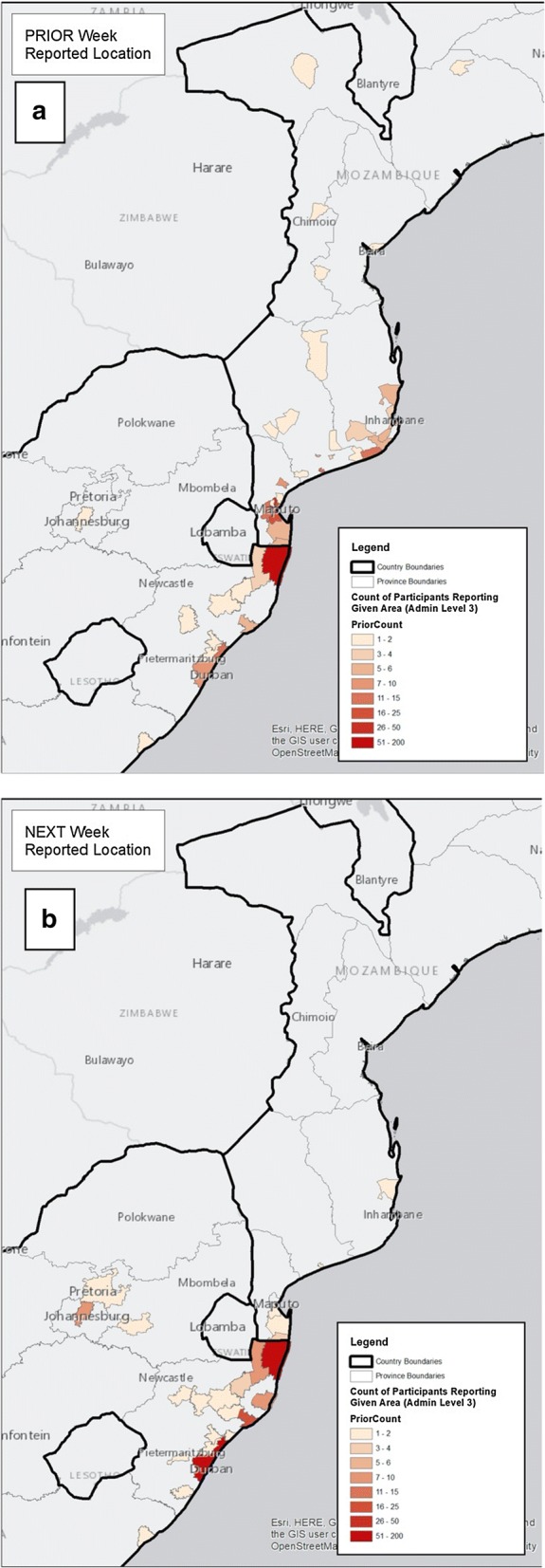
A low malaria prevalence was confirmed in the study area, with only 2% (67/2979) of the participants found to be malaria positive by both conventional and highly-sensitive falciparum-specific rapid diagnostic tests. Malaria prevalence however differed markedly between the border market and community (p < 0001), with the majority of the detected malaria carriers (65/67) identified as asymptomatic Mozambican nationals transiting through the informal border market from Mozambique to economic hubs within South Africa. Genomic analysis of the malaria isolates revealed a high degree of heterozygosity and limited genetic relatedness between the isolates supporting the hypothesis of limited local malaria transmission within the province. New potential vector breeding sites, potential vector populations with reduced insecticide susceptibility and areas with sub-optimal vector intervention coverage were identified during the entomological investigations.
If KwaZulu-Natal is to successfully halt local malaria transmission and prevent the re-introduction of malaria, greater efforts need to be placed on detecting and treating malaria carriers at both formal and informal border crossings with transmission blocking anti-malarials, while ensuring optimal coverage of vector control interventions is achieved.
夸祖鲁-纳塔尔省是南非三个疟疾流行省份之一,该省即将消除疟疾,自 2010 年以来每年报告的本地获得性病例少于 100 例。尽管持续实施了包括年度室内滞留喷洒、使用疟疾快速诊断检测及时发现病例以及使用有效青蒿素为基础的联合疗法进行治疗等基本干预措施,但该省仍存在低水平的局部传播。因此,进行了此次疟疾流行和昆虫学调查,以确定这种残留传播的驱动因素。
在夸祖鲁-纳塔尔省乌姆济卡武德区进行的社区疟疾流行调查中,评估了社区成员和流动人口的疟疾流行率以及疟疾知识、态度和做法。所有同意参与的参与者均接受了传统和高度敏感的恶性疟原虫特异性快速诊断检测。还从所有参与者采集指压滤纸血斑,用于下游寄生虫基因分型分析。在调查的家庭周围进行了昆虫学调查,对潜在的滋生地进行地理定位,并采集幼虫进行物种鉴定和杀虫剂敏感性测试。通过锥形生物测定法评估了随机选择的家庭的室内滞留喷洒质量。
研究区域的疟疾流行率较低,仅通过传统和高度敏感的恶性疟原虫特异性快速诊断检测,发现 2%(2979 名参与者中的 67 名)为疟疾阳性。然而,疟疾流行率在边境市场和社区之间存在显著差异(p<0.0001),大多数检测到的疟疾病例携带者(65/67)被确认为从莫桑比克过境到南非经济中心的无症状莫桑比克国民。对疟疾分离株的基因组分析显示,分离株之间存在高度的杂合性和有限的遗传相关性,支持该省省内疟疾传播有限的假设。在昆虫学调查中发现了新的潜在媒介滋生地、具有降低杀虫剂敏感性的潜在媒介种群以及媒介干预覆盖不足的区域。
如果夸祖鲁-纳塔尔省要成功阻断本地疟疾传播并防止疟疾再次传入,就需要更加努力地在正式和非正式边境过境点检测和治疗疟疾病例携带者,并使用阻断抗疟药物,同时确保最佳的媒介控制干预措施的覆盖范围。