Makerere University College of Health Sciences, School of Public Health, Kampala, Uganda.
School of Public Health, University of the Witwatersrand, Johannesburg, South Africa.
Infect Dis Poverty. 2020 Apr 16;9(1):36. doi: 10.1186/s40249-020-00651-0.
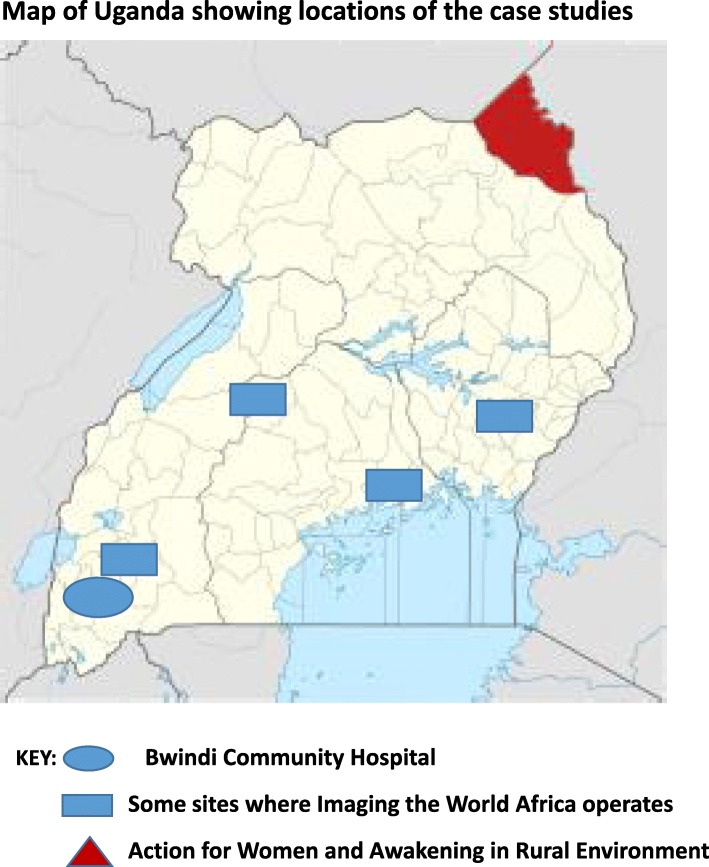
Nearly 300 children and 20 mothers die from preventable causes daily, in Uganda. Communities often identify and introduce pragmatic and lasting solutions to such challenging health problems. However, little is known of these solutions beyond their immediate surroundings. If local and pragmatic innovations were scaled-up, they could contribute to better health outcomes for larger populations. In 2017 an open call was made for local examples of community-based solutions that contribute to improving maternal and child health in Uganda. In this article, we describe three top innovative community-based solutions and their contributions to maternal health.
In this study, all innovations were implemented by non-government entities. Two case studies highlight the importance of bringing reproductive health and maternal delivery services closer to populations, through providing accessible shelters and maternity waiting homes in isolated areas. The third case study focuses on bringing obstetric imaging services to lower level rural health facilities, which usually do not provide this service, through task-shifting certain sonography services to midwives. Various health system and policy relevant lessons are highlighted.
The described case studies show how delays in access to health care by pregnant women in rural communities can be systematically removed, to improve pregnancy and delivery outcomes. Emphasis should be put on identification, capacity building and research to support the scale up of these community-based health solutions.
在乌干达,每天有近 300 名儿童和 20 名母亲死于可预防的原因。社区经常发现并提出切实可行且持久的解决方案来应对这些具有挑战性的健康问题。然而,除了在其直接环境中,人们对这些解决方案知之甚少。如果当地和务实的创新措施得到扩大,它们可能会为更多人带来更好的健康结果。2017 年,公开呼吁寻找乌干达社区为改善母婴健康做出贡献的基于社区的解决方案的范例。在本文中,我们描述了三个顶级创新的基于社区的解决方案及其对孕产妇健康的贡献。
在这项研究中,所有创新都是由非政府实体实施的。两个案例研究强调了通过在偏远地区提供可及的避难所和产妇等候室,将生殖健康和产妇分娩服务更贴近人群的重要性。第三个案例研究侧重于将产科成像服务转移到通常不提供此项服务的较低级别农村卫生设施,通过将某些超声服务下放到助产士来实现。突出了各种与卫生系统和政策相关的经验教训。
所描述的案例研究表明,如何系统地消除农村社区孕妇获得医疗保健的延迟,以改善怀孕和分娩结果。应重点关注确定、能力建设和研究,以支持这些基于社区的卫生解决方案的扩大。