Center for Biologics Evaluation and Research, Food and Drug Administration, Silver Spring, Maryland, USA
University of Cincinnati College of Medicine, Cincinnati, Ohio, USA.
mSphere. 2020 Apr 15;5(2):e00097-20. doi: 10.1128/mSphere.00097-20.
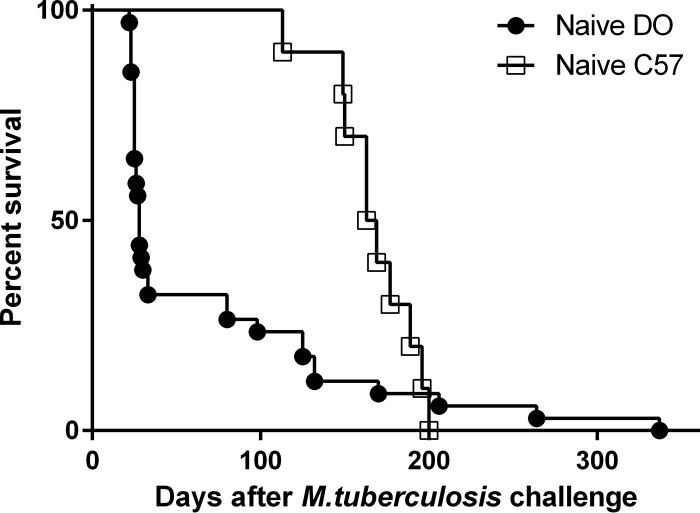
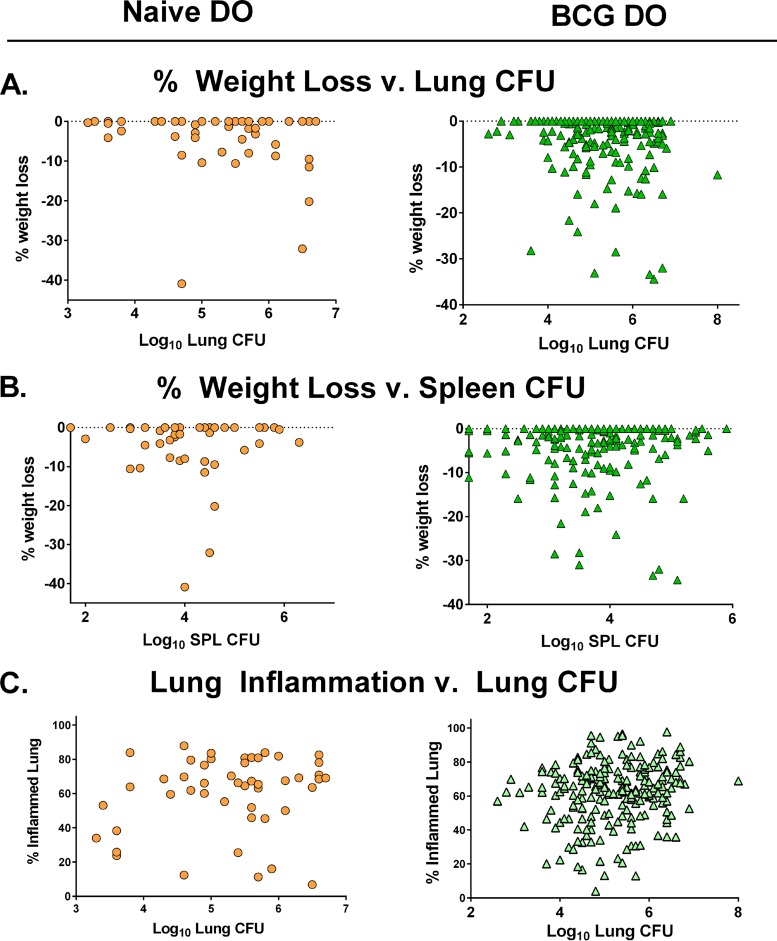
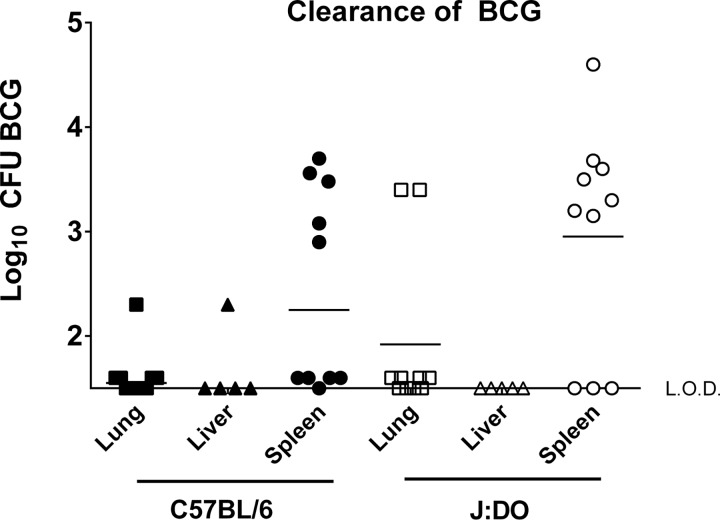
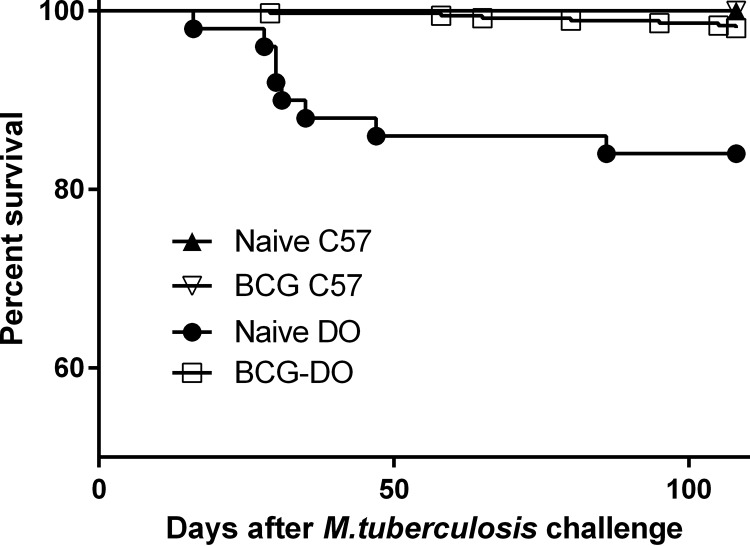
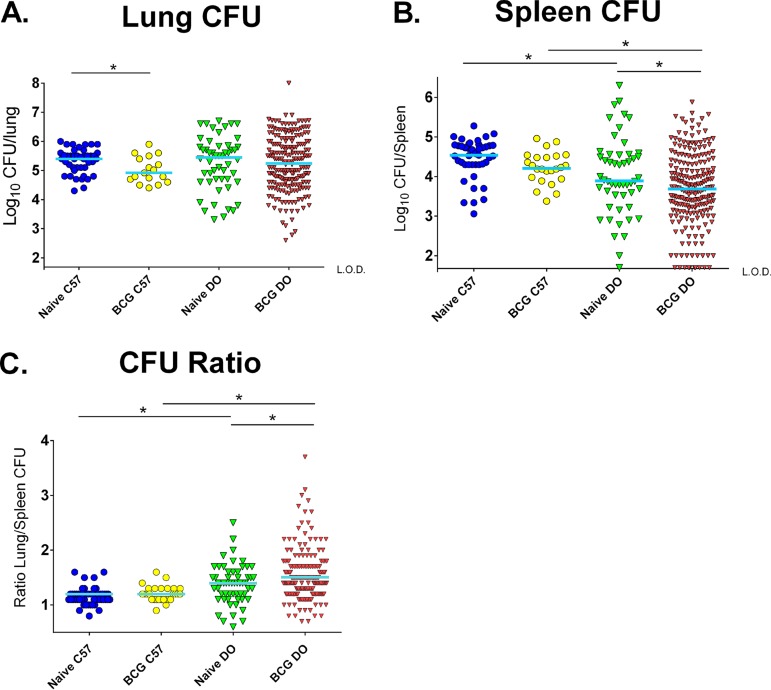
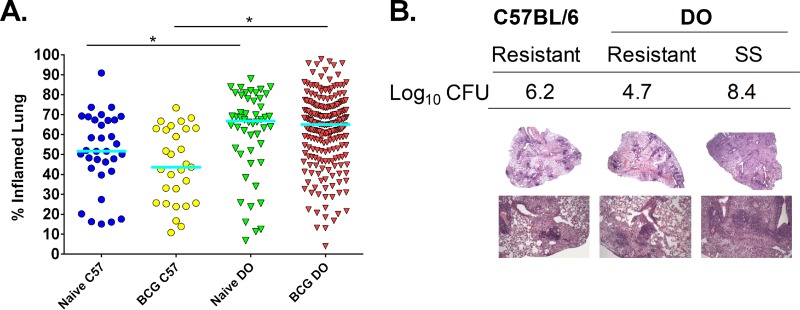
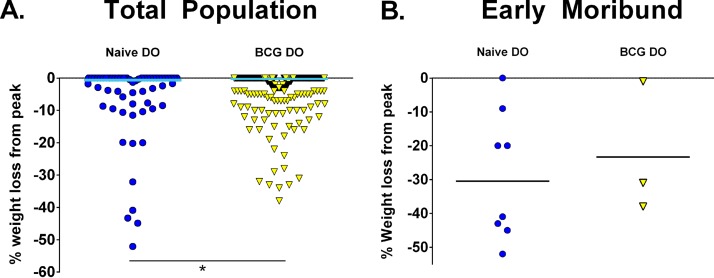
Many studies of infection and immunity have used mouse models. However, outcomes of vaccination and challenge with in inbred mouse strains do not reflect the full range of outcomes seen in people. Previous studies indicated that the novel Diversity Outbred (DO) mouse population exhibited a spectrum of outcomes after primary aerosol infection with Here, we demonstrate the value of this novel mouse population for studies of vaccination against aerosol challenge. Using the only currently licensed tuberculosis vaccine, we found that the DO population readily controlled systemic BCG bacterial burdens and that BCG vaccination significantly improved survival across the DO population upon challenge with Many individual DO mice that were vaccinated with BCG and then challenged with exhibited low bacterial burdens, low or even no systemic dissemination, little weight loss, and only minor lung pathology. In contrast, some BCG-vaccinated DO mice progressed quickly to fulminant disease upon challenge. Across the population, most of these disease parameters were at most modestly correlated with each other and were often discordant. This result suggests the need for a multiparameter metric to better characterize "disease" and "protection," with closer similarity to the complex case definitions used in people. Taken together, these results demonstrate that DO mice provide a novel small-animal model of vaccination against tuberculosis that better reflects the wide spectrum of outcomes seen in people. We vaccinated the Diversity Outbred (DO) population of mice with BCG, the only vaccine currently used to protect against tuberculosis, and then challenged them with by aerosol. We found that the BCG-vaccinated DO mouse population exhibited a wide range of outcomes, in which outcomes in individual mice ranged from minimal respiratory or systemic disease to fulminant disease and death. The breadth of these outcomes appears similar to the range seen in people, indicating that DO mice may serve as an improved small-animal model to study tuberculosis infection and immunity. Moreover, sophisticated tools are available for the use of these mice to map genes contributing to control of vaccination. Thus, the present studies provided an important new tool in the fight against tuberculosis.
许多感染和免疫研究都使用了小鼠模型。然而,在近交系小鼠中接种疫苗和进行 感染挑战的结果并不能反映人类所见的全部结果。以前的研究表明,新型多样性近交系(DO)小鼠在初次气溶胶感染 后表现出一系列结果。在这里,我们证明了这种新型小鼠群体在研究针对 气溶胶挑战的疫苗接种方面的价值。使用唯一目前获得许可的结核病疫苗,我们发现 DO 群体很容易控制系统性 BCG 细菌负担,并且 BCG 疫苗接种在 DO 群体中显著提高了 感染挑战后的存活率。许多接种了 BCG 并随后用 进行挑战的 DO 小鼠表现出低细菌负担、低甚至无系统传播、体重减轻少和仅有轻微的肺部病理学。相比之下,一些接种了 BCG 的 DO 小鼠在 挑战后迅速发展为暴发性疾病。在整个群体中,这些疾病参数中的大多数彼此之间最多只有适度的相关性,并且经常不一致。这一结果表明需要一种多参数指标来更好地描述“疾病”和“保护”,更接近在人类中使用的复杂病例定义。总之,这些结果表明,DO 小鼠提供了一种新的针对结核病的疫苗接种的小型动物模型,该模型更好地反映了人类所见的广泛结果范围。我们用 BCG (目前唯一用于预防结核病的疫苗)对多样性近交系(DO)小鼠群体进行了疫苗接种,然后用气溶胶对其进行了 感染挑战。我们发现,BCG 接种的 DO 小鼠群体表现出广泛的结果范围,其中单个小鼠的结果从轻微的呼吸道或全身疾病到暴发性疾病和死亡不等。这些结果的范围似乎与人类所见的范围相似,表明 DO 小鼠可能作为一种改进的小型动物模型,用于研究结核病感染和免疫。此外,还可以使用复杂的工具来研究这些小鼠,以绘制控制疫苗接种的基因图谱。因此,本研究为抗击结核病提供了一个重要的新工具。