Department of Entomology, Iowa State University, Ames, Iowa, USA.
Department of Entomology, Iowa State University, Ames, Iowa, USA
mSphere. 2020 Apr 15;5(2):e00983-19. doi: 10.1128/mSphere.00983-19.
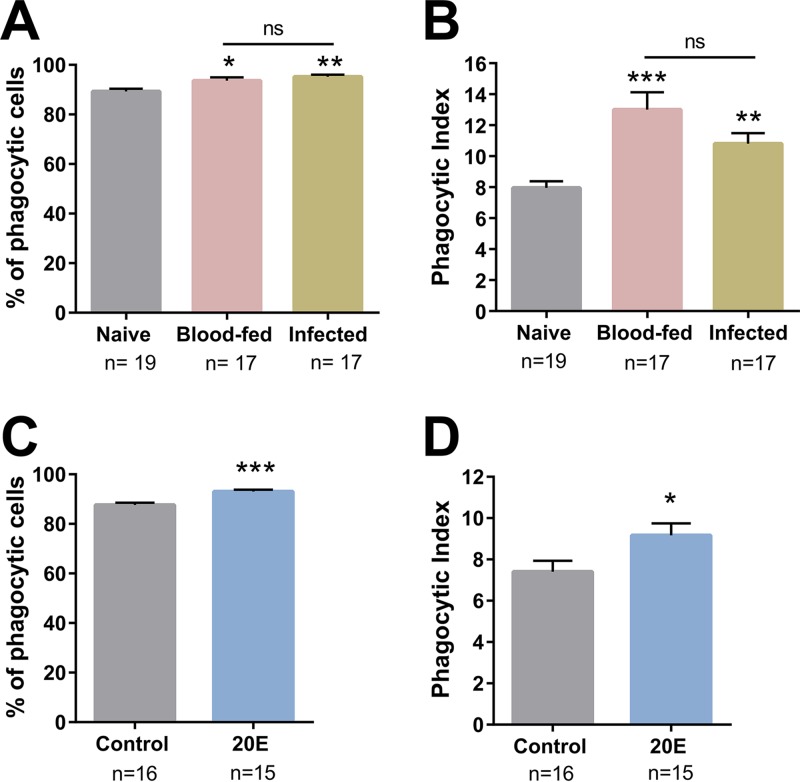
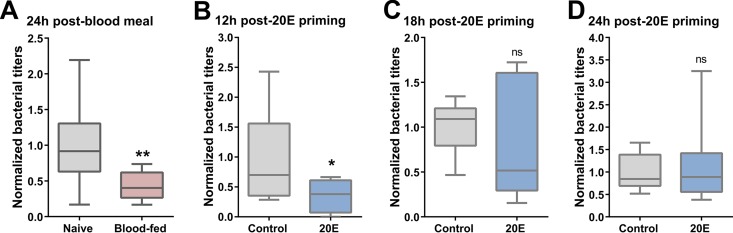
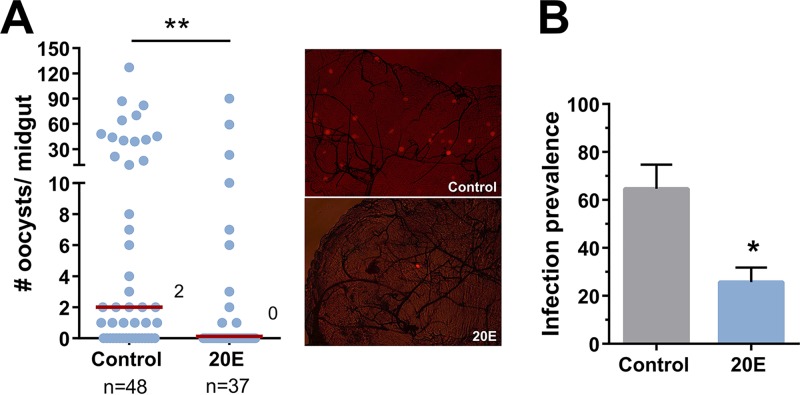
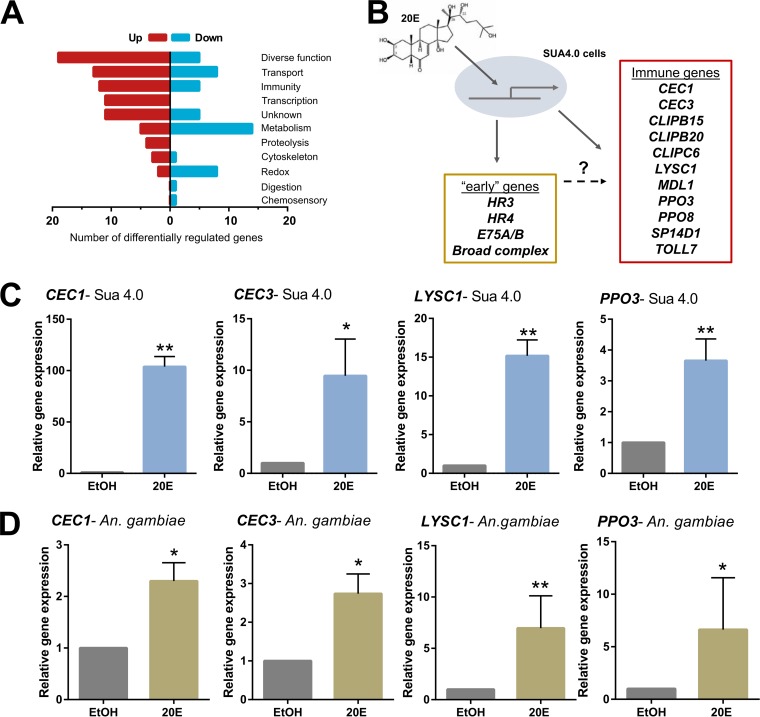
Blood feeding is an integral behavior of mosquitoes to acquire nutritional resources needed for reproduction. This requirement also enables mosquitoes to serve as efficient vectors to acquire and potentially transmit a multitude of mosquito-borne diseases, most notably malaria. Recent studies suggest that mosquito immunity is stimulated following a blood meal, independent of infection status. Since blood feeding promotes production of the hormone 20-hydroxyecdysone (20E), we hypothesized that 20E plays an important role in priming the immune response for pathogen challenge. Here, we examine the immunological effects of priming with 20E prior to pathogen infection, demonstrating a significant reduction in bacteria and survival in the mosquito host. Transcriptome sequencing (RNA-seq) analysis following 20E treatment identifies several known 20E-regulated genes, as well as several immune genes with previously reported function in antipathogen defense. Together, these data demonstrate that 20E influences cellular immune function and antipathogen immunity following mosquito blood feeding, arguing the importance of hormones in the regulation of mosquito innate immune function. Blood feeding is required to provide nutrients for mosquito egg production and serves as a mechanism to acquire and transmit pathogens. Shortly after a blood meal is taken, there is a peak in the production of 20-hydroxyecdysone (20E), a mosquito hormone that initiates physiological changes, including yolk protein production and mating refractoriness. Here, we examine additional roles of 20E in the regulation of mosquito immunity, demonstrating that priming the immune system with 20E increases mosquito resistance to pathogens. We identify differentially expressed genes in response to 20E treatment, including several involved in innate immune function as well as lipid metabolism and transport. Together, these data argue that 20E stimulates mosquito cellular immune function and innate immunity shortly after blood feeding.
吸血是蚊子获取繁殖所需营养资源的一种基本行为。这种需求还使蚊子成为获取和潜在传播多种蚊媒疾病的有效媒介,尤其是疟疾。最近的研究表明,蚊子在吸血后会受到免疫刺激,而与感染状态无关。由于吸血会促进激素 20-羟基蜕皮酮(20E)的产生,我们假设 20E 在为病原体挑战引发免疫反应方面发挥重要作用。在这里,我们研究了在病原体感染前用 20E 进行免疫预刺激的免疫学效应,结果表明细菌数量和蚊子宿主的存活率显著降低。20E 处理后的转录组测序(RNA-seq)分析确定了几个已知的 20E 调节基因,以及几个具有先前报道的抗病原体防御功能的免疫基因。这些数据表明,20E 影响蚊子吸血后的细胞免疫功能和抗病原体免疫,这表明激素在调节蚊子先天免疫功能方面的重要性。吸血是为蚊子产卵提供营养所必需的,也是获取和传播病原体的一种机制。在吸血后不久,20-羟基蜕皮酮(20E)的产生会达到峰值,这是一种启动生理变化的蚊子激素,包括卵黄蛋白的产生和交配的抵抗力。在这里,我们研究了 20E 在调节蚊子免疫方面的其他作用,结果表明,用 20E 对免疫系统进行预刺激可提高蚊子对病原体的抵抗力。我们确定了对 20E 处理有反应的差异表达基因,包括几个参与先天免疫功能以及脂质代谢和运输的基因。总之,这些数据表明,20E 在吸血后不久会刺激蚊子的细胞免疫功能和先天免疫。