Bloomberg~Kimmel Institute for Cancer Immunotherapy and Sidney Kimmel Comprehensive Cancer Center, Johns Hopkins University School of Medicine, Baltimore, MD 21231, USA.
Translational Tissue Engineering Center, Wilmer Eye Institute and Department of Biomedical Engineering, Johns Hopkins University, Baltimore, MD 21287, USA.
Sci Transl Med. 2020 Apr 15;12(539). doi: 10.1126/scitranslmed.aax3799.
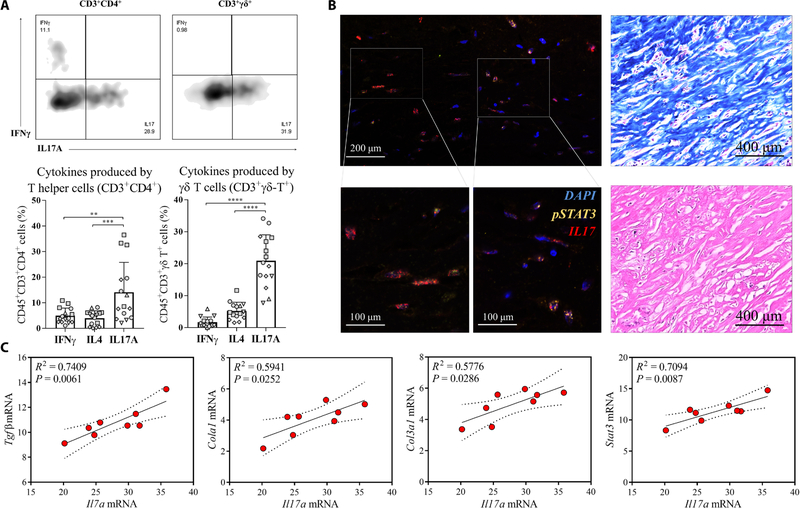
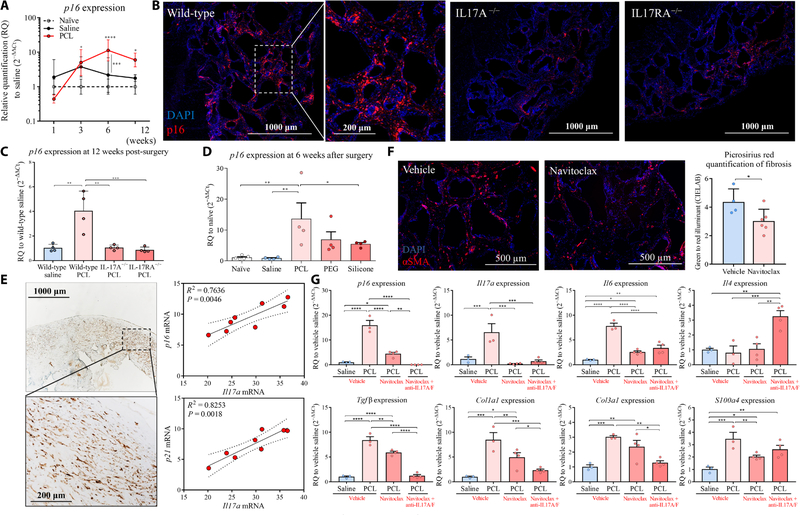
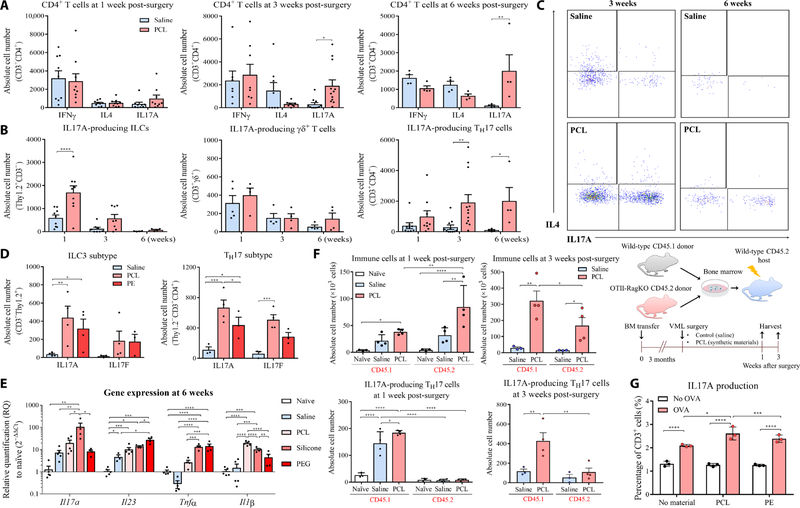
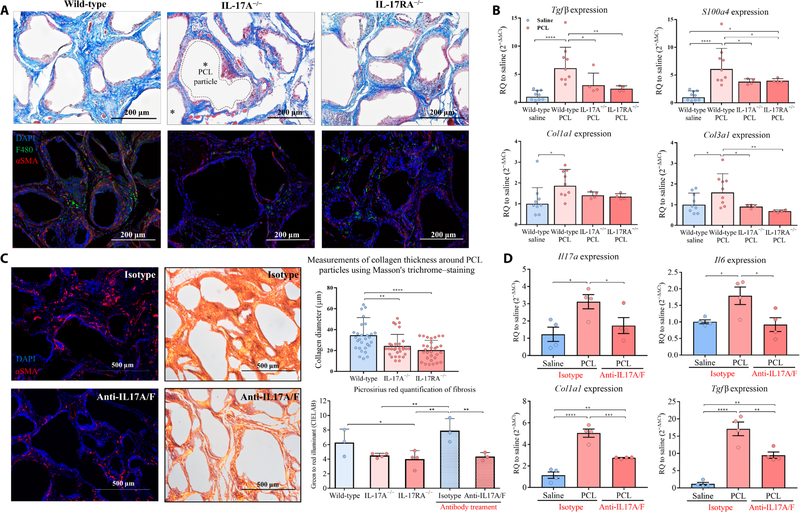
Medical devices and implants made of synthetic materials can induce an immune-mediated process when implanted in the body called the foreign body response, which results in formation of a fibrous capsule around the implant. To explore the immune and stromal connections underpinning the foreign body response, we analyzed fibrotic capsules surrounding surgically excised human breast implants from 12 individuals. We found increased numbers of interleukin 17 (IL17)-producing γδ T cells and CD4 T helper 17 (T17) cells as well as senescent stromal cells in the fibrotic capsules. Further analysis in a murine model demonstrated an early innate IL17 response to implanted synthetic material (polycaprolactone) particles that was mediated by innate lymphoid cells and γδ T cells. This was followed by a chronic adaptive CD4 T17 cell response that was antigen dependent. Synthetic materials with varying chemical and physical properties implanted either in injured muscle or subcutaneously induced similar IL17 responses in mice. Mice deficient in IL17 signaling established that IL17 was required for the fibrotic response to implanted synthetic materials and the development of p16 senescent cells. IL6 produced by senescent cells was sufficient for the induction of IL17 expression in T cells. Treatment with a senolytic agent (navitoclax) that killed senescent cells reduced IL17 expression and fibrosis in the mouse implant model. Discovery of a feed-forward loop between the T17 immune response and the senescence response to implanted synthetic materials introduces new targets for therapeutic intervention in the foreign body response.
当合成材料制成的医疗器械和植入物被植入体内时,会引发一种称为异物反应的免疫介导过程,导致在植入物周围形成纤维囊。为了探索支持异物反应的免疫和基质连接,我们分析了从 12 名个体中手术切除的人乳房植入物周围的纤维囊。我们发现,在纤维囊中,白细胞介素 17(IL17)产生的γδ T 细胞和 CD4 辅助性 T 细胞 17(T17)细胞以及衰老的基质细胞数量增加。在小鼠模型中的进一步分析表明,对植入的合成材料(聚己内酯)颗粒存在早期先天的 IL17 反应,该反应由先天淋巴细胞和γδ T 细胞介导。随后是抗原依赖性慢性适应性 CD4 T17 细胞反应。植入受伤肌肉或皮下的具有不同化学和物理性质的合成材料在小鼠中引起类似的 IL17 反应。缺乏 IL17 信号的小鼠表明,IL17 是对植入的合成材料的纤维反应和 p16 衰老细胞的发展所必需的。衰老细胞产生的 IL6 足以诱导 T 细胞中 IL17 的表达。用杀死衰老细胞的 senolytic 剂(navitoclax)治疗可降低小鼠植入模型中的 IL17 表达和纤维化。在 T17 免疫反应和对植入合成材料的衰老反应之间发现的正反馈回路为异物反应的治疗干预引入了新的靶标。