Department of Biological Sciences, Boler-Parseghian Center for Rare and Neglected Diseases, Harper Cancer Research Institute, University of Notre Dame, Notre Dame, IN 46556, USA.
Integrated Biomedical Sciences Graduate Program, University of Notre Dame, Notre Dame, IN 46556, USA.
Cancer Biol Med. 2020 Feb 15;17(1):32-43. doi: 10.20892/j.issn.2095-3941.2019.0372.
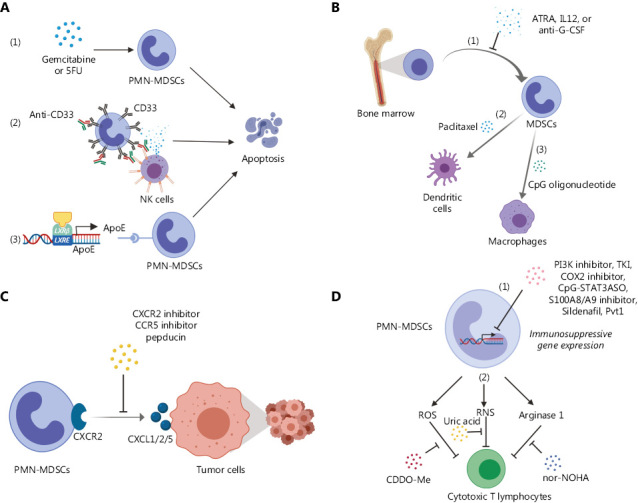
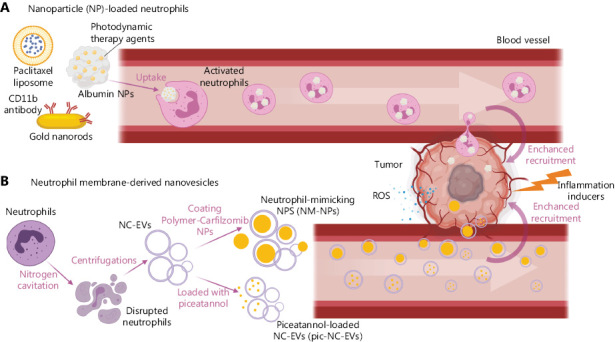
Neutrophils, the most abundant leukocytes in human blood, are essential fighter immune cells against microbial infection. Based on the finding that neutrophils can either restrict or promote cancer progression, tumor-associated neutrophils (TAN) are classified into anti-tumor N1 and pro-tumor N2 subsets. One of the major mechanisms underlying the tumor-promoting function of N2-TANs is suppression of adaptive immune cells, in particular, cytotoxic T lymphocytes. Currently, no established methodologies are available that can unequivocally distinguish immunosuppressive TANs and granulocytic/polymorphonuclear myeloid-derived suppressor cells (G/PMN-MDSC). In view of the critical role of PMN-MDSCs in immune evasion and resistance to cancer immunotherapy, as established from data obtained with diverse cancer models, therapeutic strategies targeting these cells have been actively developed to enhance the efficacy of immunotherapy. Here, we have reviewed the available literature on strategies targeting PMN-MDSCs and summarized the findings into four categories: (1) depletion of existing PMN-MDSCs, (2) blockade of the development of PMN-MDSCs, (3) blockade of PMN-MDSC recruitment, (4) inhibition of immunosuppressive function. Owing to their high mobility to inflamed organs and ability to trespass the blood-brain barrier, neutrophils are outstanding candidate carriers in nanoparticle-based therapies. Another attractive application of neutrophils in cancer therapy is the use of neutrophil membrane-derived nanovesicles as a surrogate of extracellular vesicles for more efficient and scalable drug delivery. In the second part of the review, we have highlighted recent advances in the field of neutrophil-based cancer drug delivery. Overall, we believe that neutrophil-based therapeutics are a rapidly growing area of cancer therapy with significant potential benefits.
中性粒细胞是人类血液中最丰富的白细胞,是抵抗微生物感染的重要免疫细胞。基于中性粒细胞可以限制或促进癌症进展的发现,肿瘤相关中性粒细胞(TAN)被分为抗肿瘤 N1 和促肿瘤 N2 亚群。N2-TAN 促进肿瘤的主要机制之一是抑制适应性免疫细胞,特别是细胞毒性 T 淋巴细胞。目前,尚无明确的方法可以区分免疫抑制性 TAN 和粒细胞/多形核髓系来源的抑制细胞(G/PMN-MDSC)。鉴于 PMN-MDSC 在免疫逃逸和对癌症免疫治疗的抵抗中的关键作用,从各种癌症模型获得的数据已经证实,针对这些细胞的治疗策略已被积极开发以增强免疫治疗的疗效。在这里,我们回顾了针对 PMN-MDSC 的现有文献,并将研究结果总结为四类:(1)耗尽现有的 PMN-MDSC,(2)阻断 PMN-MDSC 的发展,(3)阻断 PMN-MDSC 的募集,(4)抑制其免疫抑制功能。由于其向炎症器官的高迁移能力和穿过血脑屏障的能力,中性粒细胞是基于纳米粒子治疗的杰出候选载体。中性粒细胞在癌症治疗中的另一个有吸引力的应用是使用中性粒细胞膜衍生的纳米囊泡作为细胞外囊泡的替代物,以更有效地进行药物传递。在综述的第二部分,我们强调了中性粒细胞为基础的癌症药物输送领域的最新进展。总的来说,我们相信基于中性粒细胞的治疗是癌症治疗中一个快速发展的领域,具有显著的潜在益处。