Duan Zongsheng, Zhang Jian, Li Jing, Pang Xiaochuan, Wang Hushan
Department of Anesthesiology, The First Hospital of Jilin University, Changchun, China.
Department of Radiology, The Second Part of The First Hospital of Jilin University, Changchun, China.
Front Oncol. 2020 Mar 31;10:416. doi: 10.3389/fonc.2020.00416. eCollection 2020.
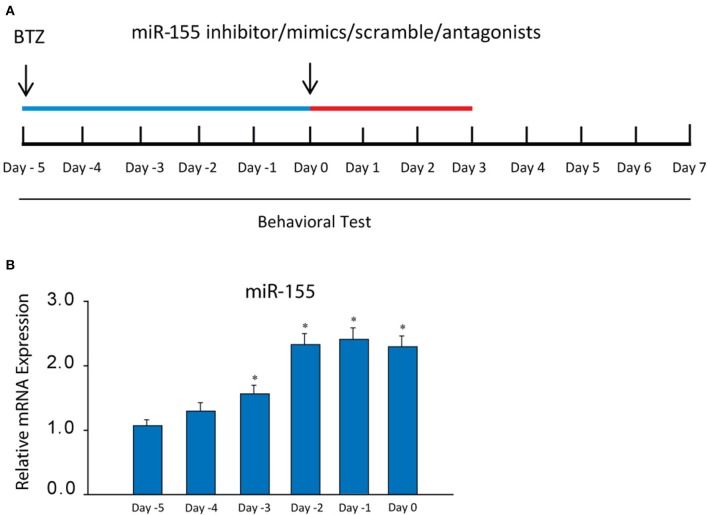
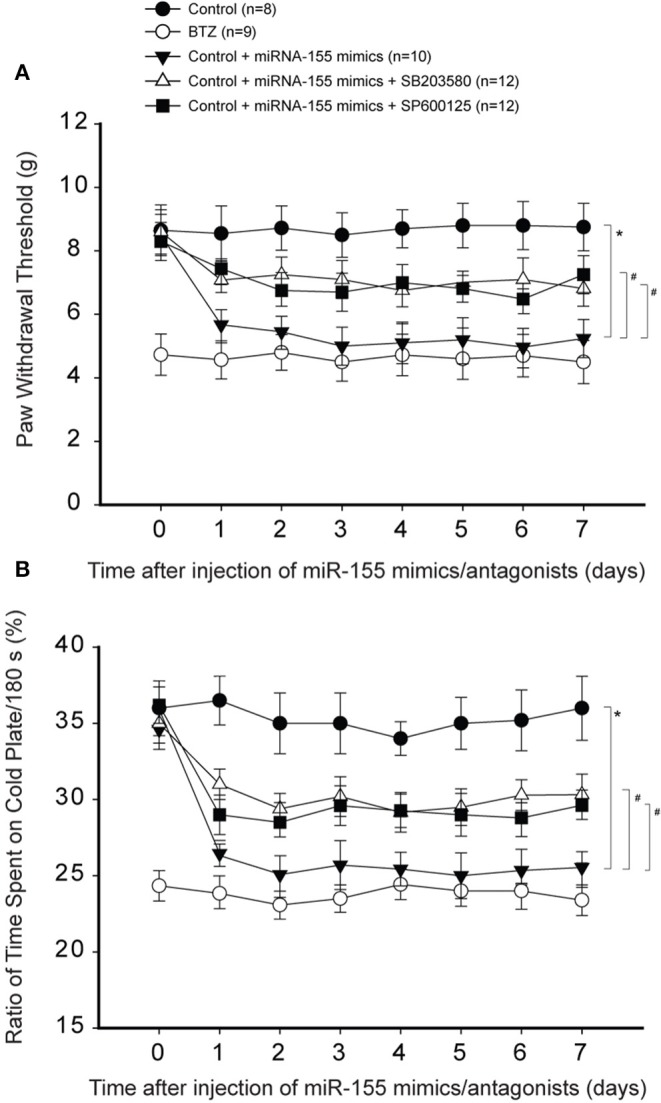
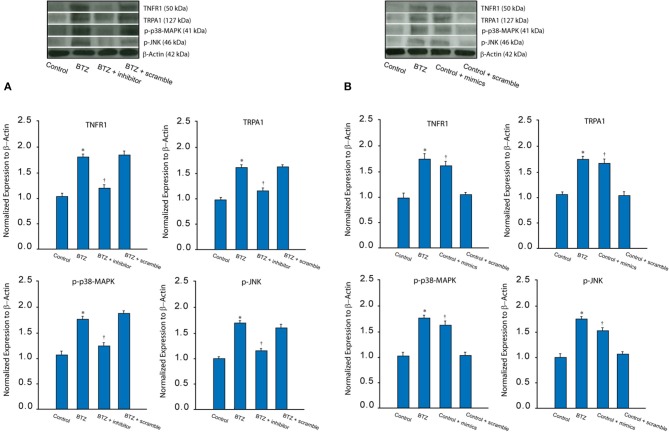
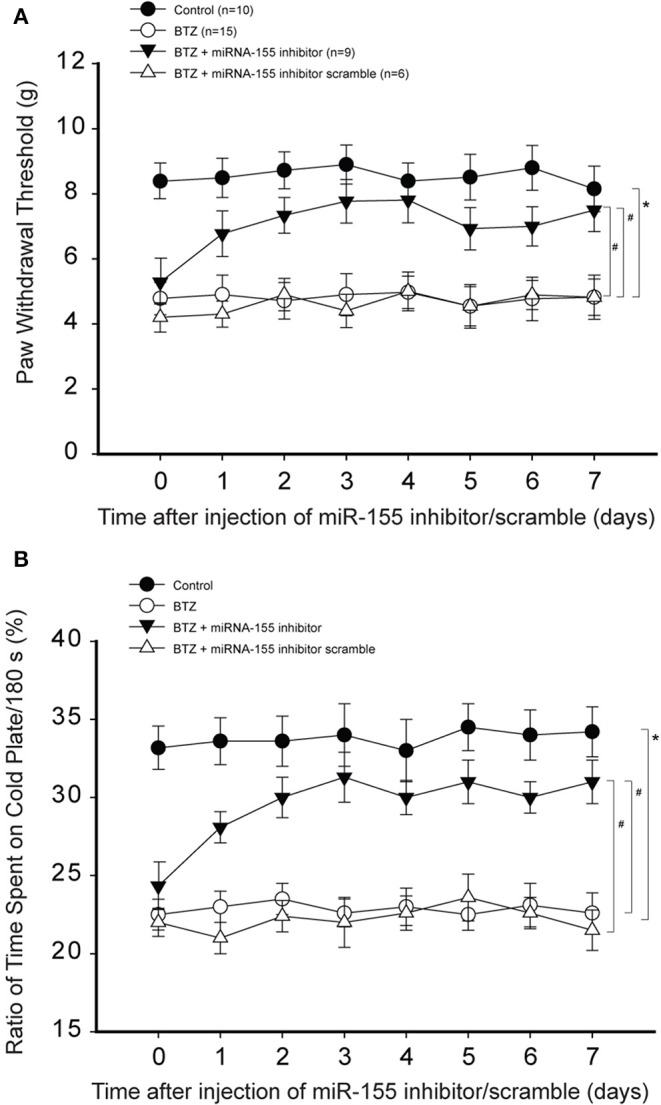
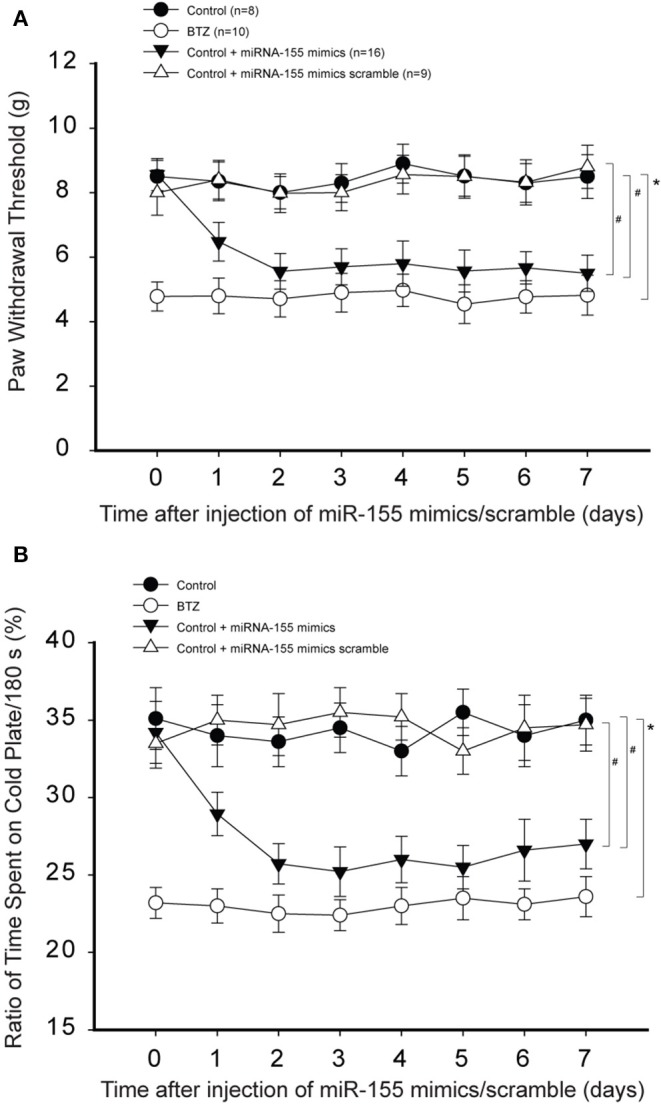
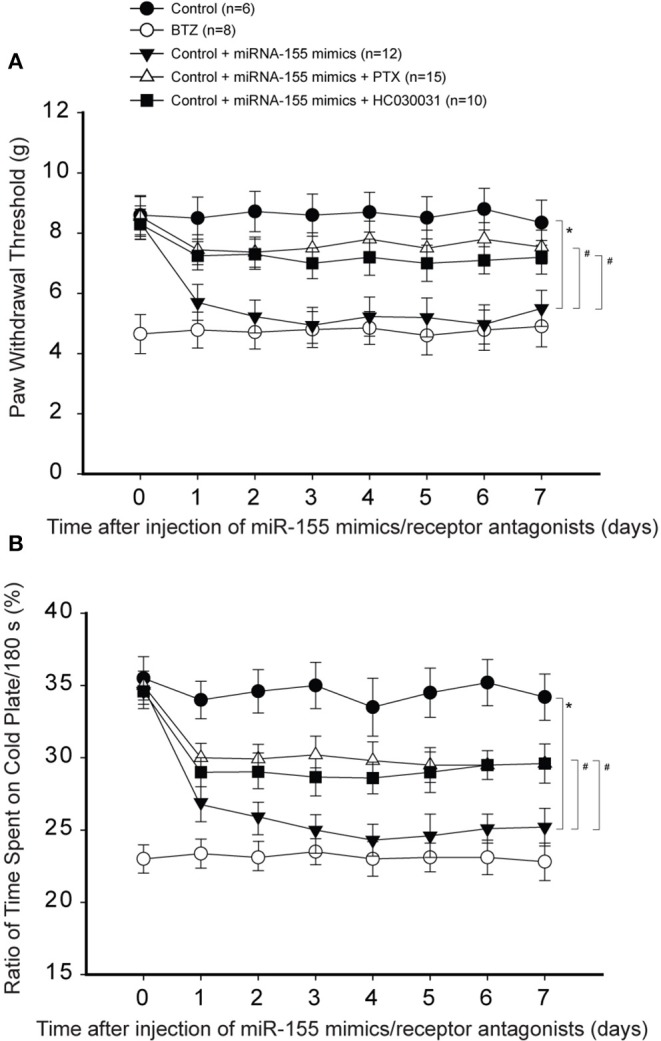
As a chemotherapeutic agent, bortezomib (BTZ) is used for the treatment of multiple myeloma with adverse effect of painful peripheral neuropathy. Our current study was to determine the inhibitory effects of blocking microRNA-155 (miR-155) signal on BTZ-induced neuropathic pain and the underlying mechanisms. We employed real time RT-PCR and western blot analysis to examine the miR-155 and expression of - tumor necrosis factor-α receptor (TNFR1) in the dorsal horn of the spinal cord. Its downstream signals p38-MAPK and JNK and transient receptor potential ankyrin 1 (TRPA1) were also determined. Mechanical pain and cold sensitivity were assessed by behavioral test. In result, inhibition of miR-155 significantly attenuated mechanical allodynia and thermal hyperalgesia in BTZ rats, which was accompanied with decreasing expression of TNFR1, p38-MAPK, JNK, and TRPA1. In contrast, miRNA-155 mimics amplified TNFR1-TRPA1 pathway and augmented mechanical pain and cold sensitivity. In addition, mechanical and thermal hypersensitivity induced by miRNA-155 mimics were attenuated after blocking TNFR1, p38-MAPK, JNK, and TRPA1. Overall, we show the key role of miR-155 in modifying BTZ-induced neuropathic pain through TNFR1-TRPA1 pathway, suggesting that miR-155 is a potential target in preventing neuropathic pain development during intervention of BTZ.
作为一种化疗药物,硼替佐米(BTZ)用于治疗多发性骨髓瘤,但具有外周神经病理性疼痛的副作用。我们当前的研究旨在确定阻断微小RNA-155(miR-155)信号对BTZ诱导的神经病理性疼痛的抑制作用及其潜在机制。我们采用实时逆转录聚合酶链反应(RT-PCR)和蛋白质免疫印迹分析来检测脊髓背角中miR-155和肿瘤坏死因子-α受体(TNFR1)的表达。还测定了其下游信号p38丝裂原活化蛋白激酶(p38-MAPK)、应激活化蛋白激酶(JNK)和锚蛋白1型瞬时受体电位通道(TRPA1)。通过行为测试评估机械性疼痛和冷敏感性。结果显示,抑制miR-155可显著减轻BTZ诱导大鼠的机械性异常性疼痛和热痛觉过敏,同时伴有TNFR1、p38-MAPK、JNK和TRPA1表达的降低。相反,miR-155模拟物增强了TNFR1-TRPA1信号通路,并加剧了机械性疼痛和冷敏感性。此外,在阻断TNFR1、p38-MAPK、JNK和TRPA1后,miR-155模拟物诱导的机械性和热超敏反应减弱。总体而言,我们证明了miR-155通过TNFR1-TRPA1信号通路在调节BTZ诱导的神经病理性疼痛中起关键作用,提示miR-155是预防BTZ干预期间神经病理性疼痛发展的潜在靶点。