Department of Laboratory Medicine Yangzhi Rehabilitation Hospital (Shanghai Sunshine Rehabilitation Center), Tongji University School of Medicine, Shanghai, P.R. China.
Department of Laboratory Medicine, Tinghu People's Hospital, Yancheng, P.R. China.
Bioengineered. 2022 Apr;13(4):8101-8114. doi: 10.1080/21655979.2022.2051783.
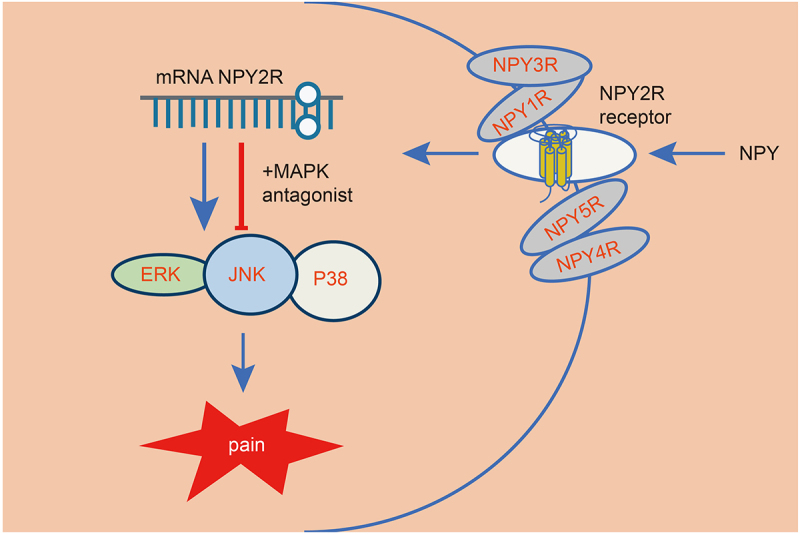
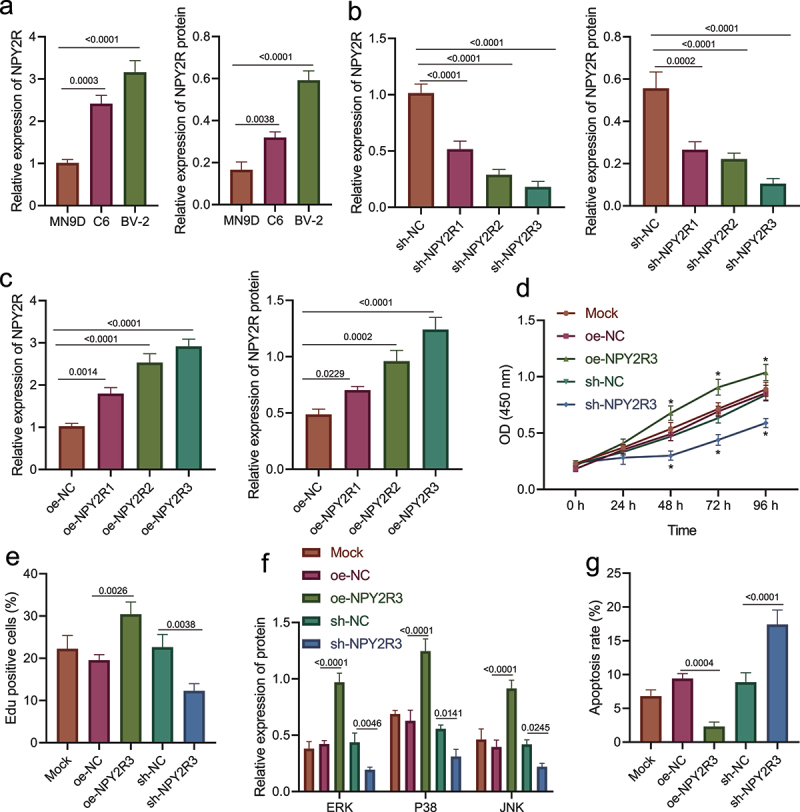
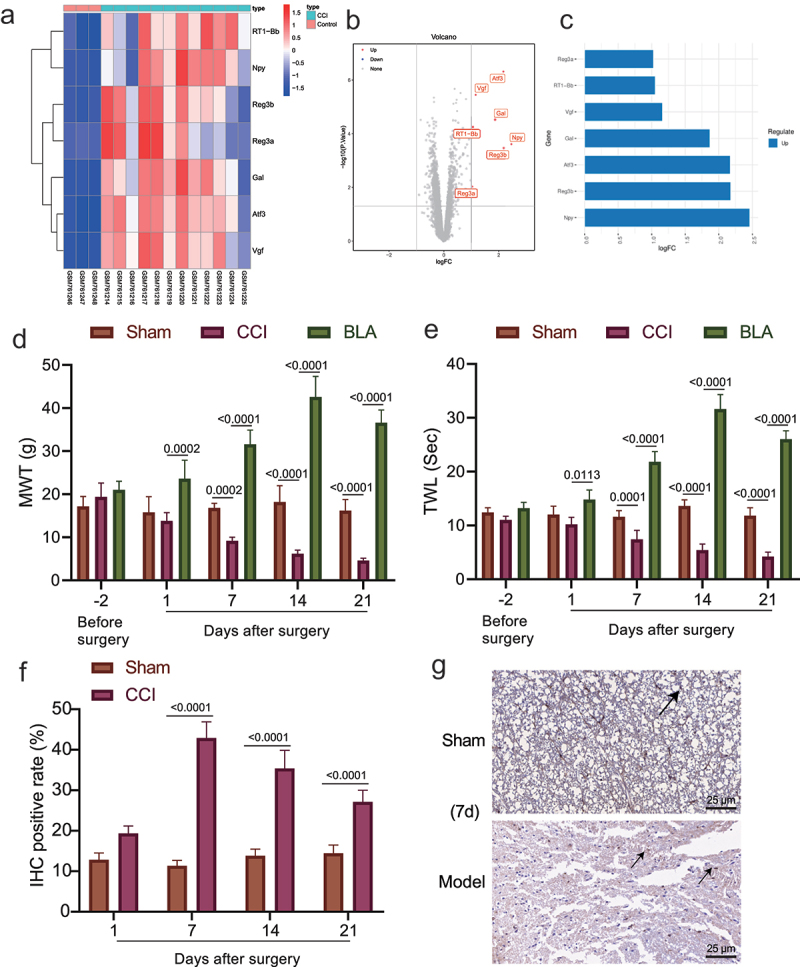
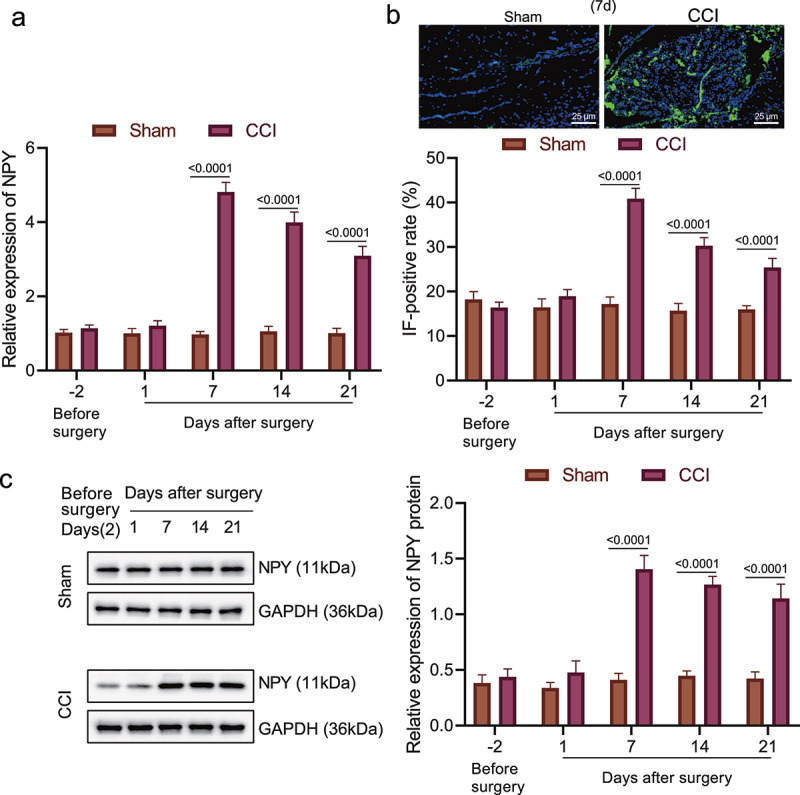
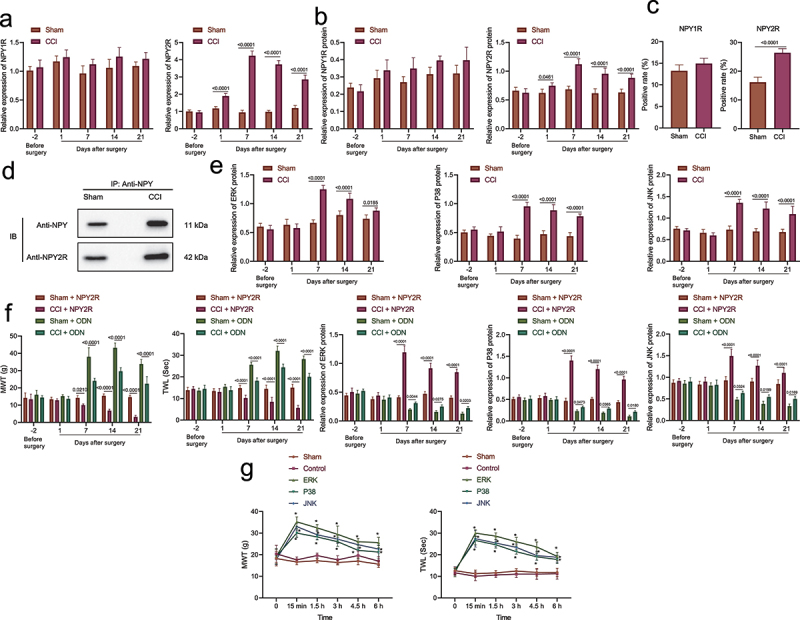
Neuropeptide Y (NPY) is a highly conserved endogenous peptide in the central and peripheral nervous systems, which has been implicated in nociceptive signaling in neuropathic pain. However, downstream mechanistic actions remain uncharacterized. In this study, we sought to investigate the mechanism of NPY and its receptor NPY2R in the amygdala in rats with neuropathic pain-like behaviors induced by chronic constriction injury (CCI) of the sciatic nerve. The expression of NPY and NPY2R was found to be aberrantly up-regulated in neuropathic pain-related microarray dataset. Further, NPY was found to act on NPY2R in the basolateral amygdala (BLA). As reflected by the decrease in mechanical withdrawal threshold (MWT) and thermal withdrawal latency (TWL) as well as the increase of NPY expression in the amygdala of rats with neuropathic pain-like behaviors, NPY was closely related to the effect of amygdala nerve activity in neuropathic pain. Subsequently, mechanistic investigations indicated that NPY2R activated the MAPK signaling pathway in the amygdala. NPY2R-induced decrease of MWT and TWL were also restored in the presence of MAPK signaling pathway antagonist. Moreover, it was revealed that NPY2R overexpression promoted the viability while inhibiting the apoptosis of microglia. Taken together, NPY in the amygdala interacts with NPY2R to activate the MAPK signaling pathway, thereby promoting the occurrence of neuropathic pain.
神经肽 Y(NPY)是中枢和外周神经系统中高度保守的内源性肽,它与神经病理性疼痛中的伤害性信号传导有关。然而,下游的机制作用仍未被描述。在这项研究中,我们试图研究 NPY 及其受体 NPY2R 在慢性缩窄性损伤(CCI)诱导的神经病理性疼痛样行为大鼠杏仁核中的作用机制。在与神经病理性疼痛相关的微阵列数据集发现 NPY 和 NPY2R 的表达异常上调。此外,NPY 被发现作用于杏仁核的基底外侧核(BLA)上的 NPY2R。大鼠出现神经病理性疼痛样行为时,杏仁核中 NPY 表达的降低伴随着机械性退缩阈值(MWT)和热退缩潜伏期(TWL)的降低,表明 NPY 与神经活性在神经病理性疼痛中的作用密切相关。随后,机制研究表明,NPY2R 在杏仁核中激活了 MAPK 信号通路。在存在 MAPK 信号通路拮抗剂的情况下,NPY2R 诱导的 MWT 和 TWL 的降低也得到了恢复。此外,还发现 NPY2R 的过表达促进了小胶质细胞的活力,同时抑制了小胶质细胞的凋亡。总之,杏仁核中的 NPY 与 NPY2R 相互作用,激活 MAPK 信号通路,从而促进神经病理性疼痛的发生。