Department of Physiology, Development and Neuroscience, University of Cambridge, Downing Street, Cambridge, CB2 3DY, UK.
Department of Veterinary Medicine, University of Cambridge, Madingley Road, Cambridge, CB3 0ES, UK.
Neurotherapeutics. 2020 Jul;17(3):1075-1086. doi: 10.1007/s13311-020-00849-y.
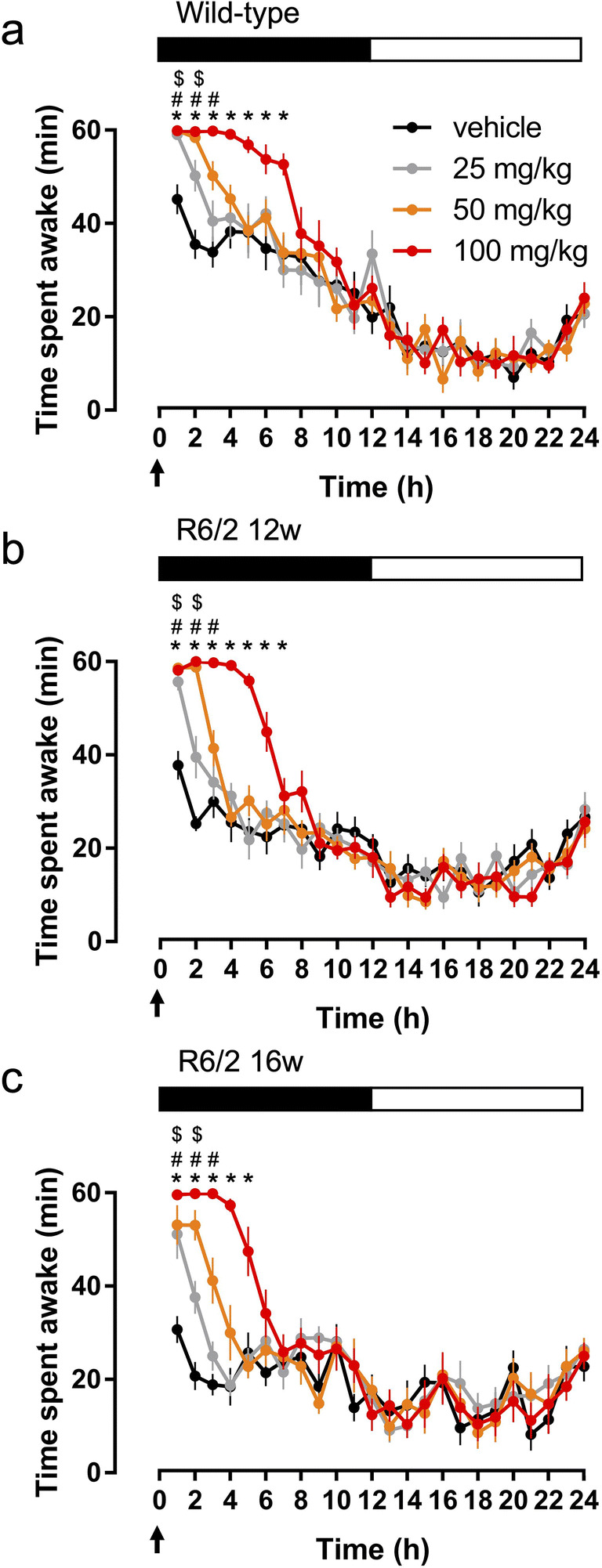
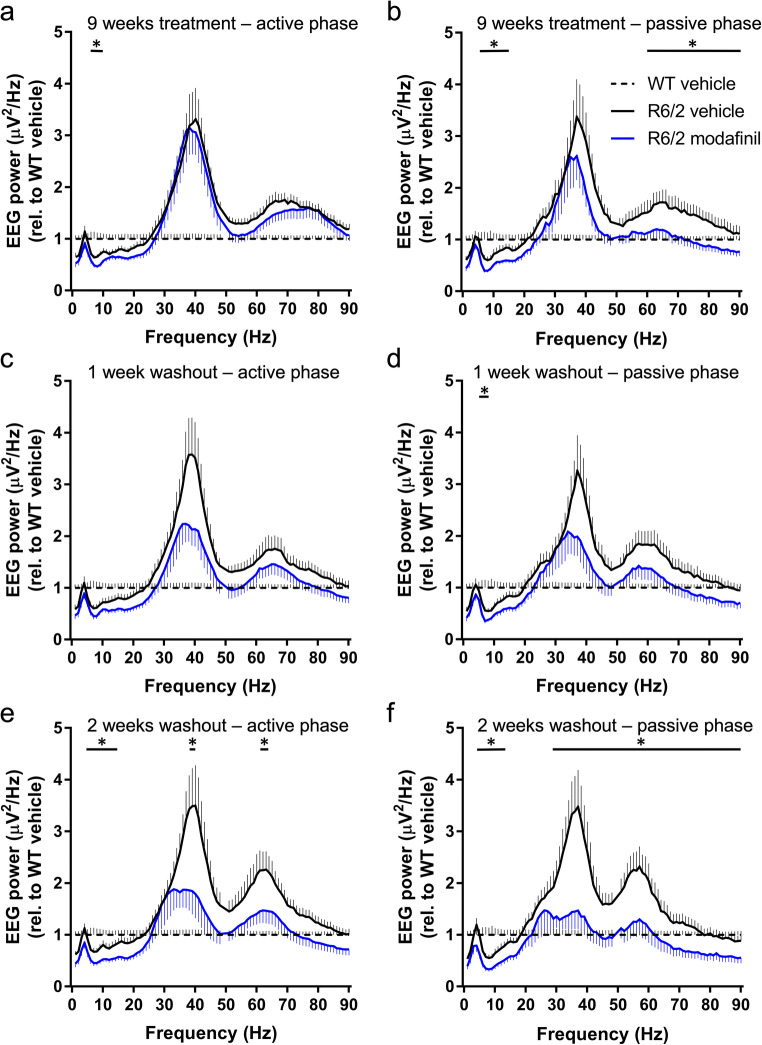
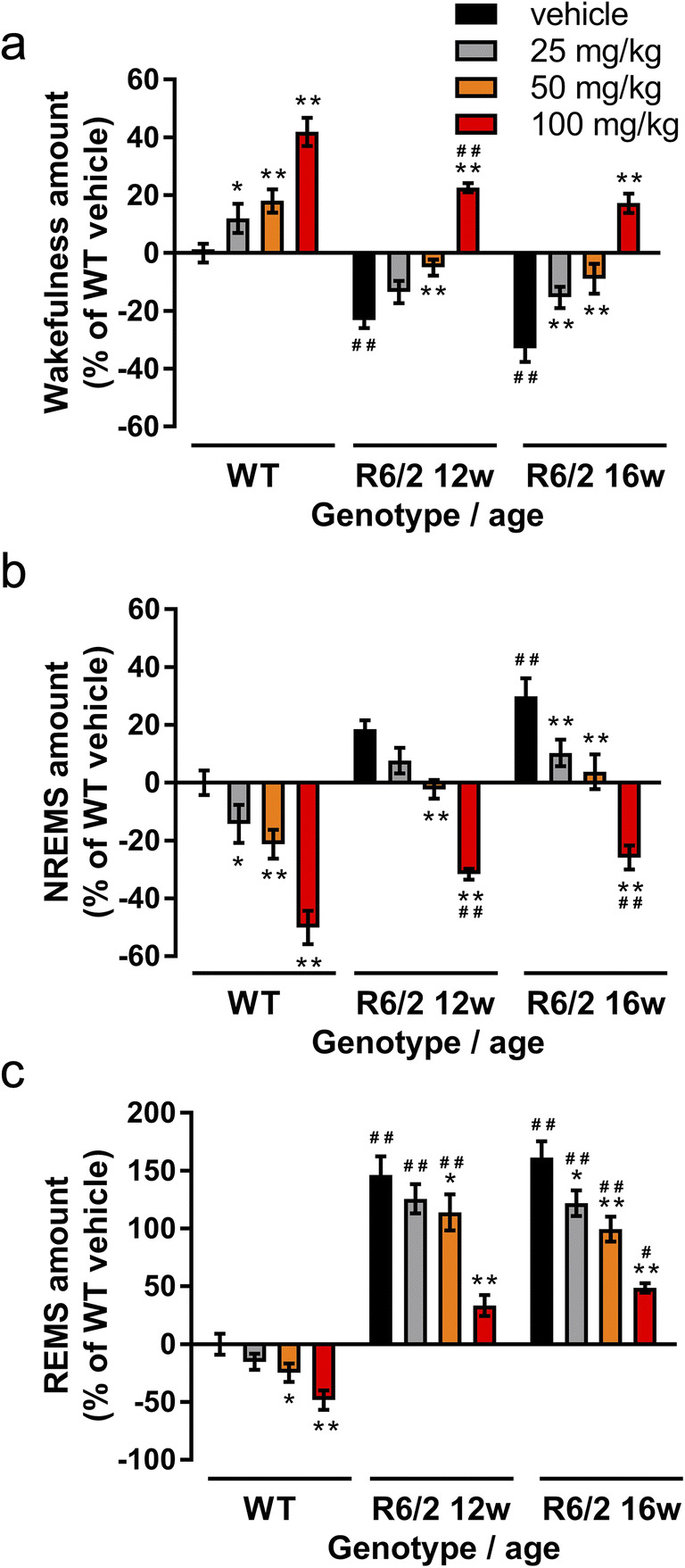
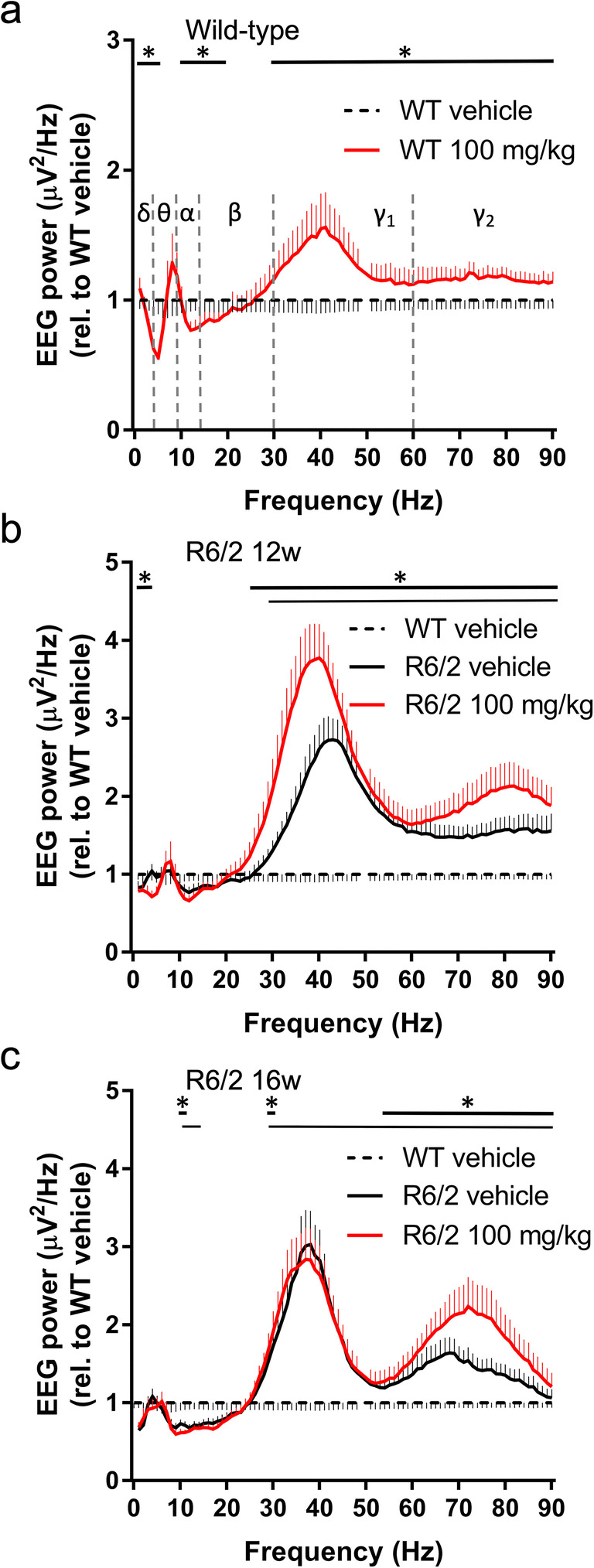
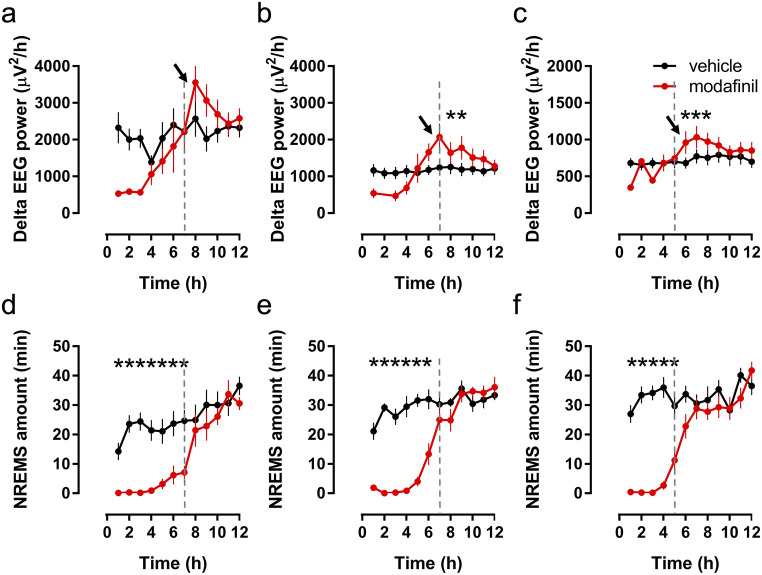
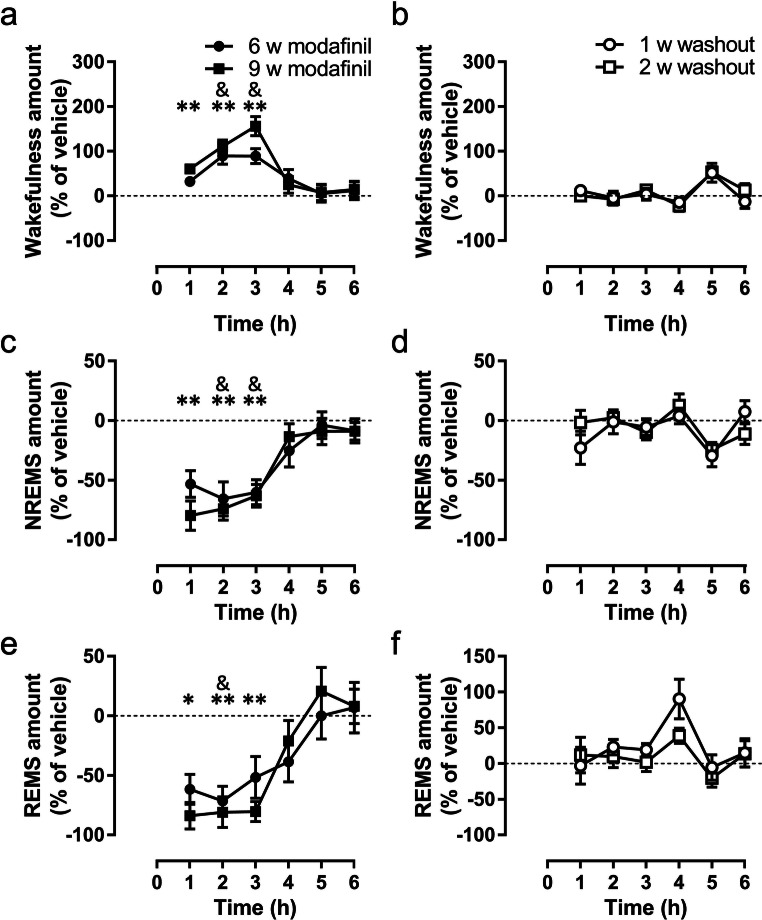
Huntington's disease (HD) is characterised by progressive symptoms including cognitive deficits and sleep/wake disturbances reflected in an abnormal electroencephalography (EEG). Modafinil, a wake-promoting and cognitive-enhancing drug, has been considered as a treatment for HD. We used HD (R6/2) mice to investigate the potential for using modafinil to treat sleep-wake disturbance in HD. R6/2 mice show sleep-wake and EEG changes similar to those seen in HD patients, with increased rapid eye movement sleep (REMS), decreased wakefulness/increased non-REMS (NREMS), and pathological changes in EEG spectra, particularly an increase in gamma power. We recorded EEG from R6/2 and wild-type mice treated with modafinil acutely (with single doses between 25 and 100 mg/kg; at 12 and 16 weeks of age), or chronically (64 mg/kg modafinil/day from 6 to 15 weeks). Acutely, modafinil increased wakefulness in R6/2 mice and restored NREMS to wild-type levels at 12 weeks. It also suppressed the pathologically increased REMS. This was accompanied by decreased delta power, increased peak frequency of theta, and increased gamma power. At 16 weeks, acute modafinil also restored wakefulness and NREMS to wild-type levels. However, whilst REMS decreased, it did not return to normal levels. By contrast, in the chronic treatment group, modafinil-induced wakefulness was maintained at 15 weeks (after 9 weeks of treatment). Interestingly, chronic modafinil also caused widespread suppression of power across the EEG spectra, including a reduction in gamma that increases pathologically in R6/2 mice. The complex EEG effects of modafinil in R6/2 mice should provide a baseline for further studies to investigate the translatability of these result to clinical practice.
亨廷顿病(HD)的特征是进行性症状,包括认知障碍和睡眠/觉醒障碍,反映在异常脑电图(EEG)中。莫达非尼是一种促醒和认知增强药物,已被认为是治疗 HD 的一种方法。我们使用 HD(R6/2)小鼠来研究使用莫达非尼治疗 HD 睡眠-觉醒障碍的潜力。R6/2 小鼠表现出与 HD 患者相似的睡眠-觉醒和 EEG 变化,快速眼动睡眠(REMS)增加,觉醒减少/非快速眼动睡眠(NREMS)增加,以及 EEG 谱的病理性变化,特别是伽马功率增加。我们从 R6/2 和野生型小鼠中记录了 EEG,这些小鼠接受了莫达非尼的急性治疗(单次剂量为 25 至 100mg/kg;在 12 和 16 周龄时)或慢性治疗(6 至 15 周龄时每天给予 64mg/kg 莫达非尼)。急性治疗时,莫达非尼增加了 R6/2 小鼠的觉醒,并将 NREMS 恢复到野生型水平。它还抑制了病理性增加的 REMS。这伴随着 delta 功率降低,theta 峰值频率增加和 gamma 功率增加。在 16 周龄时,急性莫达非尼也将觉醒和 NREMS 恢复到野生型水平。然而,虽然 REMS 减少,但它没有恢复到正常水平。相比之下,在慢性治疗组中,莫达非尼诱导的觉醒在 15 周时得以维持(在 9 周治疗后)。有趣的是,慢性莫达非尼还导致 EEG 谱上的广泛功率抑制,包括在 R6/2 小鼠中病理性增加的 gamma 减少。R6/2 小鼠中莫达非尼的复杂 EEG 效应应为进一步研究提供基线,以调查这些结果向临床实践的转化。