Hurtado Isabel, García-Sempere Aníbal, Peiró Salvador, Rodríguez-Bernal Clara, Sanfélix-Genovés José, Sanfélix-Gimeno Gabriel
Fundación para el Fomento de la Investigación Sanitaria y Biomédica de la Comunidad Valenciana (FISABIO), Valencia, Spain.
Red de Investigación en Servicios de Salud en Enfermedades Crónicas (REDISSEC), Valencia, Spain.
J Bone Miner Res. 2020 Sep;35(9):1660-1667. doi: 10.1002/jbmr.4028. Epub 2020 May 5.
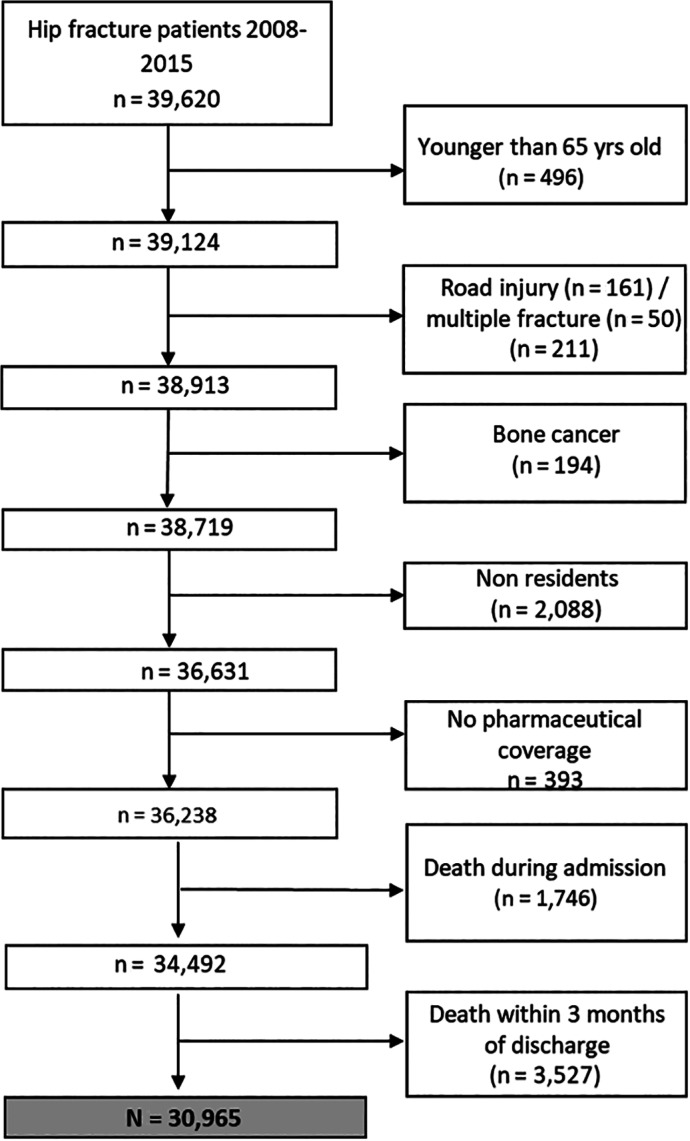
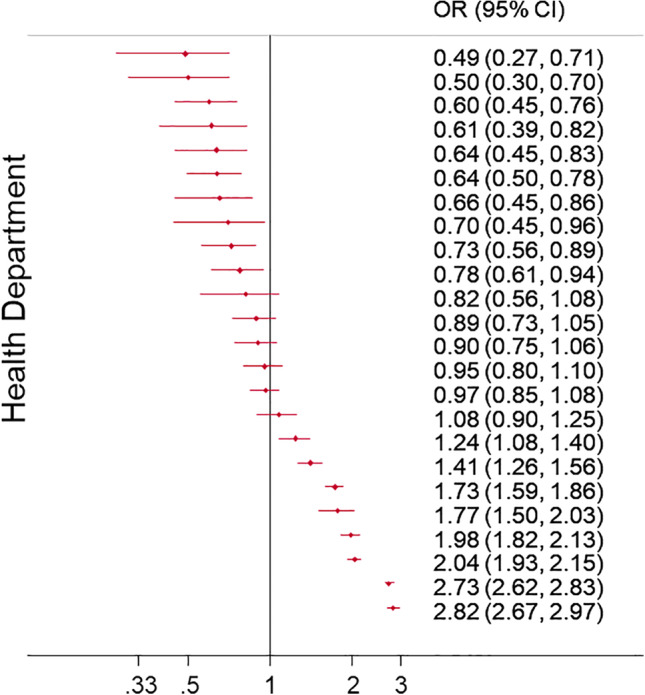
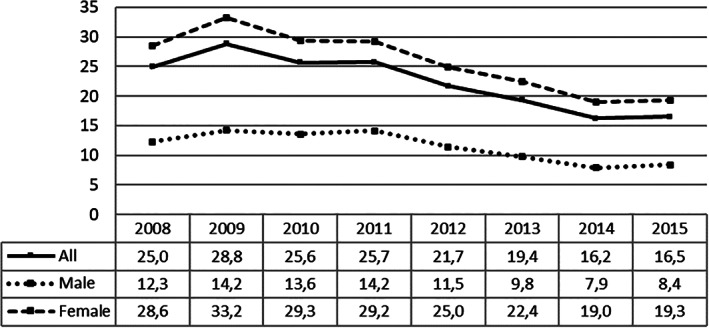
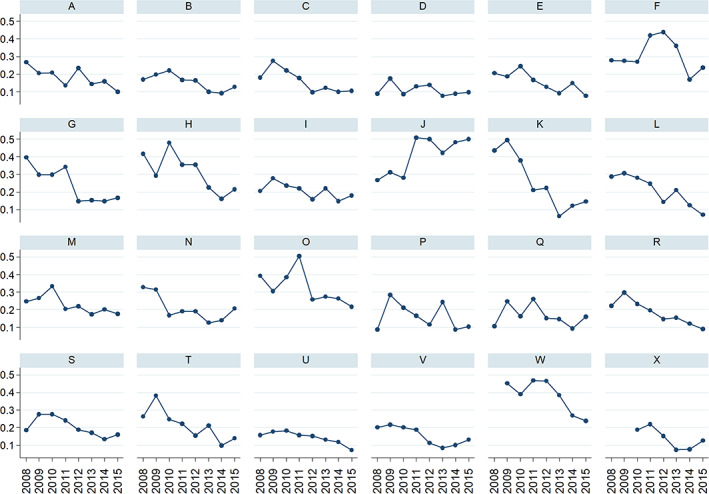
Despite improvements in the therapeutic arsenal and the recommendations of guidelines, low rates of prescribing osteoporosis medications are being reported worldwide for patients surviving a hip fracture, and important geographical variation remain. We aimed to describe trends in the proportion of patients that receive osteoporosis medication after hip fracture and to analyze the geographical variation in the prescription of drug therapy and its associated factors in the region of Valencia, Spain. We studied a population-based retrospective cohort of 30,965 patients aged 65 years and older, discharged from hospital after a hip fracture from January 2008 to December 2015, who were followed up for 3 months after discharge to identify the presence of any prescription of osteoporosis medication. We conducted a multilevel multiple logistic regression analysis with two levels (individuals and health departments [HD]) to determine which individual covariates were associated with receiving a prescription of osteoporosis medication in the 3 months after discharge, as well as the importance of the HD of hospitalization. The percentage of patients treated in the region decreased from a maximum of 28.9% in 2009 to 16.4% in 2015. By sex, the proportion of women treated reached a maximum of 33.4% in 2009 and declined to 19% in 2015, while the proportion of men reached a maximum of 14% in 2011 and reduced to 8.1% in 2015. By health department, there was a noticeable variability in the rate of patients treated, ranging from 40.9% to 11.1% in the whole period (intraclass correlation coefficient [ICC] = 7.54%; median odds ratio [MOR] = 1.64). Proportion of treated patients decreased in 20 of the 24 HDs. Variability could be also observed with regard to choice of medication by HD. This situation pressingly demands action (both at the organizational and professional levels) focused on populations at a higher risk (such as hip fracture patients) that particularly address underutilization and unwarranted variation.
尽管治疗手段有所改进且有指南推荐,但全球范围内报告显示,髋部骨折幸存患者的骨质疏松症药物处方率较低,且存在显著的地域差异。我们旨在描述髋部骨折后接受骨质疏松症药物治疗的患者比例趋势,并分析西班牙巴伦西亚地区药物治疗处方的地域差异及其相关因素。我们研究了一个基于人群的回顾性队列,共30965名65岁及以上的患者,他们于2008年1月至2015年12月因髋部骨折出院,出院后随访3个月以确定是否有骨质疏松症药物处方。我们进行了两级(个体和卫生部门[HD])的多水平多重逻辑回归分析,以确定哪些个体协变量与出院后3个月内接受骨质疏松症药物处方相关,以及住院卫生部门的重要性。该地区接受治疗的患者百分比从2009年的最高28.9%降至2015年的16.4%。按性别划分,接受治疗的女性比例在2009年达到最高33.4%,2015年降至19%,而男性比例在2011年达到最高14%,2015年降至8.1%。按卫生部门划分,接受治疗的患者比例存在明显差异,整个时期从40.9%到11.1%不等(组内相关系数[ICC]=7.54%;中位数优势比[MOR]=1.64)。24个卫生部门中有20个部门接受治疗的患者比例下降。在药物选择方面,不同卫生部门也存在差异。这种情况迫切需要采取行动(在组织和专业层面),针对高危人群(如髋部骨折患者),特别解决利用不足和不必要的差异问题。