São Paulo State University - UNESP, Department of Chemical and Biological Sciences, Institute of Biosciences of Botucatu, Botucatu, SP, Brazil; São Paulo State University - UNESP, Department of Pathology, School of Medicine of Botucatu, Botucatu, SP, Brazil.
São Paulo State University - UNESP, Department of Chemical and Biological Sciences, Institute of Biosciences of Botucatu, Botucatu, SP, Brazil.
Int Immunopharmacol. 2020 Jul;84:106495. doi: 10.1016/j.intimp.2020.106495. Epub 2020 Apr 13.
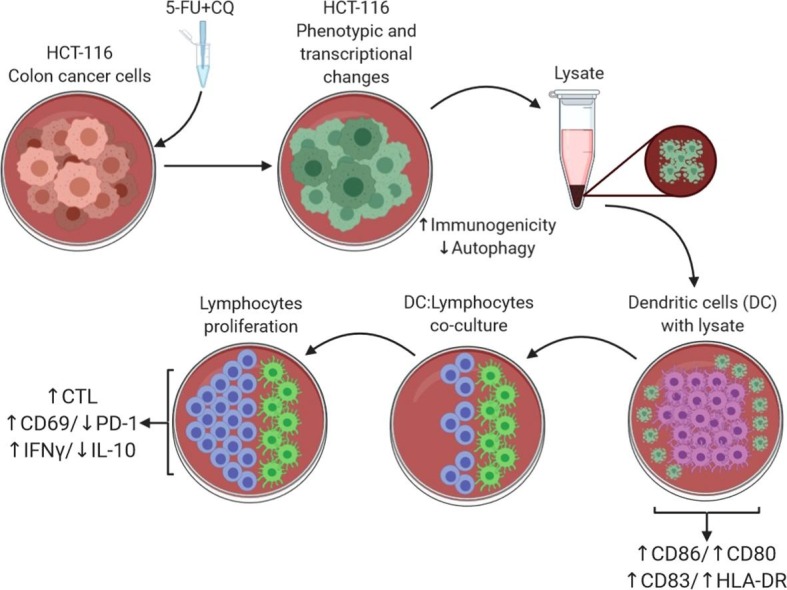
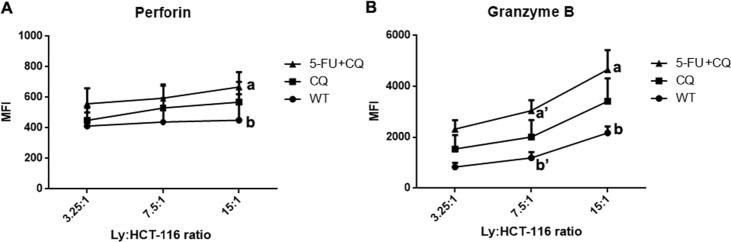
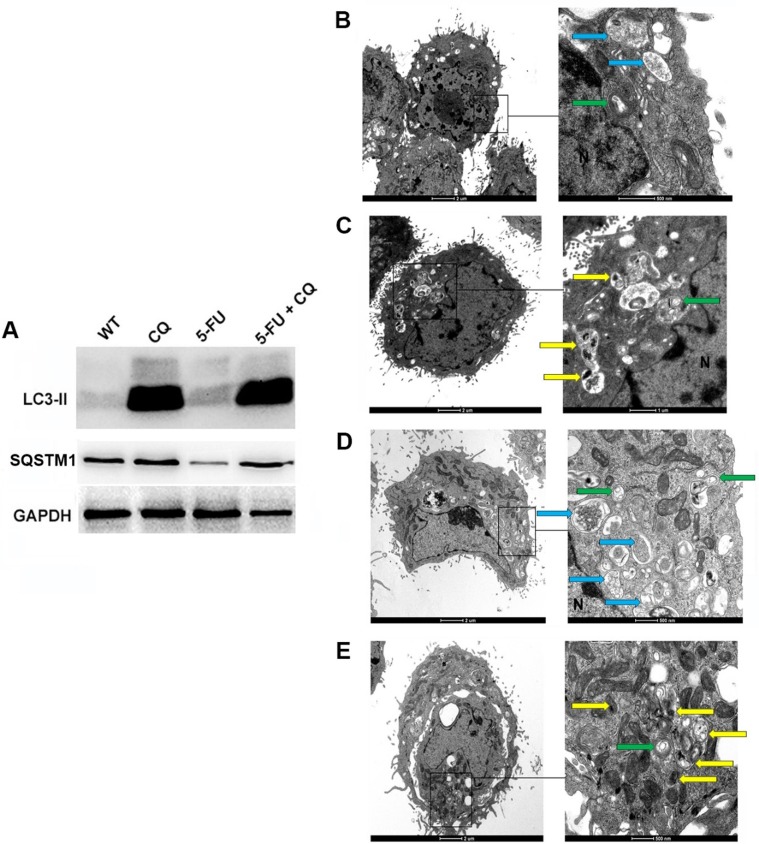
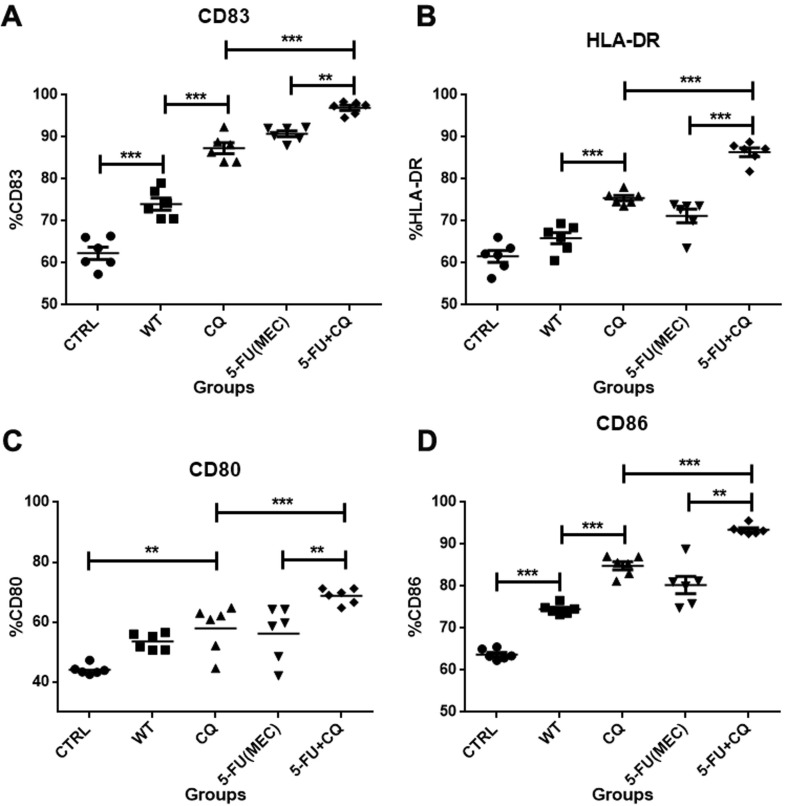
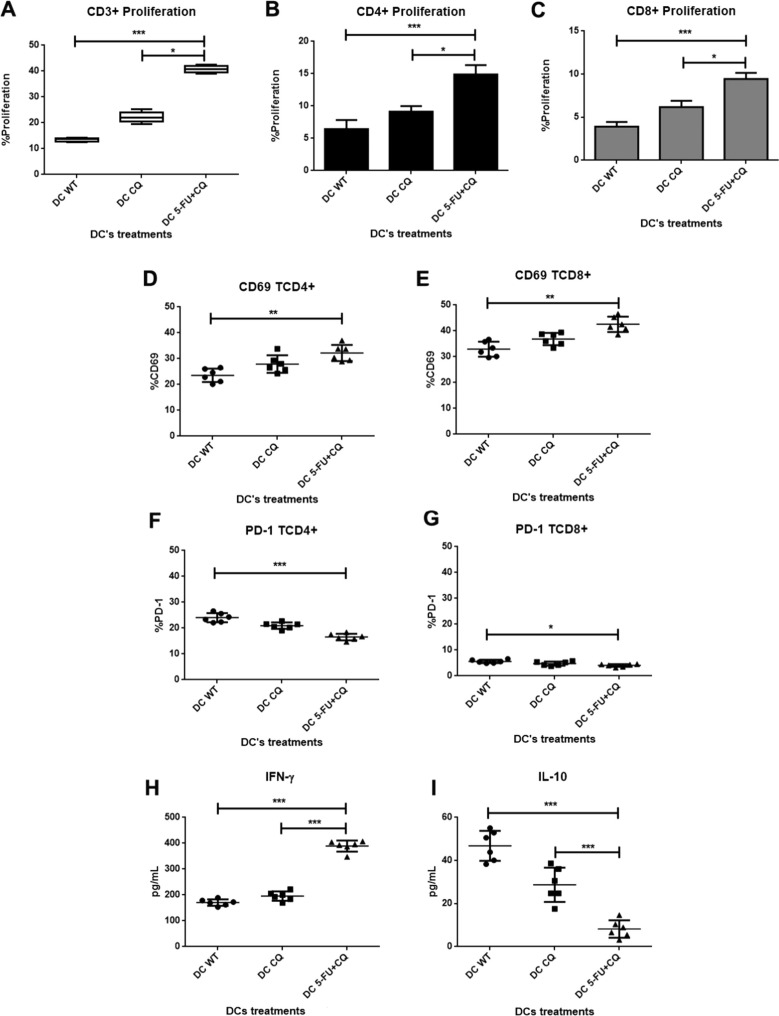
Autophagy is an important mechanism for tumor escape, allowing tumor cells to recover from the damage induced by chemotherapy, radiation therapy, and immunotherapy and contributing to the development of resistance. The pharmacological inhibition of autophagy contributes to increase the efficacy of antineoplastic agents. Exposing tumor cells to low concentrations of select autophagy-inducing antineoplastic agents increases their immunogenicity and enhances their ability to stimulate dendritic cell (DC) maturation. We tested whether the application of an autophagy-inhibiting agent, chloroquine (CQ), in combination with low concentrations of 5-fluorouracil (5-FU) increases the ability of tumor cells to induce DC maturation. DCs sensitized with the lysate of HCT-116 cells previously exposed to such a combination enhanced the DC maturation/activation ability. These matured DCs also increased the allogeneic responsiveness of both CD4+ and CD8+ T cells, which showed a greater proliferative response than those from DCs sensitized with control lysates. The T cells expanded in such cocultures were CD69+ and PD-1- and produced higher levels of IFN-γ and lower levels of IL-10, consistent with the preferential activation of Th1 cells. Cocultures of autologous DCs and lymphocytes improved the generation of cytotoxic T lymphocytes, as assessed by the expression of CD107a, perforin, and granzyme B. The drug combination increased the expression of genes related to the CEACAM family (BECN1, ATGs, MAPLC3B, ULK1, SQSTM1) and tumor suppressors (PCBP1). Furthermore, the decreased expression of genes related to metastasis and tumor progression (BNIP3, BNIP3L, FOSL2, HES1, LAMB3, LOXL2, NDRG1, P4HA1, PIK3R2) was noted. The combination of 5-FU and CQ increases the ability of tumor cells to drive DC maturation and enhances the ability of DCs to stimulate T cell responses.
自噬是肿瘤逃逸的重要机制,使肿瘤细胞能够从化疗、放疗和免疫治疗诱导的损伤中恢复,并有助于产生耐药性。自噬的药理学抑制有助于提高抗肿瘤药物的疗效。使肿瘤细胞暴露于低浓度的选择性诱导自噬的抗肿瘤药物会增加其免疫原性,并增强其刺激树突状细胞(DC)成熟的能力。我们测试了应用自噬抑制剂氯喹(CQ)与低浓度 5-氟尿嘧啶(5-FU)联合应用是否会增加肿瘤细胞诱导 DC 成熟的能力。用先前暴露于这种组合的 HCT-116 细胞裂解物致敏的 DC 增强了 DC 成熟/激活能力。这些成熟的 DC 还增加了同种异体反应性的 CD4+和 CD8+T 细胞,与用对照裂解物致敏的 DC 相比,这些 T 细胞的增殖反应更大。在这种共培养物中扩增的 T 细胞是 CD69+和 PD-1-,并产生更高水平的 IFN-γ和更低水平的 IL-10,与 Th1 细胞的优先激活一致。自体 DC 和淋巴细胞的共培养物改善了细胞毒性 T 淋巴细胞的产生,如 CD107a、穿孔素和颗粒酶 B 的表达所评估的那样。药物组合增加了与 CEACAM 家族(BECN1、ATGs、MAPLC3B、ULK1、SQSTM1)和肿瘤抑制基因(PCBP1)相关的基因的表达。此外,还观察到与转移和肿瘤进展相关的基因(BNIP3、BNIP3L、FOSL2、HES1、LAMB3、LOXL2、NDRG1、P4HA1、PIK3R2)表达下调。5-FU 和 CQ 的组合增加了肿瘤细胞驱动 DC 成熟的能力,并增强了 DC 刺激 T 细胞反应的能力。