Hashemi Mehrdad, Mohandesi Khosroshahi Elaheh, Tanha Mahsa, Khoushab Saloomeh, Bizhanpour Anahita, Azizi Farnaz, Mohammadzadeh Mahsa, Matinahmadi Arash, Khazaei Koohpar Zeinab, Asadi Saba, Taheri Hengameh, Khorrami Ramin, Ramezani Farani Marzieh, Rashidi Mohsen, Rezaei Mahdi, Fattah Eisa, Taheriazam Afshin, Entezari Maliheh
Farhikhtegan Medical Convergence Sciences Research Center, Farhikhtegan Hospital Tehran Medical Sciences, Islamic Azad University, Tehran, Iran.
Department of Genetics, Faculty of Advanced Science and Technology, Tehran Medical Sciences, Islamic Azad University, Tehran, Iran.
Heliyon. 2024 Sep 3;10(18):e37376. doi: 10.1016/j.heliyon.2024.e37376. eCollection 2024 Sep 30.
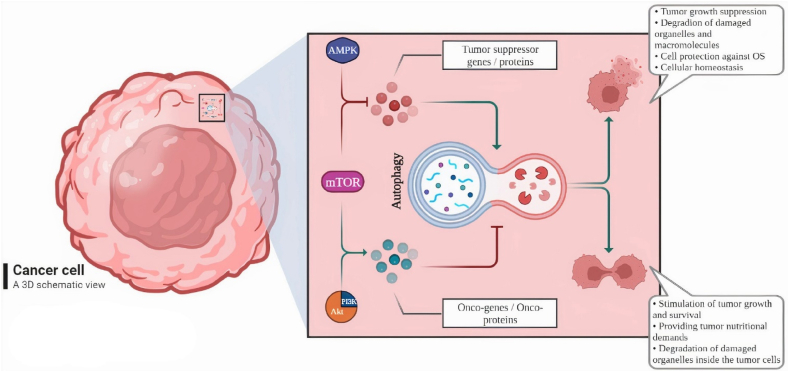
Immune checkpoints are a set of inhibitory and stimulatory molecules/mechanisms that affect the activity of immune cells to maintain the existing balance between pro- and anti-inflammatory signaling pathways and avoid the progression of autoimmune disorders. Tumor cells can employ these checkpoints to evade immune system. The discovery and development of immune checkpoint inhibitors (ICIs) was thereby a milestone in the area of immuno-oncology. ICIs stimulate anti-tumor immune responses primarily by disrupting co-inhibitory signaling mechanisms and accelerate immune-mediated killing of tumor cells. Despite the beneficial effects of ICIs, they sometimes encounter some degrees of therapeutic resistance, and thereby do not effectively act against tumors. Among multiple combination therapies have been introduced to date, targeting autophagy, as a cellular degradative process to remove expired organelles and subcellular constituents, has represented with potential capacities to overcome ICI-related therapy resistance. It has experimentally been illuminated that autophagy induction blocks the immune checkpoint molecules when administered in conjugation with ICIs, suggesting that autophagy activation may restrict therapeutic challenges that ICIs have encountered with. However, the autophagy flux can also provoke the immune escape of tumors, which must be considered. Since the conventional FDA-approved ICIs have designed and developed to target programmed cell death receptor/ligand 1 (PD-1/PD-L1) as well as cytotoxic T lymphocyte-associated molecule 4 (CTLA-4) immune checkpoint molecules, we aim to review the effects of autophagy targeting in combination with anti-PD-1/PD-L1- and anti-CTLA-4-based ICIs on cancer therapeutic resistance and tumor immune evasion.
免疫检查点是一组抑制性和刺激性分子/机制,可影响免疫细胞的活性,以维持促炎和抗炎信号通路之间的现有平衡,并避免自身免疫性疾病的进展。肿瘤细胞可以利用这些检查点逃避免疫系统。因此,免疫检查点抑制剂(ICI)的发现和开发是免疫肿瘤学领域的一个里程碑。ICI主要通过破坏共抑制信号机制来刺激抗肿瘤免疫反应,并加速免疫介导的肿瘤细胞杀伤。尽管ICI有有益效果,但它们有时会遇到一定程度的治疗耐药性,因此不能有效地对抗肿瘤。在迄今为止引入的多种联合疗法中,靶向自噬作为一种去除过期细胞器和亚细胞成分的细胞降解过程,已显示出克服ICI相关治疗耐药性的潜在能力。实验表明,自噬诱导与ICI联合使用时可阻断免疫检查点分子,这表明自噬激活可能会限制ICI所遇到的治疗挑战。然而,自噬通量也可能引发肿瘤的免疫逃逸,这一点必须予以考虑。由于传统的FDA批准的ICI是设计和开发用于靶向程序性细胞死亡受体/配体1(PD-1/PD-L1)以及细胞毒性T淋巴细胞相关分子4(CTLA-4)免疫检查点分子,我们旨在综述靶向自噬与基于抗PD-1/PD-L1和抗CTLA-4的ICI联合使用对癌症治疗耐药性和肿瘤免疫逃逸的影响。