Hunan Key Laboratory of Translational Radiation Oncology, Hunan Cancer Hospital and The Affiliated Cancer Hospital of Xiangya School of Medicine, Central South University, 283 Tongzipo Road, Changsha, 410013, Hunan, China.
University of South China, Hengyang, 421001, Hunan, China.
J Exp Clin Cancer Res. 2020 Apr 16;39(1):67. doi: 10.1186/s13046-020-01570-6.
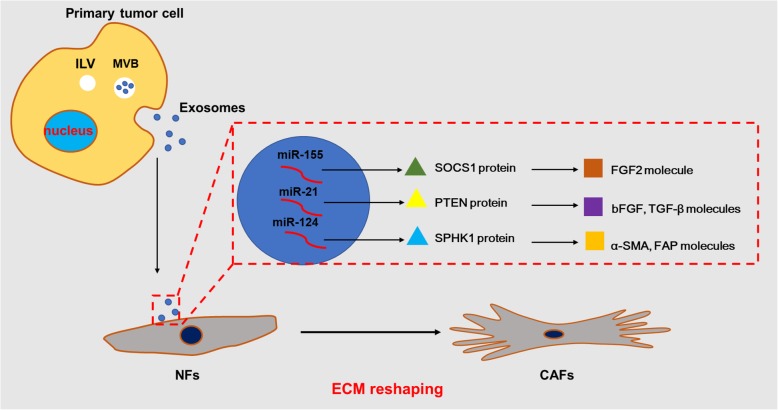
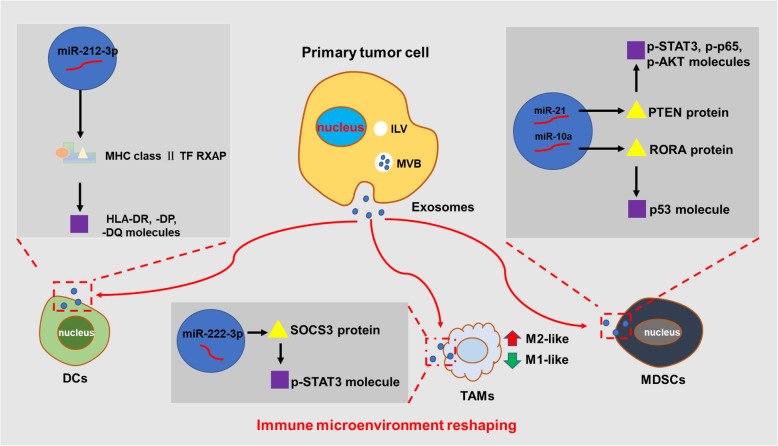
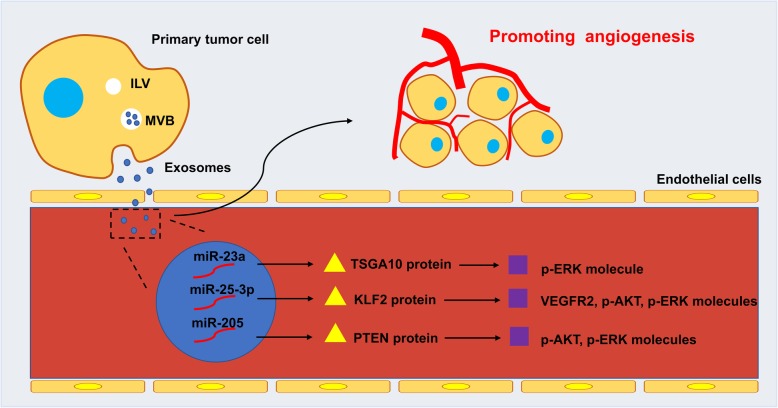
Tumor microenvironment (TME) is the internal environment in which tumor cells survive, consisting of tumor cells, fibroblasts, endothelial cells, and immune cells, as well as non-cellular components, such as exosomes and cytokines. Exosomes are tiny extracellular vesicles (40-160nm) containing active substances, such as proteins, lipids and nucleic acids. Exosomes carry biologically active miRNAs to shuttle between tumor cells and TME, thereby affecting tumor development. Tumor-derived exosomal miRNAs induce matrix reprogramming in TME, creating a microenvironment that is conducive to tumor growth, metastasis, immune escape and chemotherapy resistance. In this review, we updated the role of exosomal miRNAs in the process of TME reshaping.
肿瘤微环境(TME)是肿瘤细胞赖以生存的内部环境,由肿瘤细胞、成纤维细胞、内皮细胞和免疫细胞以及非细胞成分(如外泌体和细胞因子)组成。外泌体是含有活性物质(如蛋白质、脂质和核酸)的微小细胞外囊泡(40-160nm)。外泌体携带生物活性 miRNA 在肿瘤细胞和 TME 之间穿梭,从而影响肿瘤的发展。肿瘤来源的外泌体 miRNA 诱导 TME 中的基质重编程,创造有利于肿瘤生长、转移、免疫逃逸和化疗耐药的微环境。在这篇综述中,我们更新了外泌体 miRNA 在重塑 TME 过程中的作用。