Laboratório de Farmacologia Molecular, Departamento de Ciências da Saúde, Universidade de Brasília, Brasilia, DF, Brazil.
Laboratório de Hematologia e Células-Tronco, Departamento de Ciências da Saúde, Universidade de Brasília, Brasilia, DF, Brazil.
Stem Cell Res Ther. 2020 Apr 16;11(1):156. doi: 10.1186/s13287-020-01659-x.
Mesenchymal stem cell (MSC) therapy is an important alternative for GVHD treatment, but a third of patients fail to respond to such therapy. Therefore, strategies to enhance the immunosuppressive potential of MSCs constitute an active area of investigation. Here, we proposed an innovative priming strategy based on the plasma obtained from GVHD patients and tested whether this approach could enhance the immunosuppressive capacity of MSCs.
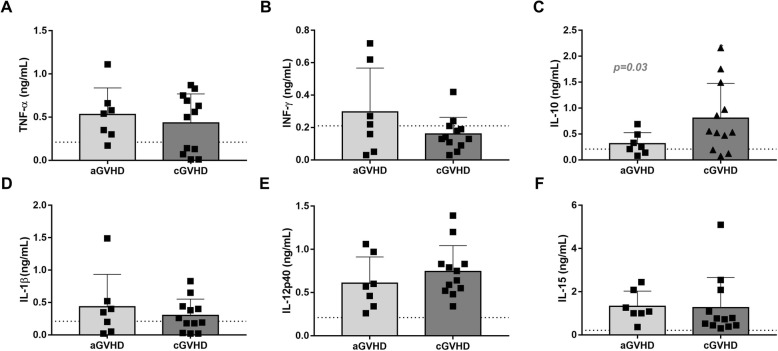
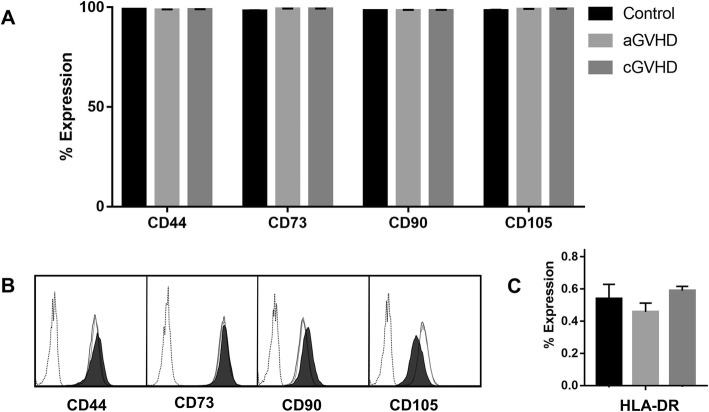
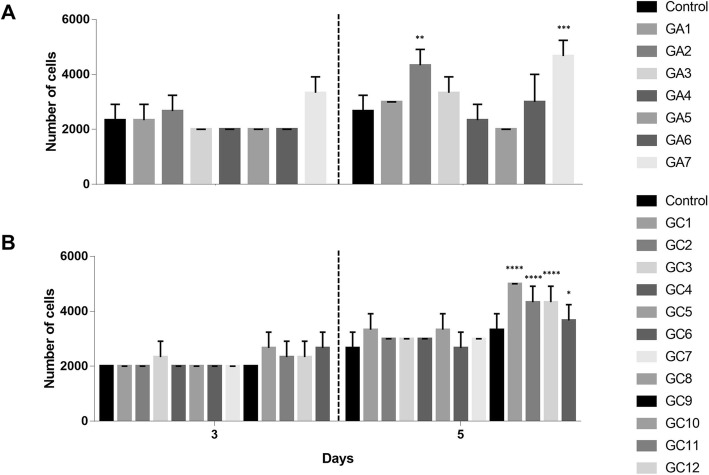
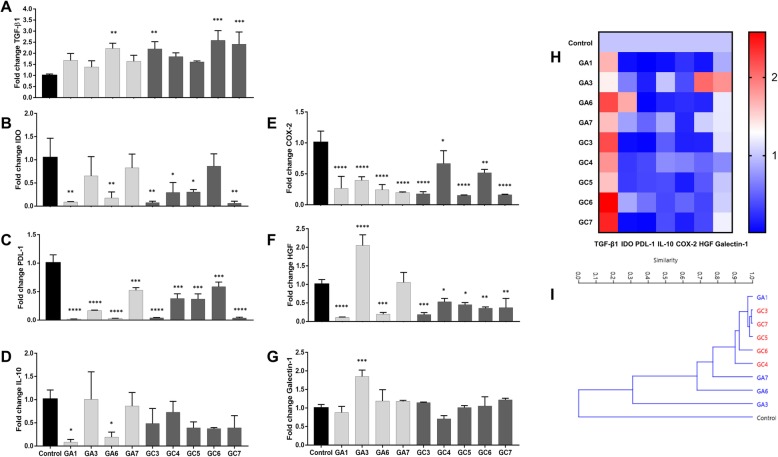
We obtained the plasma from healthy as well as acute (aGVHD) and chronic (cGVHD) GVHD donors. Plasma samples were characterized according to the TNF-α, IFN-γ, IL-10, IL-1β, IL-12p40, and IL-15 cytokine levels. The MSCs primed with such plasmas were investigated according to surface markers, morphology, proliferation, mRNA expression, and the capacity to control T cell proliferation and Treg generation.
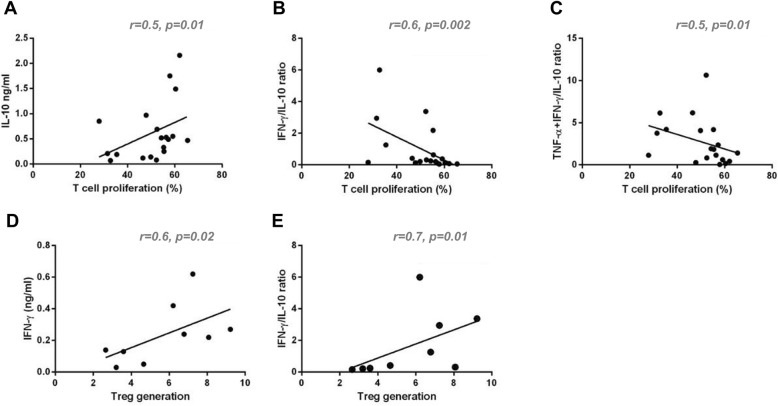
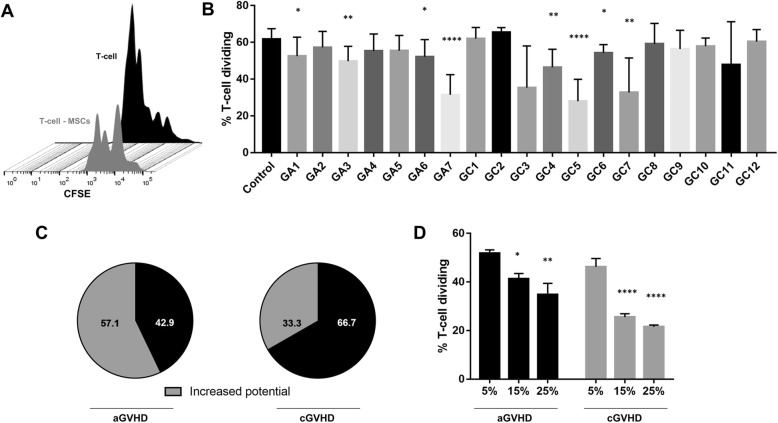
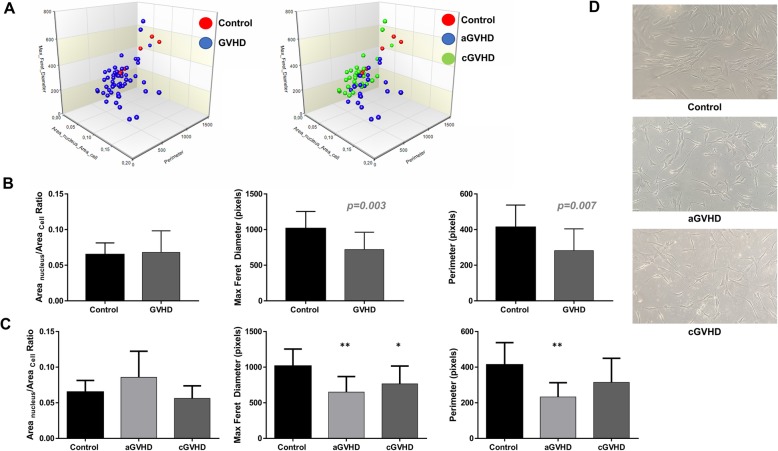
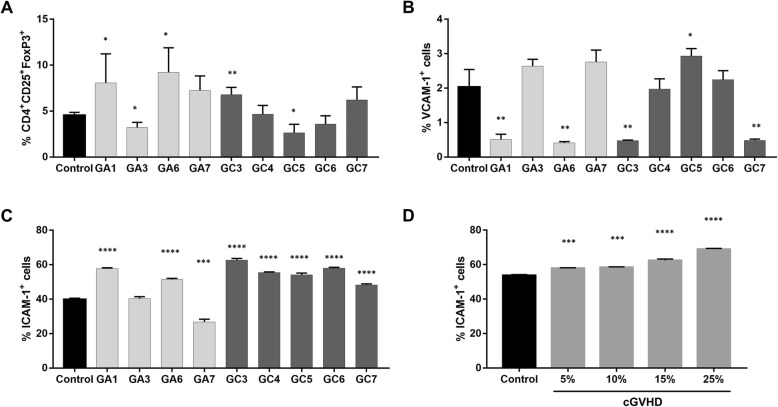
Interestingly, 57% of aGVHD and 33% of cGVHD plasmas significantly enhanced the immunosuppressive potential of MSCs. The most suppressive MSCs presented altered morphology, and those primed with cGHVD displayed a pronounced overexpression of ICAM-1 on their surface. Furthermore, we observed that the ratio of IFN-γ to IL-10 cytokine levels in the plasma used for MSC priming was significantly correlated with higher suppressive potential and Treg generation induction by primed MSCs, regardless of the clinical status of the donor.
This work constitutes an important proof of concept which demonstrates that it is possible to prime MSCs with biological material and also that the cytokine levels in the plasma may affect the MSC immunosuppressive potential, serving as the basis for the development of new therapeutic approaches for the treatment of immune diseases.
间充质干细胞(MSC)治疗是移植物抗宿主病(GVHD)治疗的重要替代方法,但三分之一的患者对此种治疗无反应。因此,增强 MSC 免疫抑制潜能的策略构成了一个活跃的研究领域。在这里,我们提出了一种基于 GVHD 患者血浆的创新预激策略,并测试了这种方法是否可以增强 MSC 的免疫抑制能力。
我们从健康以及急性(aGVHD)和慢性(cGVHD)GVHD 供者中获得了血浆。根据 TNF-α、IFN-γ、IL-10、IL-1β、IL-12p40 和 IL-15 细胞因子水平对血浆样本进行了表征。根据表面标志物、形态、增殖、mRNA 表达以及控制 T 细胞增殖和 Treg 生成的能力对用这种血浆预激的 MSC 进行了研究。
有趣的是,57%的 aGVHD 血浆和 33%的 cGVHD 血浆显著增强了 MSC 的免疫抑制潜能。最具抑制作用的 MSC 呈现出改变的形态,用 cGHVD 预激的 MSC 表面 ICAM-1 的表达明显增加。此外,我们观察到用于 MSC 预激的血浆中 IFN-γ与 IL-10 细胞因子水平的比值与预激 MSC 更高的抑制潜能和 Treg 生成诱导显著相关,而与供者的临床状态无关。
这项工作构成了一个重要的概念验证,证明了用生物材料预激 MSC 是可行的,并且血浆中的细胞因子水平可能影响 MSC 的免疫抑制潜能,为治疗免疫性疾病的新治疗方法的发展提供了基础。