Skirball Institute of Biomolecular Medicine, Department of Cell Biology, NYU School of Medicine, New York, NY 10016, USA.
Skirball Institute of Biomolecular Medicine, Department of Cell Biology, NYU School of Medicine, New York, NY 10016, USA.
Curr Opin Genet Dev. 2020 Feb;60:119-126. doi: 10.1016/j.gde.2020.02.017. Epub 2020 Apr 14.
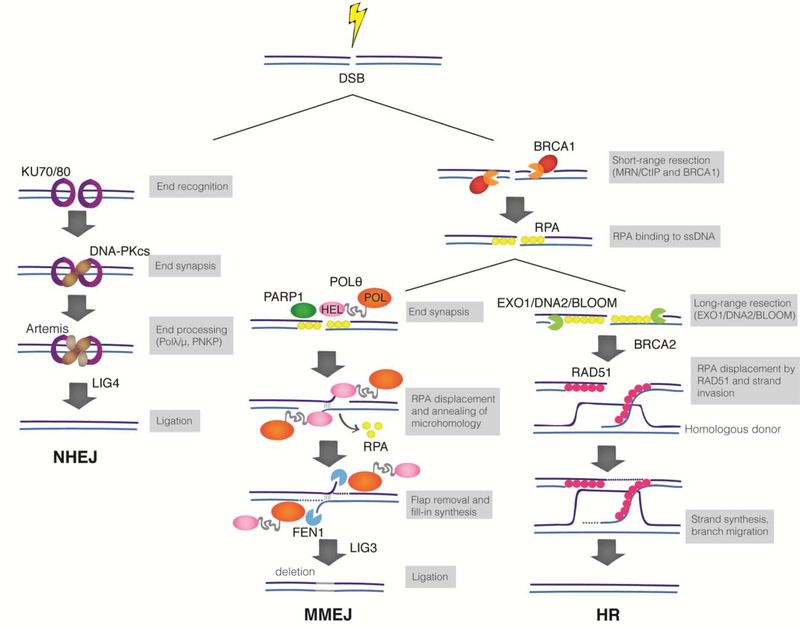
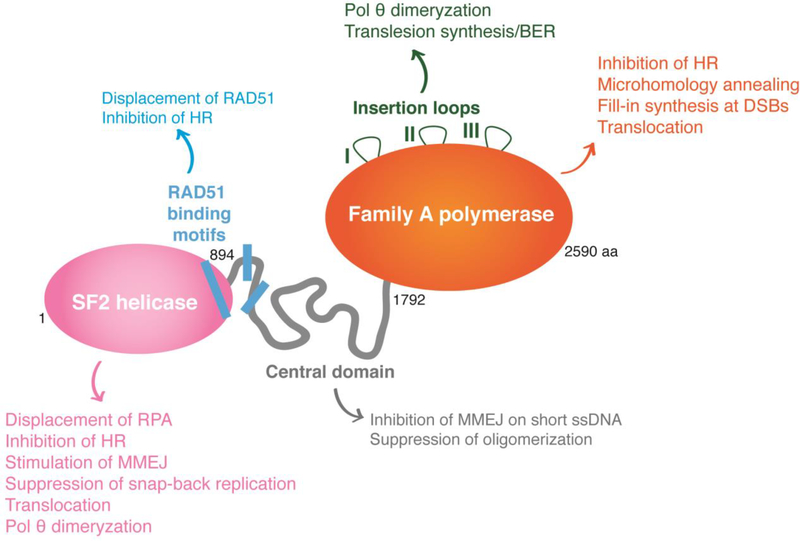
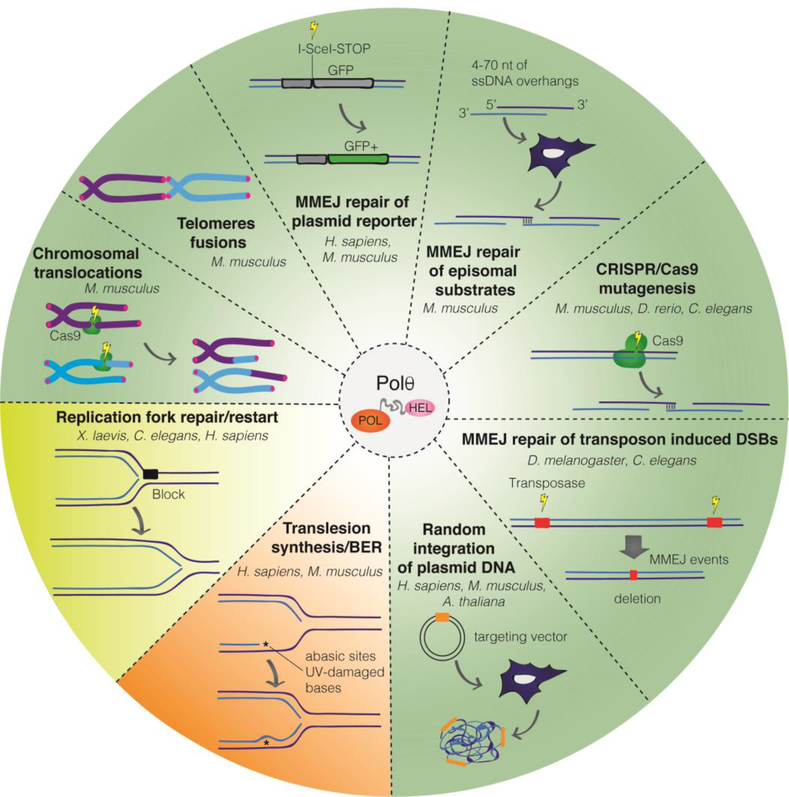
Mammalian cells have evolved multiple pathways to repair DNA double strand breaks (DSBs) and ensure genome stability. In addition to non-homologous end-joining (NHEJ) and homologous recombination (HR), cells evolved an error-prone repair pathway termed microhomology-mediated end joining (MMEJ). The mutagenic outcome of MMEJ derives from the activity of DNA polymerase theta (Polθ) - a multidomain enzyme that is minimally expressed in normal tissue but overexpressed in tumors. Polθ expression is particularly crucial for the proliferation of HR deficient cancer cells. As a result, this mutagenic repair emerged as an attractive target for cancer therapy, and inhibitors are currently in pre-clinical development. Here, we review the multifunctionality of this enigmatic polymerase, focusing on its role during DSB repair in mammalian cells and its impact on cancer genomes.
哺乳动物细胞已经进化出多种途径来修复 DNA 双链断裂 (DSB),以确保基因组的稳定性。除了非同源末端连接 (NHEJ) 和同源重组 (HR) 外,细胞还进化出了一种易错的修复途径,称为微同源介导的末端连接 (MMEJ)。MMEJ 的诱变结果源于 DNA 聚合酶θ (Polθ) 的活性 - 一种在正常组织中表达水平较低但在肿瘤中过度表达的多功能酶。Polθ 的表达对于 HR 缺陷型癌细胞的增殖尤为重要。因此,这种诱变修复成为癌症治疗的一个有吸引力的靶点,目前抑制剂正在临床前开发中。在这里,我们综述了这种神秘聚合酶的多功能性,重点介绍了它在哺乳动物细胞中 DSB 修复过程中的作用及其对癌症基因组的影响。