First Department of Medicine and Deutsches Zentrum Immuntherapie DZI, Friedrich-Alexander-Universität Erlangen-Nürnberg, Erlangen 91052, Germany
Deutsches Zentrum Immuntherapie (DZI), Erlangen, Germany.
Gut. 2020 Jul;69(7):1335-1342. doi: 10.1136/gutjnl-2020-321269. Epub 2020 Apr 17.
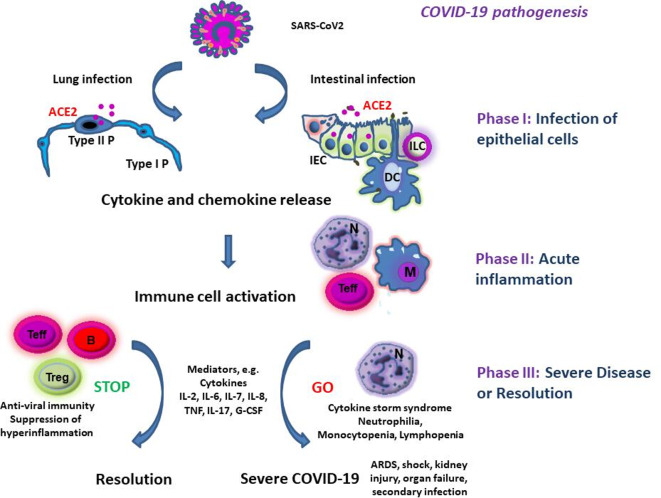
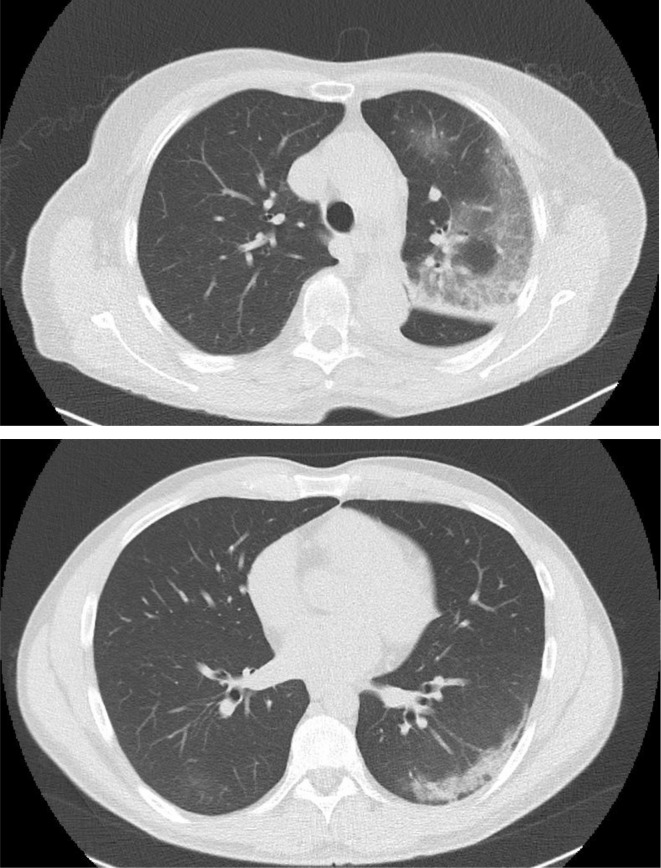
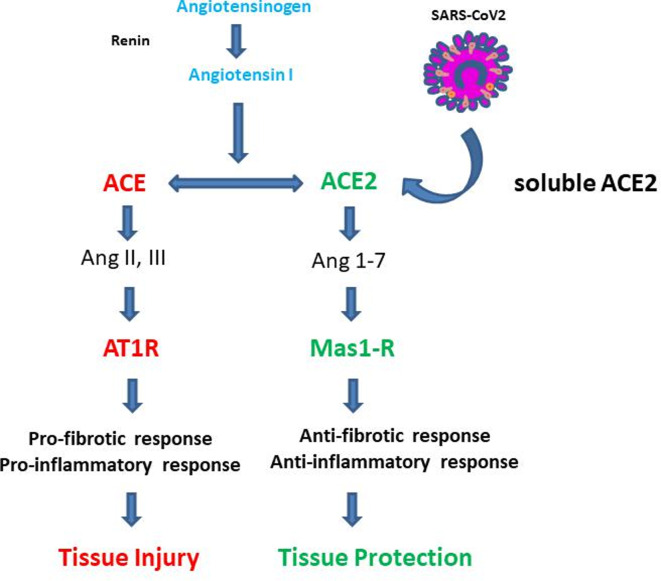
The current coronavirus pandemic is an ongoing global health crisis due to COVID-19, caused by severe acute respiratory syndrome coronavirus 2. Although COVID-19 leads to little or mild flu-like symptoms in the majority of affected patients, the disease may cause severe, frequently lethal complications such as progressive pneumonia, acute respiratory distress syndrome and organ failure driven by hyperinflammation and a cytokine storm syndrome. This situation causes various major challenges for gastroenterology. In the context of IBD, several key questions arise. For instance, it is an important question to understand whether patients with IBD (eg, due to intestinal ACE2 expression) might be particularly susceptible to COVID-19 and the cytokine release syndrome associated with lung injury and fatal outcomes. Another highly relevant question is how to deal with immunosuppression and immunomodulation during the current pandemic in patients with IBD and whether immunosuppression affects the progress of COVID-19. Here, the current understanding of the pathophysiology of COVID-19 is reviewed with special reference to immune cell activation. Moreover, the potential implications of these new insights for immunomodulation and biological therapy in IBD are discussed.
当前的冠状病毒大流行是由 COVID-19 引起的持续的全球健康危机,由严重急性呼吸系统综合征冠状病毒 2 引起。虽然 COVID-19 在大多数受影响的患者中导致轻微或轻度流感样症状,但该疾病可能导致严重的、经常致命的并发症,如肺炎进展、急性呼吸窘迫综合征和由过度炎症和细胞因子风暴综合征引起的器官衰竭。这种情况给胃肠病学带来了各种重大挑战。在 IBD 的背景下,出现了几个关键问题。例如,了解 IBD 患者(例如由于肠道 ACE2 表达)是否可能特别容易受到 COVID-19 和与肺损伤和致命结果相关的细胞因子释放综合征的影响,这是一个重要的问题。另一个高度相关的问题是如何在当前的 IBD 患者的大流行期间处理免疫抑制和免疫调节,以及免疫抑制是否会影响 COVID-19 的进展。在这里,特别参考免疫细胞激活,回顾了对 COVID-19 病理生理学的当前理解。此外,还讨论了这些新见解对 IBD 中免疫调节和生物治疗的潜在影响。